
The Fairer World Cup qualifiers are almost over. Soon, we will know all 48 teams who will battle it out in North America for the battle to be crowned champions – in a world where players compete for the lowest-ranked national teams they are eligible for.
So far, we have seen 37 teams from the OFC, the AFC, CAF, UEFA and CONCACAF book their places alongside co-hosts Canada, Mexico and the Confederate Plutocracy of Trumpland. Now just one more batch of qualifiers remains.
In today’s chapter, we will see the 10 nations from CONMEBOL battle it out for six places at the World Cup, before the final two tickets are handed out through the intercontinental play-offs. We will then have the draw for the Group Stage, as all our finalists discover what awaits them in the summer.
THE QUALIFIERS: SOUTH AMERICA
Aside from Oceania, South America is probably the continent that has seen the least radical changes in terms of the squads.
Obviously, the big two of Argentina and Brazil have lost a load of key players to European nations – mainly Spain, Portugal and Italy. Nonetheless, they still have enough depth to field formidable line-ups. Indeed, the defections might allow younger and/or less-heralded talents like Alan Varela and Vanderson to thrive for La Albiceleste and the Seleção respectively.
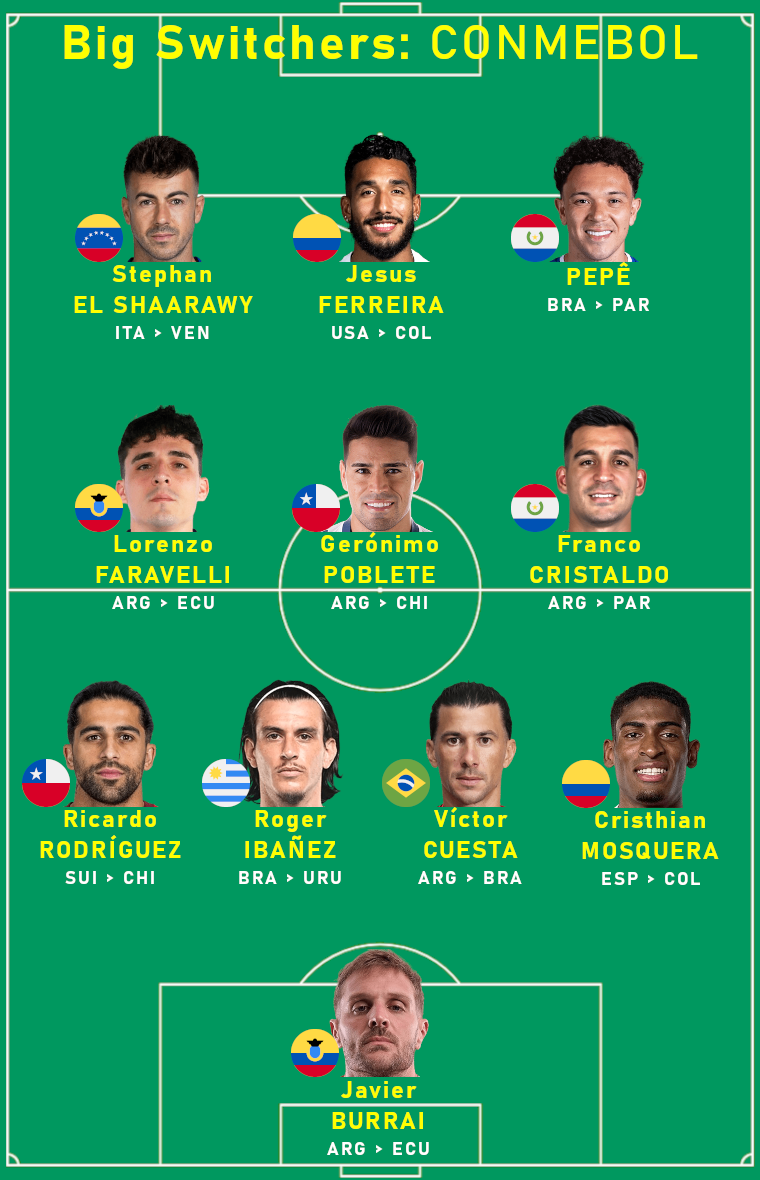
As for the other CONMEBOL powers, there are a few high-profile acquisitions. Ex-Swiss left-back Ricardo Rodríguez adds yet more experience to an already ancient Chile squad. Paraguay now have the mercurial talents of the Brazilian-born Porto winger Pepê – not to be confused with the Brazilian-born Porto defender Pepe, who’s still Portuguese… and in his 40s. But I digress.
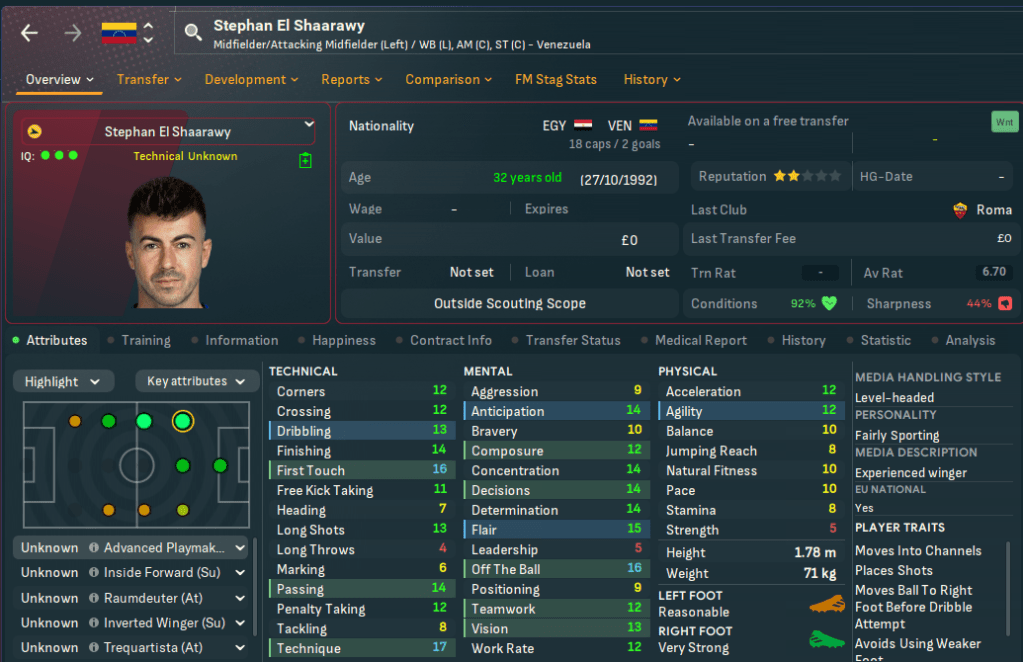
Perhaps the most intriguing switch involves Roma’s pacey attacker Stephan El Shaarawy swapping Italian azzurro for Venezuelan vinotinto. Apparently, his Egyptian dad used to live in Venezuela. Could he now send Caracas crackers by leading his adopted nation to a maiden World Cup finals?
LEAGUE PHASE
CONMEBOL’s qualifiers are as simple as they’ve always been. The 10 teams play each other twice – home and away – over the course of two years. The top six teams will qualify automatically for the World Cup, while the side in 7th place will go into the intercontinental play-offs.
I should also mention that Ecuador start off with a 3-point deduction after fielding an ineligible player – Byron Castillo – during the 2022 qualifiers. Naughty boys.
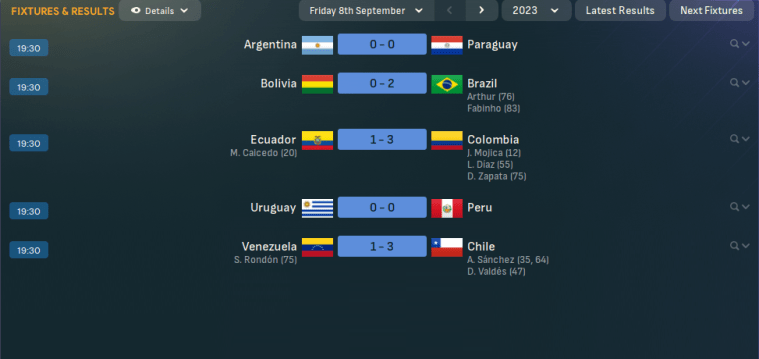
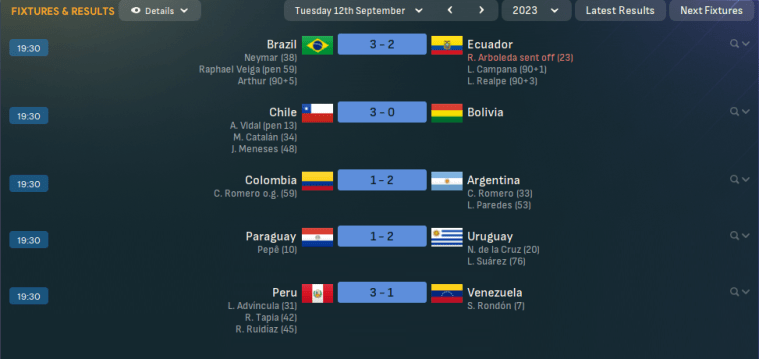
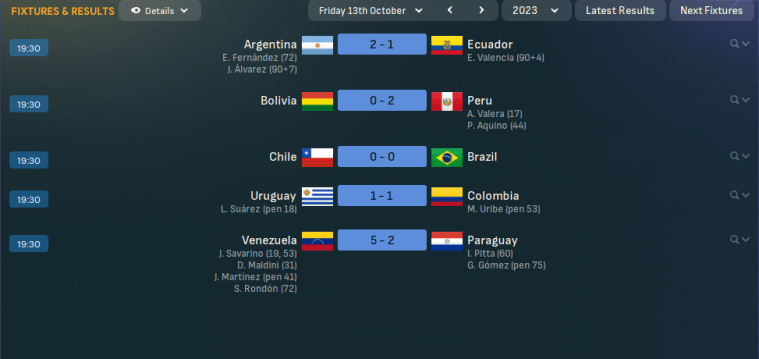
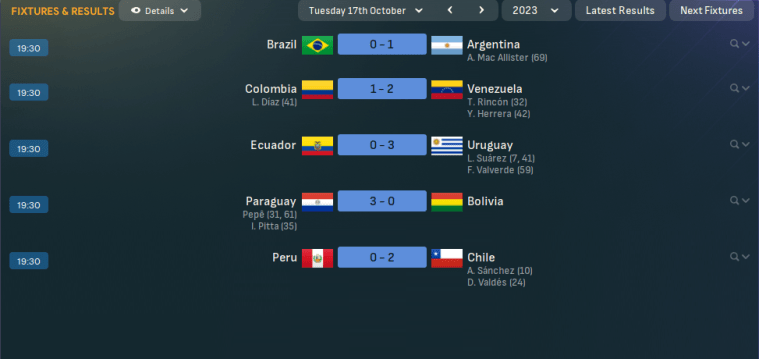
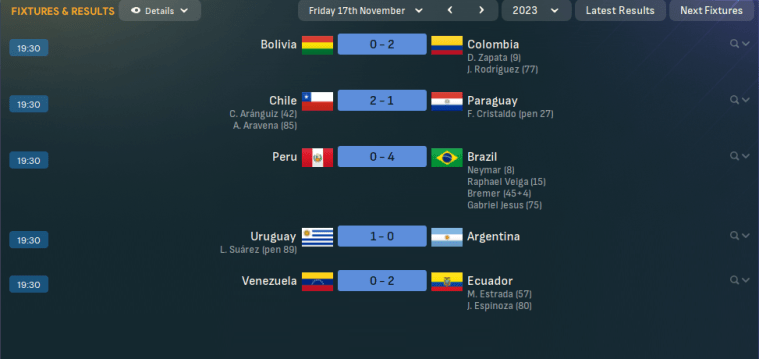
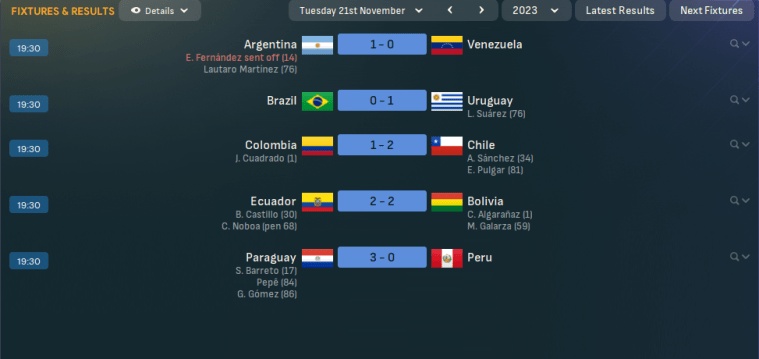
As if things weren’t bad enough for Ecuador, they got off to a terrible start. Osasuna’s Johan Mojica scored the very first goal of the World Cup qualifiers after 12 minutes to set Colombia on their way to a 3-1 victory. Ecuador went on to lose their first four matches, while Bolivia fared even worse – starting off with five consecutive defeats without scoring! Suffice to say, they were both quickly cut adrift from the others.
By contrast, Chile and Uruguay went unbeaten in their first six matches, as their ageing superstars rolled back the years. Alexis Sánchez (35) got six goal contributions in as many matches for early frontrunners Chile, while a 36-year-old Luis Suárez bagged a couple of late Uruguayan winners, against Argentina… and this one against Brazil.
Could the golden oldies keep their impressive form going all the way to the finals, or would FM find a way to stop them?
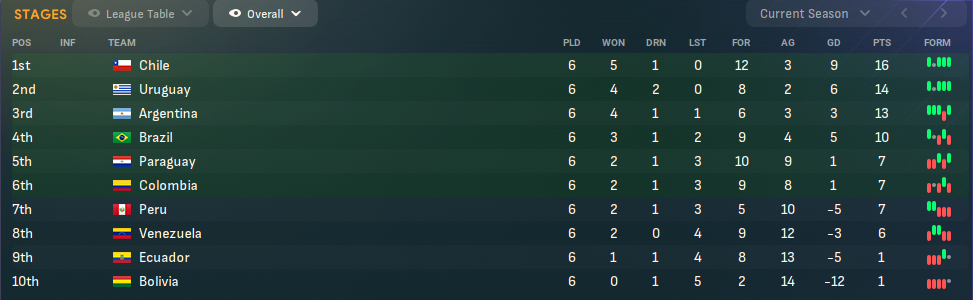
That one blip aside, Argentina still began pretty strongly, with Alexis Mac Allister netting a crucial winner against their great rivals from the north-east. The world champions were clearly rebuilding their depleted squad much more effectively than Brazil, who after losing Marquinhos had now been forced to give Neymar the captaincy. What could possibly go wrong?
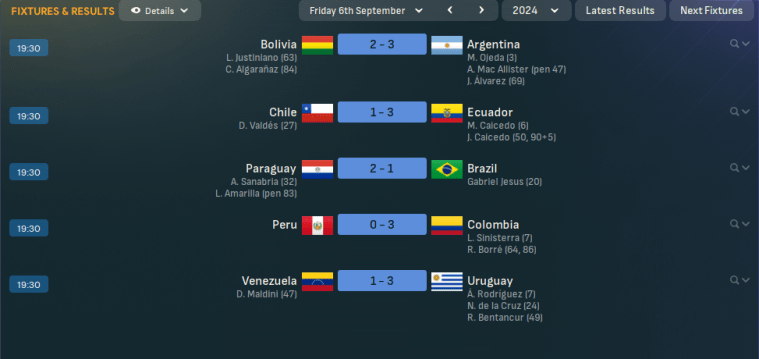
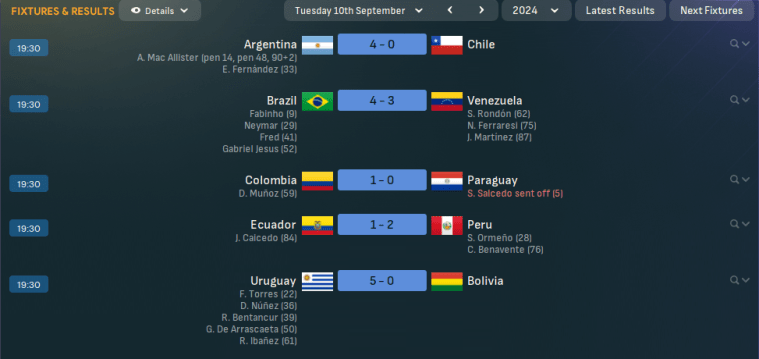
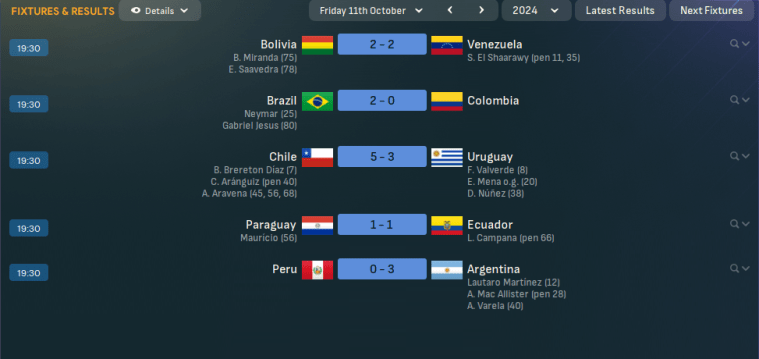
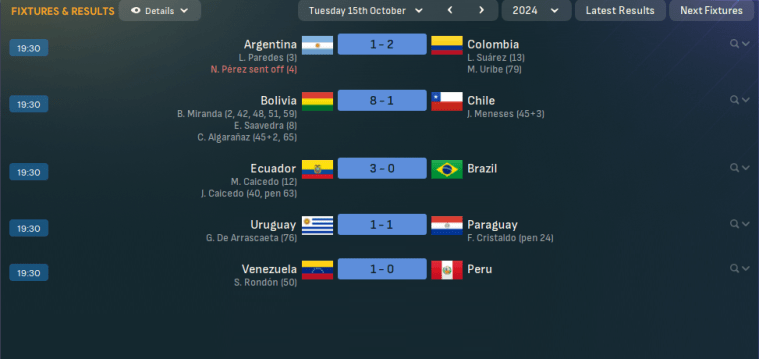
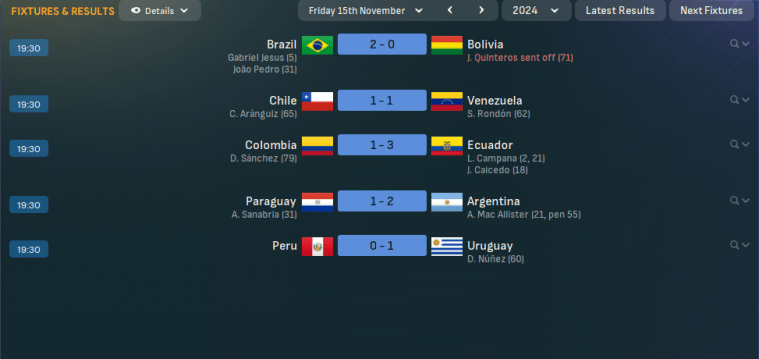
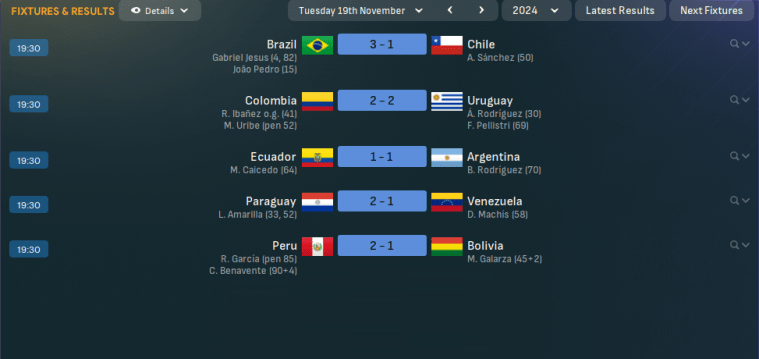
Argentina won the Copa América in the summer of 2024 (beating the United States in the Final, of all teams). They continued to make strong progress towards World Cup qualification later in the year – winning four of their next six matches to go top of the table. Their only defeat was at home to Colombia, thanks in part to a different Luis Suárez (the one who used to not play for Watford).
The Uruguayan Luis Suárez retired after the Copa América, while Marcelo Bielsa hung up his bucket at the same time. Despite that, La Celeste continued to march on under new coach Gustavo Poyet – with the unpredictable Darwin Núñez taking up the goalscoring baton and Roger Ibañez shoring up the backline. Uruguay remained in 2nd place, just ahead of Brazil.
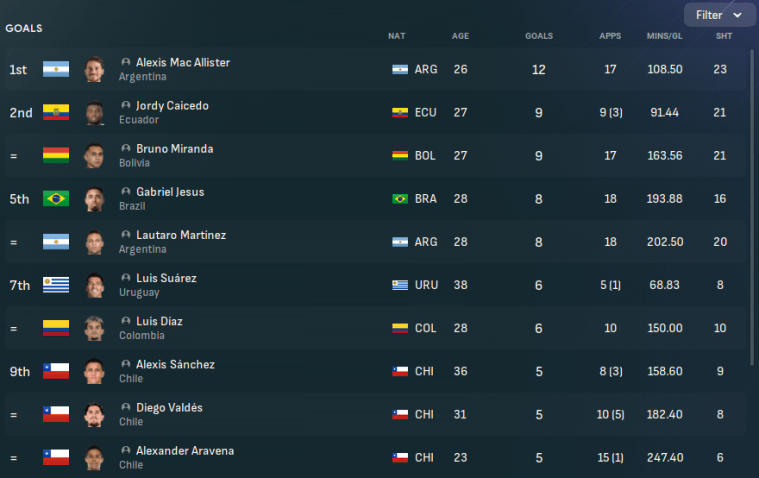
Meanwhile, Bolivia were cut adrift at the bottom after taking just two points at the halfway stage. Then they hosted 3rd-placed Chile in La Paz… and smashed them 8-1, with Bruno Miranda scoring FIVE goals! Look, I know altitude is a factor in FM, but I certainly wouldn’t expect a team like friggin’ Chile to suffer from severe altitude sickness!
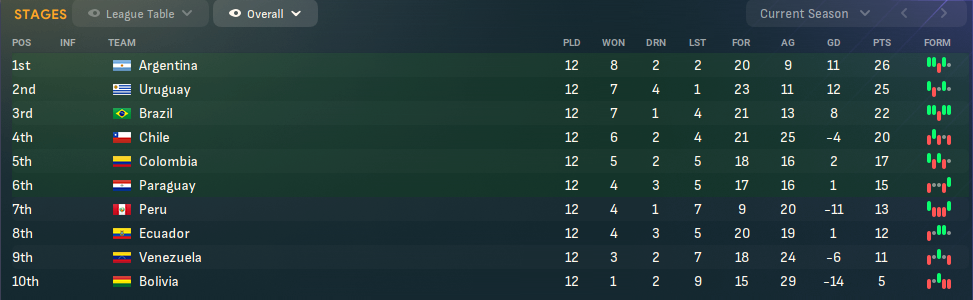
Despite the 8-1, Bolivia were still in a right old state with just six matches left to play. With Argentina, Uruguay and Brazil all closing in on their World Cup tickets, the race was on between everyone else to join them at the finals.
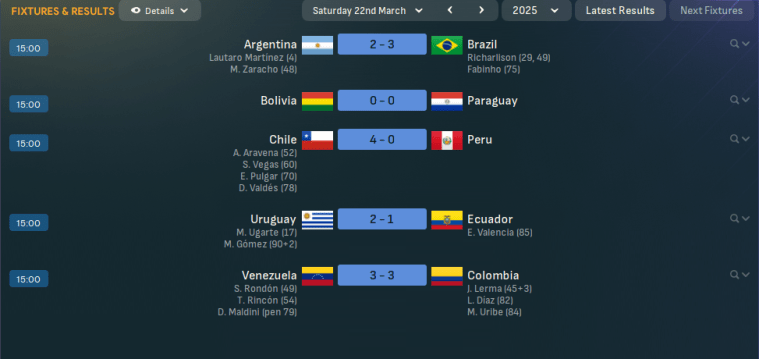
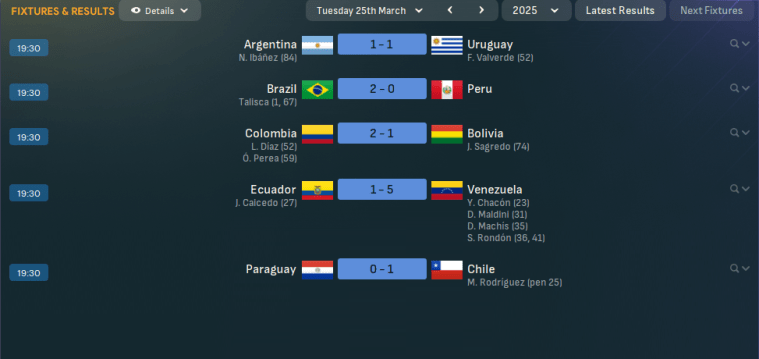
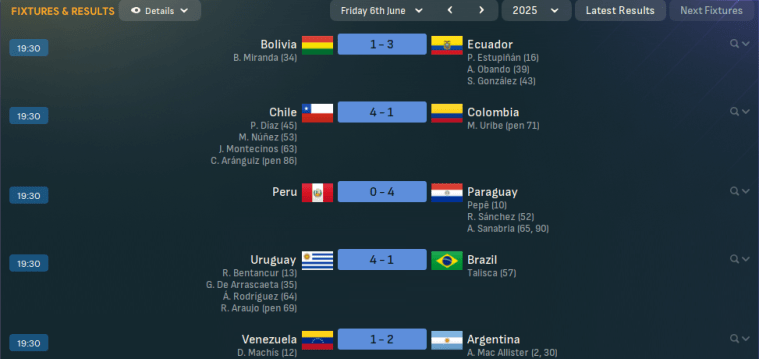
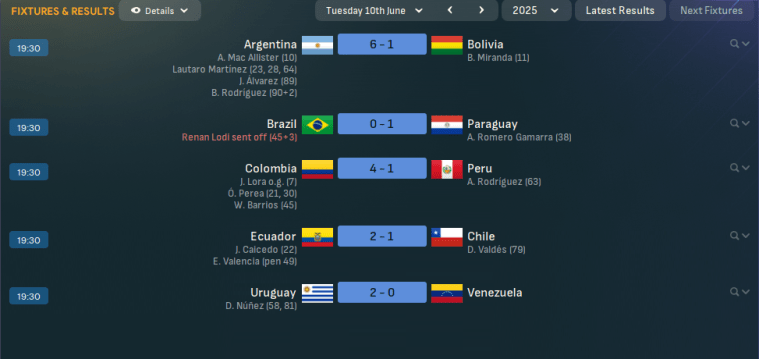
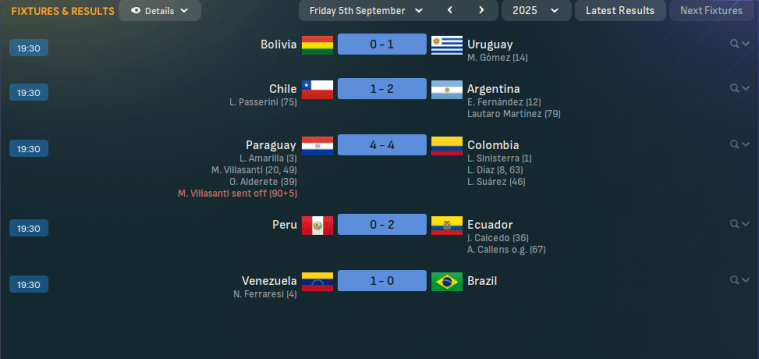
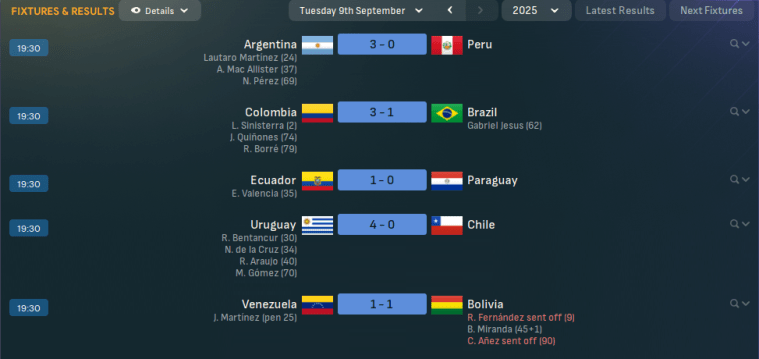
Uruguay and Brazil were the first teams to qualify – getting it done with a cool four games to spare. While Uruguay proceeded to win each of their final four matches and finish top of the group, the Seleção phoned it in and LOST their final four. Neymar didn’t happen to have any sisters celebrating their birthdays by any chance, did he?
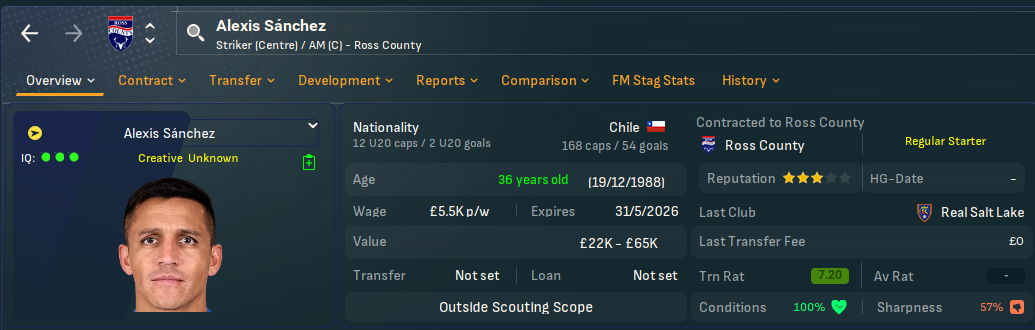
Unsurprisingly, Argentina would soon join them in the finals, as Mac Allister continued his fantastic scoring record against Venezuela to get it done. Chile also qualified, with Alexis Sánchez still going strong at the age of 36. After getting a brief taste of American soccer with Real Salt Lake, the little maestro had found another new club where he could finish his illustrious career…
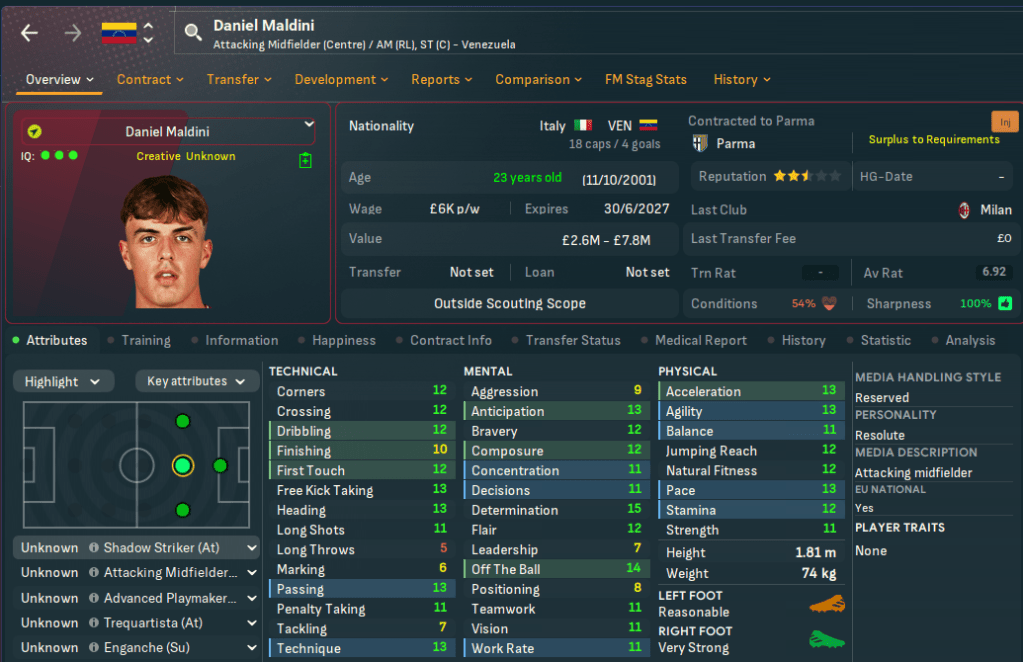
In the penultimate round, Colombia played out a thrilling 4-4 draw with Paraguay that saw them through as well. Despite beating Brazil, a valiant Venezuela team would join Peru and Bolivia on the scrapheap. The World Cup dream was over for Stephan El Shaarawy… and for Paolo Maldini’s son Daniel, who did at least get a couple of goals for La Vinotinto.
And so, CONMEBOL’s 6th and final automatic place in the World Cup would be decided in what was effectively a play-off between Ecuador and Paraguay. The hosts had to win; Paraguay needed a draw.
Ecuador dominated the early stages, and when Willian Pacho won a penalty in the 20th minute, veteran forward Enner Valencia stepped forward with a chance to give them the lead… only to screw it wide. But just 15 minutes later, he well and truly made amends.
A truly classy finish from Valencia, not to mention a lovely assist from… [checks notes] Byron Castillo. Huh. That’s awkward.
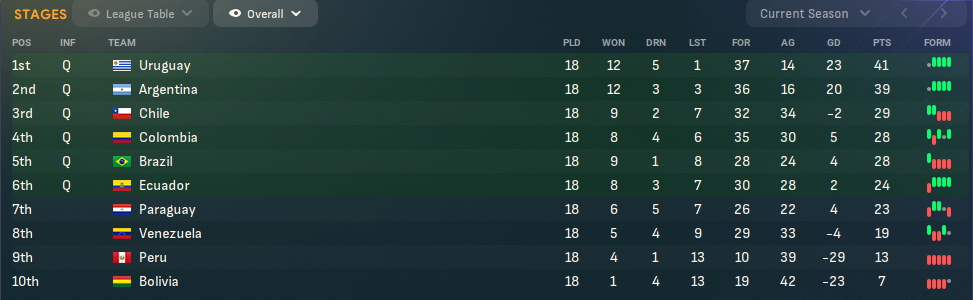
And so, after even more Castillo controversy, Ecuador had won 1-0 and nicked a place at the World Cup. Paraguay finished 7th and would have to go through the intercontinental play-offs.
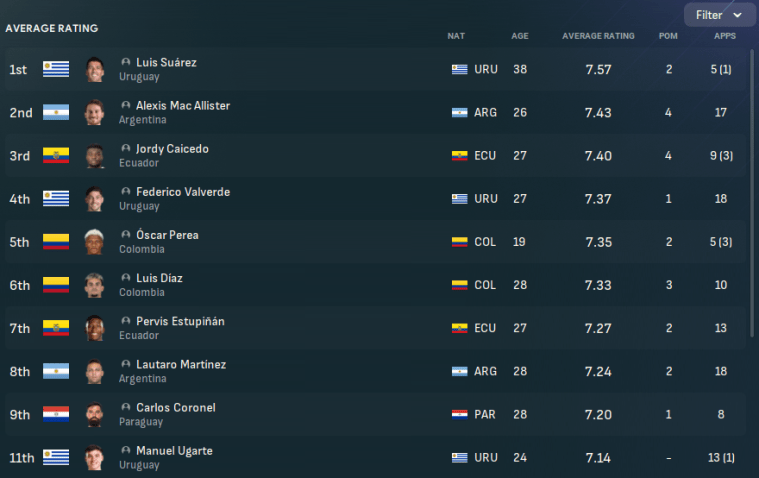
CONMEBOL QUALIFYING STATS
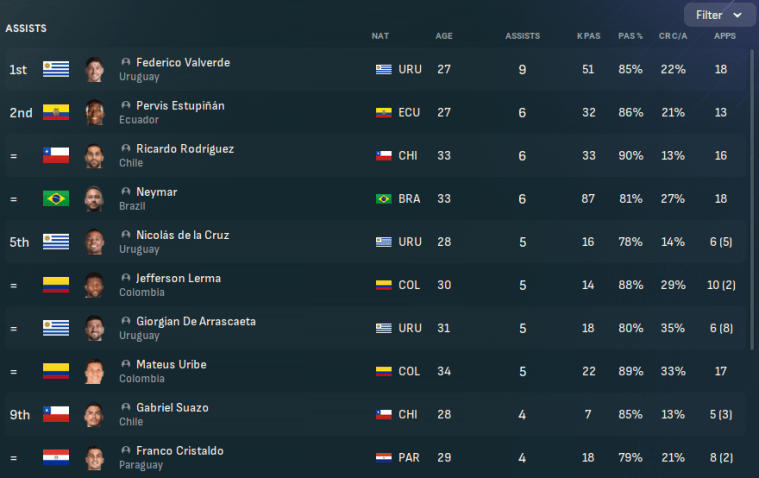
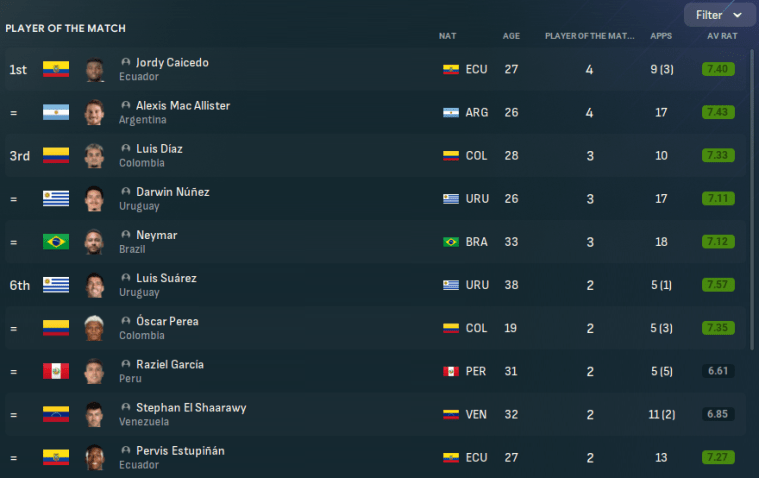
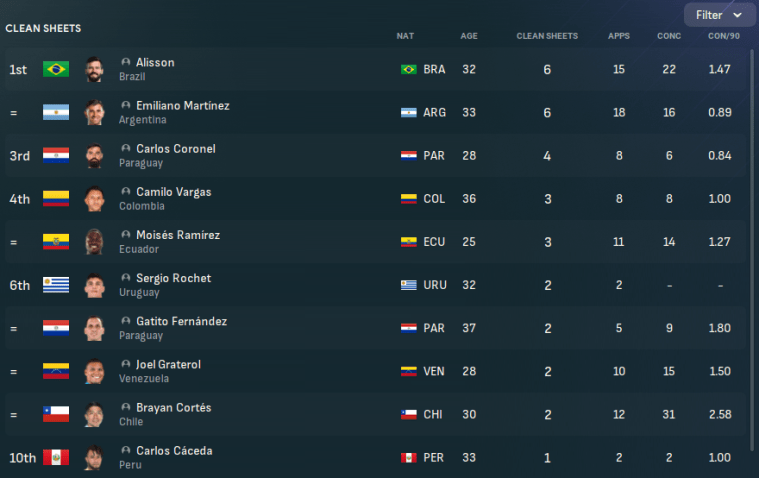
INTERCONTINENTAL PLAY-OFFS
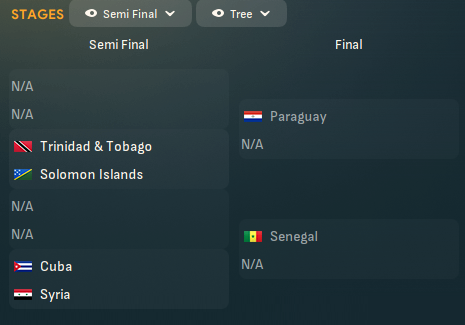
Paraguay would be joined in the intercontinental play-offs by the Solomon Islands, Syria, Senegal, Cuba, and Trinidad & Tobago. In March 2026, those six teams battled it out for the final two spots at the World Cup later that summer.
The play-off teams were split into two draw brackets – each with a World Cup ticket at stake. As the highest-ranked teams in the competition, both Paraguay and Senegal were given byes to the Finals. La Albirroja would play either Trinidad & Tobago or the Solomon Islands, while the African giants awaited the winner of Cuba vs Syria.
SEMI FINALS

Trinidad & Tobago opened up the play-offs with a deserved 3-1 win over the Solomon Islands. Duane Muckette mucked in with a couple of goals as the Soca Warriors survived a red card to Daniel Phillips and moved one step away from qualification. Though the Solomons grabbed a consolation goal in injury time, their ride was over.
It was also the end of the road for Cuba, after their goalkeeper Christian Joel Sánchez morphed into Robert Sánchez – and made an absolute howler in the 35th minute! Syria’s defence then dug in deep to preserve their 1-0 lead and set up an all-or-nothing showdown with Senegal.
FINALS

The Trinidadians started brightly against Paraguay by taking the lead twice in the first 20 minutes, only to be stung by a couple of Luis Amarilla equalisers. Amarilla then completed his hat-trick as La Albirroja ran rampant in the second half – winning 5-2 to book their place in the tournament.
But sadly for Syria, their 22nd match of the qualification campaign would end in heartache. Senegal’s class was just too great to overcome, and despite a valiant Syrian fightback in the closing stages, Leroy Sané struck in injury-time to complete a 4-2 win. The Lions of Teranga thus became the 45th and final team to qualify for the 2026 World Cup.
GROUP STAGE DRAW
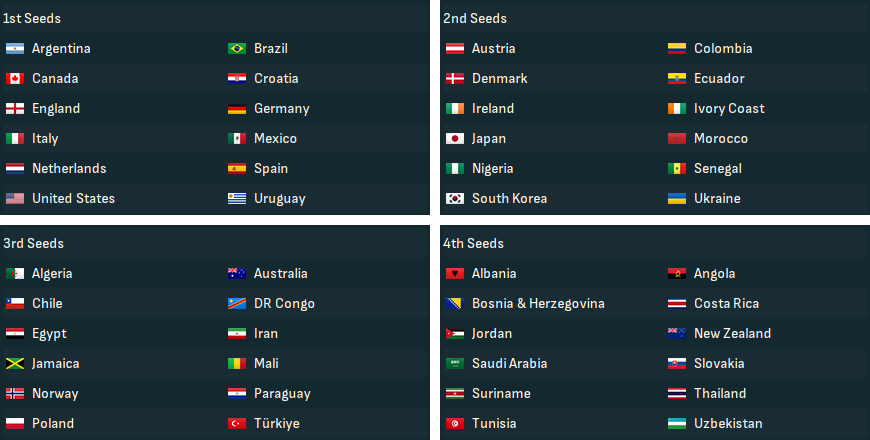
With the 48 teams now set in stone, all that was left to do was to draw the groups. The teams were split into four pots based on their world rankings, with the top nine nations (minus France and Belgium, lol) joining the co-hosts in Pot 1. The United States, Canada and Mexico would automatically be drawn into Groups A, B and C respectively.
The 12 groups were assigned one team from each of the four pots. As per FIFA rules, there could not be more than two UEFA teams in the same group – or more than one team from any other confederation.
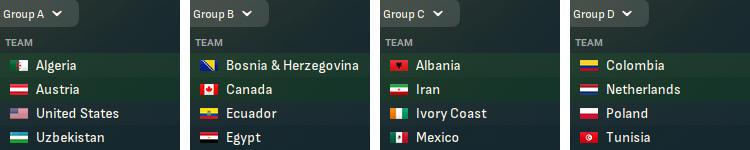
I’m sure it’s entirely coincidental that Gianni gave his good friend Donald a nice, easy Group A. The United States could have drawn tougher opponents than Austria and Algeria, that was for sure. For Uzbekistan, getting even a point out of their first World Cup would be a fine achievement.
Canada would face some slightly tougher assignments in Group B, where Canucks winger Omar Marmoush would face off against Egypt – and his old mate Mohamed Salah. The additions of Ecuador and Bosnia & Herzegovina would make this a very competitive and unpredictable pool.
Group C also looked hard to cool. Mexico’s road to an inevitable last-16 exit opened up against the Ivory Coast, with Iran and debutants Albania likely to pose threats later on after battling through difficult qualifying groups.
The Netherlands’ depleted squad would face three stern tests in Group D. Poland still had the evergreen Robert Lewandowski, Tunisia were one of the more convincing teams to qualify from Africa, and Colombia were a solid top-20 side in the FIFA rankings.
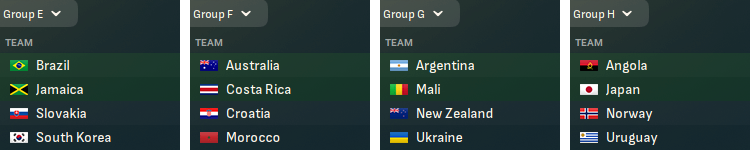
There was sure to be plenty of colour and entertainment when Brazil’s Samba stars opened up Group E against Jamaica’s irresistible Reggae Boyz. South Korea also harboured realistic hopes of reaching the knockout rounds, but Slovakia were expected to struggle.
Group F was another group that looked wide open. 2022 semi-finalists Croatia and Morocco had struggled to get back to their best form, giving fresh hope to Australia and Costa Rica that they could go on a run in the tournament.
Argentina were blessed with a seemingly simple Group G. N’Golo Kanté and Mali would not be pushovers by any means, but it would be a very emotional return to the World Cup stage for Ukraine. New Zealand would need to be at their very best to take anything away from this.
Uruguay’s reward for topping the CONMEBOL qualifiers was to be drawn into a very tricky-looking Group H. Not only did they have to contend with Norway’s unstoppable blonde cyborg, but they would also need to face a Japan team at the peak of its powers, and an Angola side full of high-end Portuguese talent.
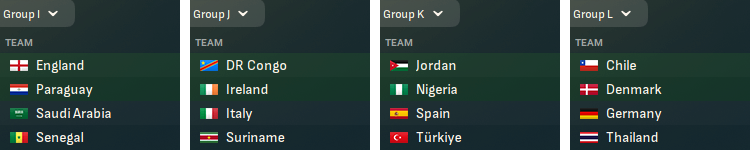
Tabloid newspapers in England were calling Group I a piece of P.S.S. – but the Three Lions should be wary of complacency. Paraguay and Senegal would both be eager to impress after sneaking in through the back door, and Saudi Arabia showed at the last World Cup that they really could beat anyone.
Group J was billed as the ‘Group of Death’, and with good reason. Italy’s first World Cup since 2014 would pit them against three teams who had all undergone massive upgrades. Romelu Lukaku’s DR Congo and Harry Kane’s Republic of Ireland were each rated as dark horses, and even Suriname looked capable these days.
Group K handed Spain’s South American imports a shot at swift revenge on Türkiye, who finished top of their qualifying group. They would also face Nigeria, who would arrive in North America with serious title aspirations after winning the 2026 Africa Cup of Nations. Jordan’s debut looked like being a brutal experience.
Last, but not least, we have Group L. Germany were spotless in their qualifying group, while Denmark had also been very impressive in knocking out Les Bleus. Chile’s ageing team were in transition and would perhaps struggle to upset the top two seeds, with newcomers Thailand expected to bring up the rear.
So now we know the 48 teams at the Fairer World Cup, and the groups they’ll be competing in. Now the fun can really begin!
The World Cup Group Stage in real-life is gonna be a 17-day slog to eliminate 16 teams. I promise I won’t take quite as long with my virtual tournament. Over the next fortnight, I’ll be taking you through the group phase in SIX chapters – with each chapter covering TWO groups in full.
So please, join me next Monday, when the Fairer World Cup kicks off with all the highlights from Groups A and B – featuring the United States, Canada and Uzbekistan!

