
We’re back with the Fairer World Cup on Football Manager 2024, where we find out what would happen if players represented the weakest national teams available to them.
So far, we have gone through the qualifiers in Oceania and in Asia. Feel free to catch up if you haven’t already.
As far as this chapter is concerned, we’re now heading to Africa, where we’ll meet a load of big-name players in their new national colours. With only nine World Cup places and a play-off spot up for grabs, there will be some major casualties… but we might also come across a serious title contender or two.
THE QUALIFIERS: AFRICA
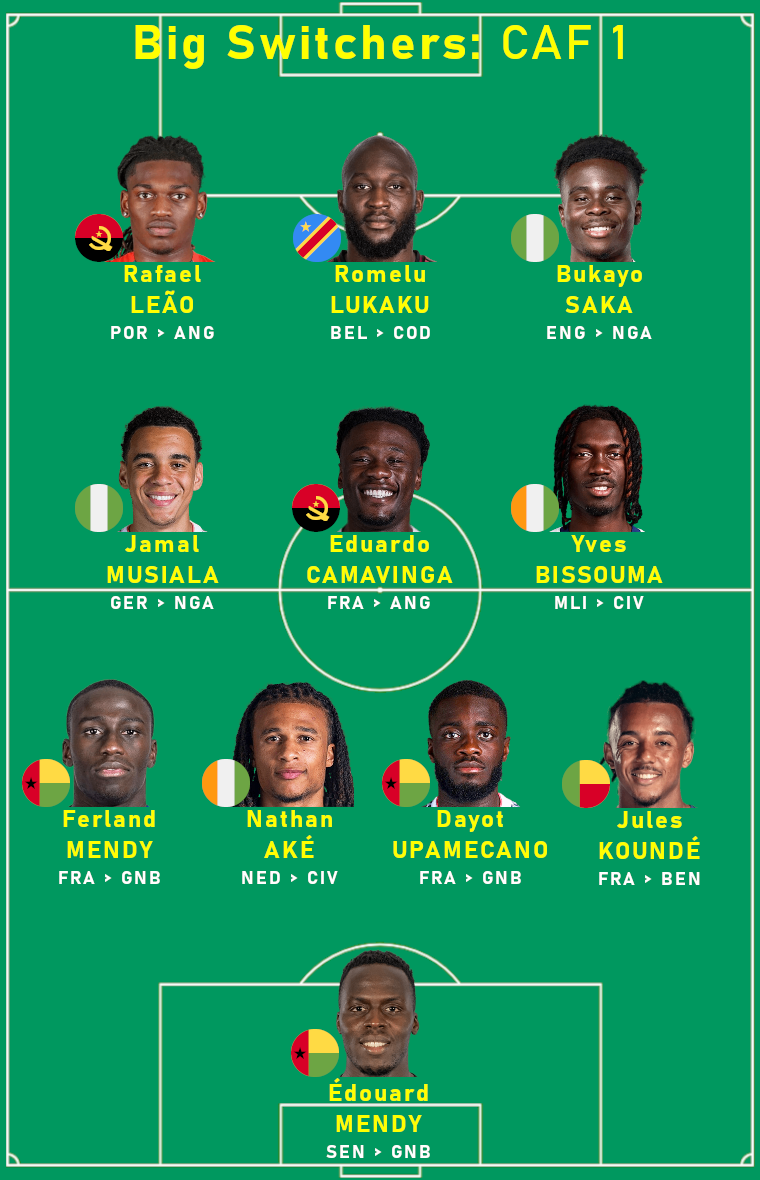
With players now forced to represent their ‘weakest’ available nationality, it’s perhaps no surprise that African nations have benefitted the most – snapping up many of Europe’s top talents. Although 2022 World Cup semi-finalists Morocco are perhaps slightly worse off after losing their goalkeeper Bono to Canada, several of their rivals look capable of matching their achievement – and perhaps even going all the way.
DR Congo will be hotly-fancied after winning the 2024 Africa Cup of Nations with their vast array of French and Belgian attackers. If Romelu Lukaku can’t fire the Leopards safely into the finals, then at least one of Christopher Nkunku, Randal Kolo Muani and Loïs Openda surely will.
Maybe you’re a (Carlos) Baleba in Afcon runners-up Cameroon, who’ve beefed up their spine with Samuel Umtiti, Aurélien Tchouameni and the precocious Youssoufa Moukoko? Or perhaps Ghana’s Black Stars can realise their potential at long last, now that Nico Williams has joined his elder brother Iñaki?
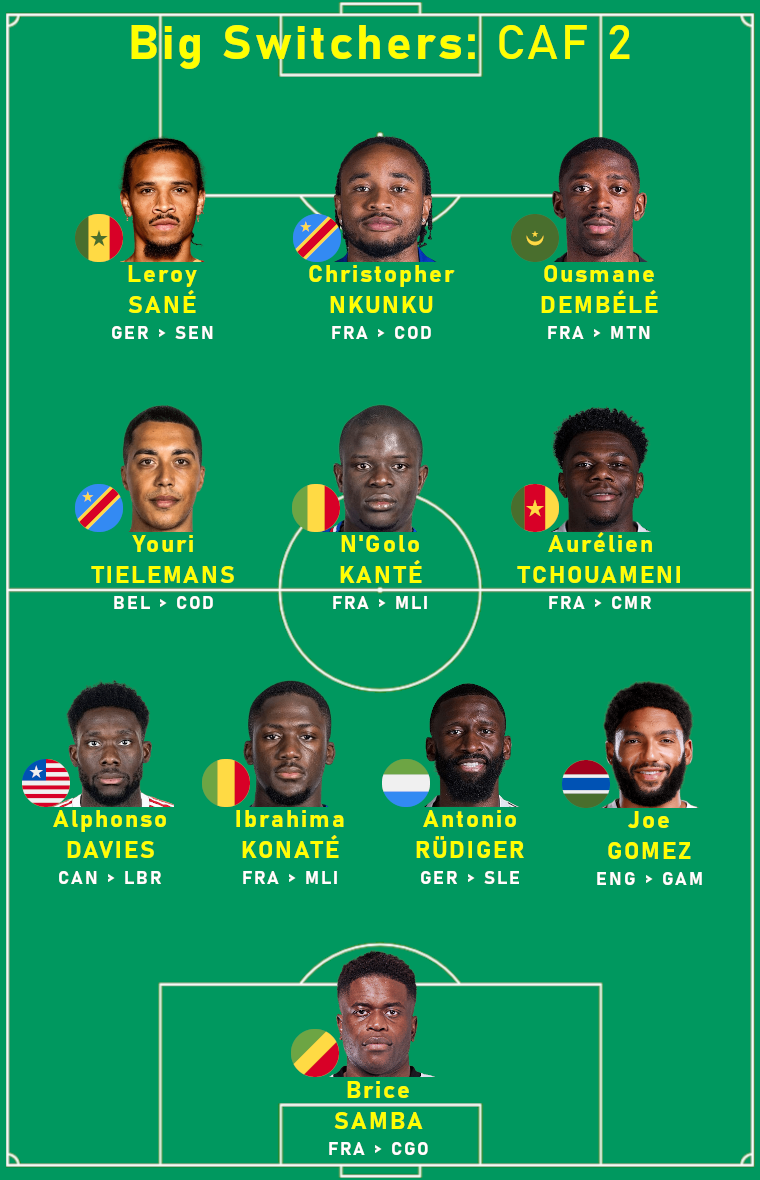
Several nations will hope that their new superstars can lead them to a World Cup debut. Timothy Weah will aim to achieve something with Liberia that his father George never did, while left-back Alphonso Davies provides the ‘Lone Star’ with serious world-class quality out wide.
Meanwhile, Ousmane Dembélé and Kingsley Coman will add their attacking talents out wide to Mauritania and Guinea respectively. Guinea-Bissau have inherited a world-class defensive line, and Equatorial Guinea have got themselves a little-known 16-year-old Catalan kid named Lamine Yamal.
But without a doubt my team to watch is Nigeria’s Super Eagles – now made even more super by Messrs Saka, Musiala, Adeyemi, Olise, Eze… and Ross Barkley! I could go on. In fact, I ran a couple of quick simulations on this database before starting the save proper, and Nigeria won the 2026 World Cup in BOTH of them. If that’s a sign of things to come, my Nigerian readers should be VERY excited…
ROUND 1
The African qualifiers are brutal. The teams are divided into nine groups of six teams apiece, but only the group winners will qualify automatically for the World Cup. The four best runners-up will then advance to Round 2, where they will battle it out for a place in the intercontinental playoffs.
GROUP 1
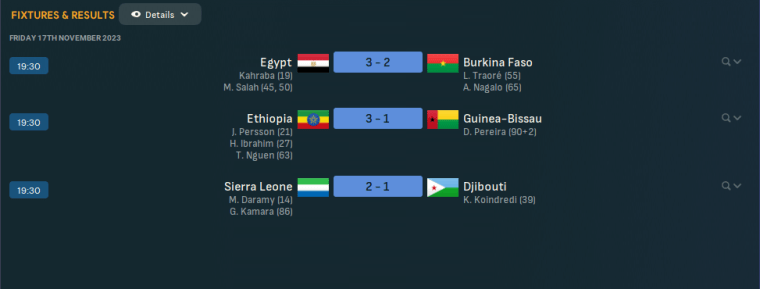
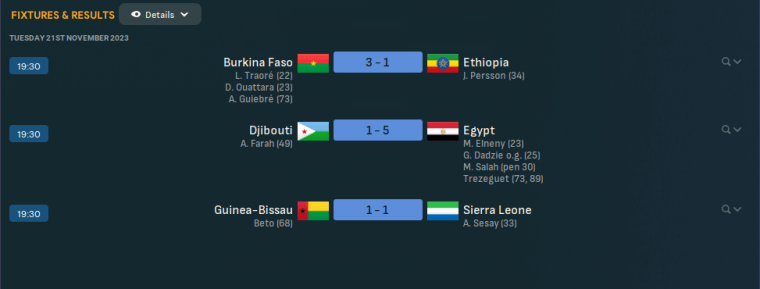
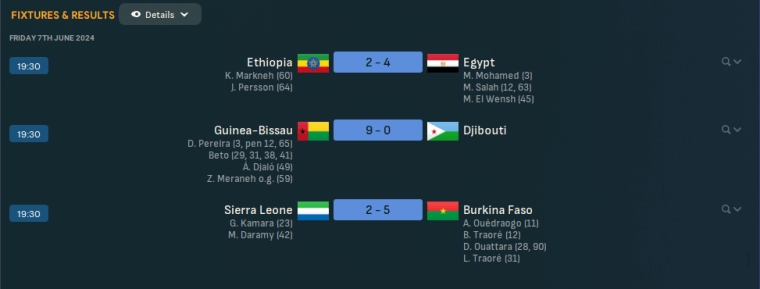
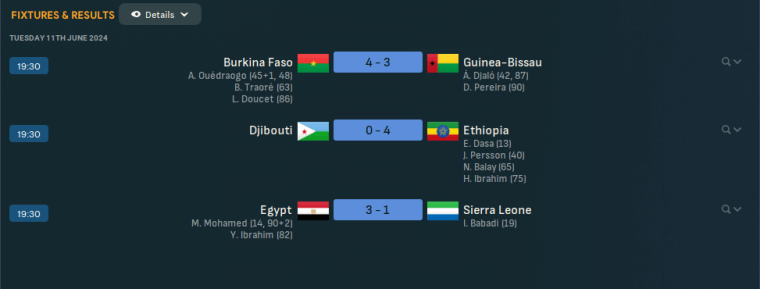
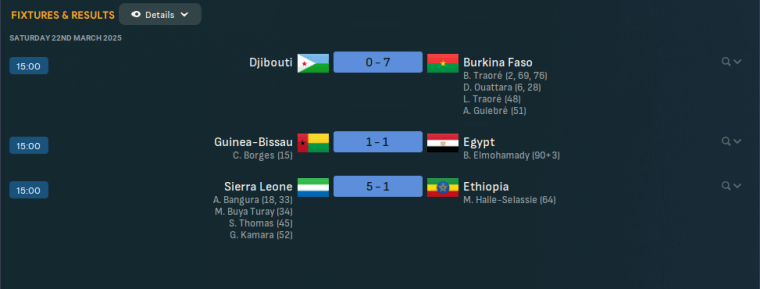
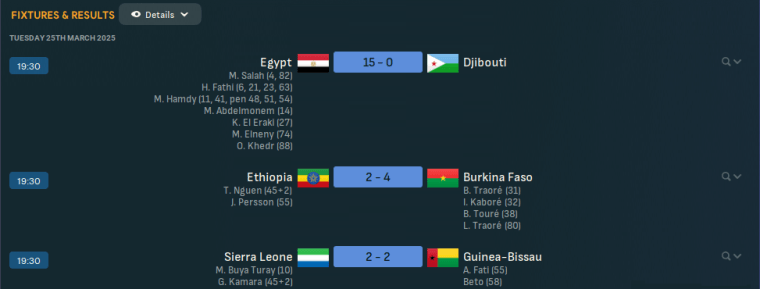
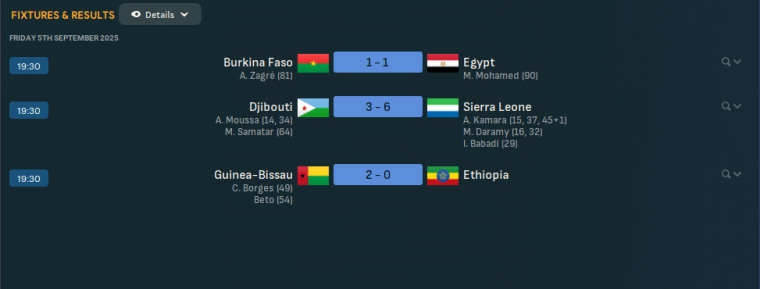
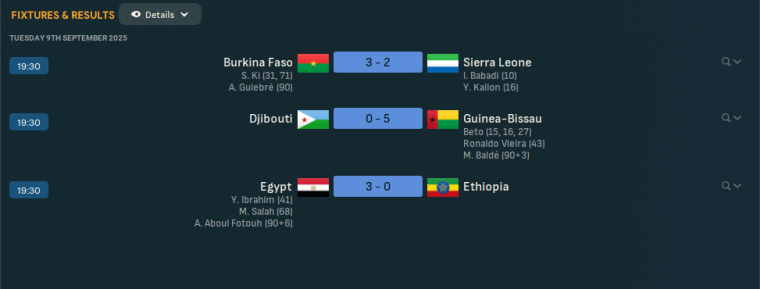
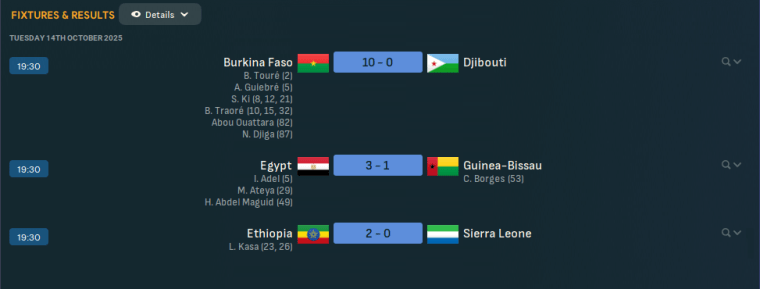
Despite almost blowing a 3-0 lead in their opener against Burkina Faso, Egypt quickly consolidated their place as group favourites. The Pharaohs strolled to the top of the standings with four more wins… and yes, they really did thump Djibouti 15-0! Even more incredibly, Mohamed Salah only scored twice in that game!
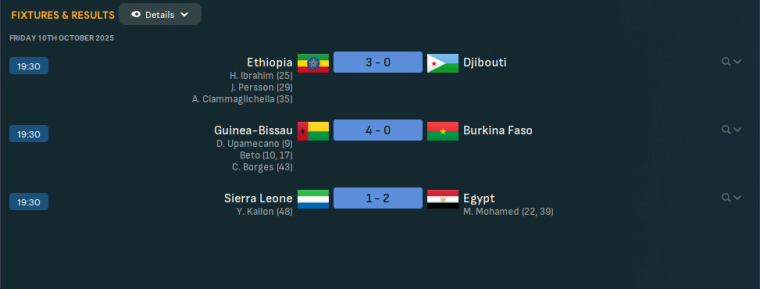
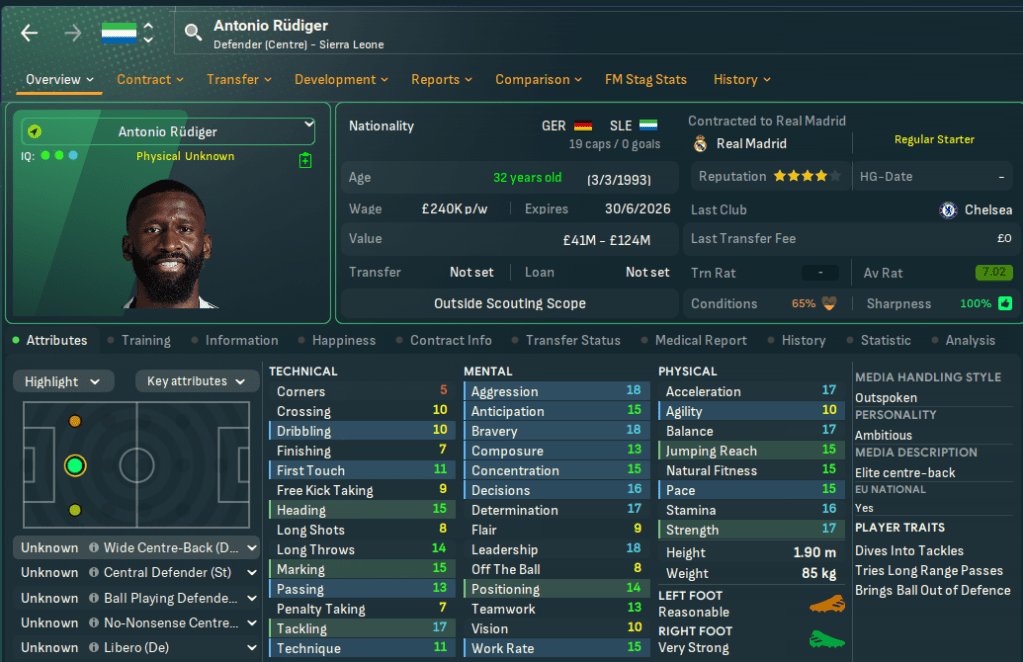
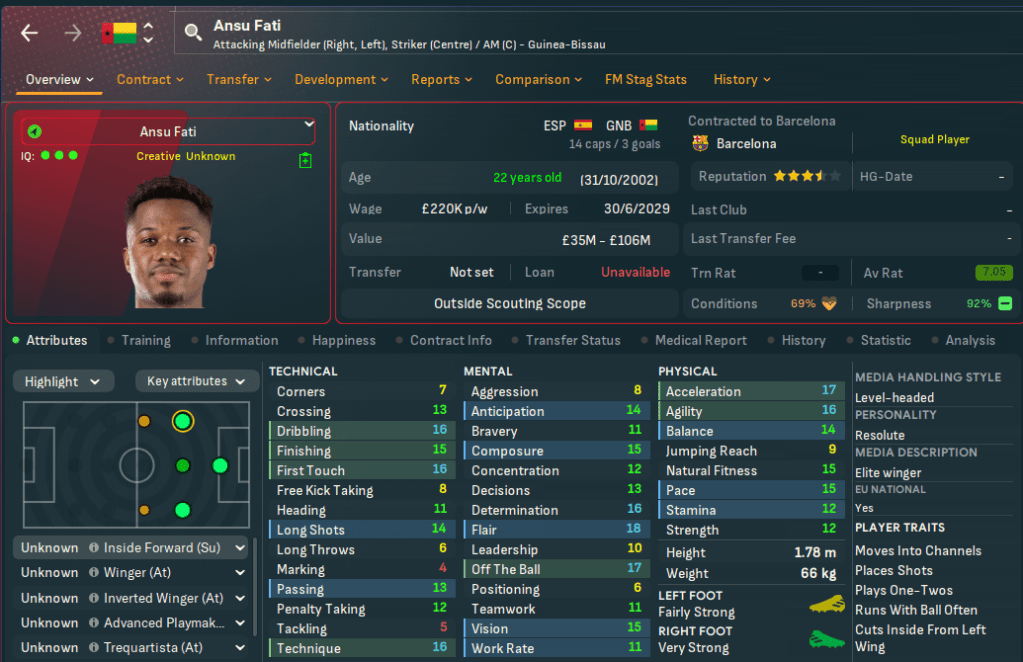
But Burkina Faso remained hot on their heels, reeling off five straight victories to set up a massive showdown in Ouagadougou, which would surely decide who qualified automatically. Despite their best efforts, Antonio Rüdiger’s Sierra Leone and Ansu Fati’s Guinea-Bissau had perhaps left it too late to enter the conversation.
As expected, Egypt marched on into the finals. After surviving a major scare in Burkina Faso, the Pharaohs won their final three matches and finished top of the group by four points.
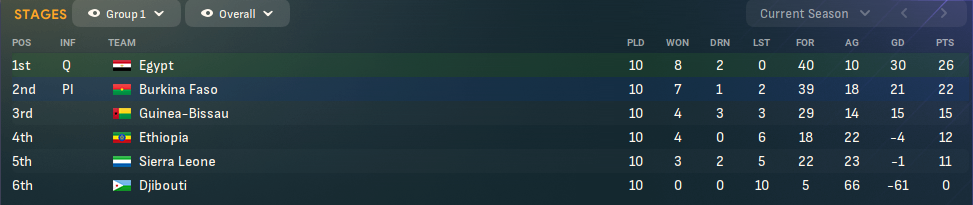
While Egypt notched up 40 goals, Burkina Faso themselves bagged 39 (though to be fair, a huge chunk of those were also against Djibouti) and had an incredible 26% shot conversion rate. Les Étalons deservedly booked a place in Round 2, where Bertrand Traoré and Dango Ouattara would hope to fire them into the finals as well.
GROUP 2
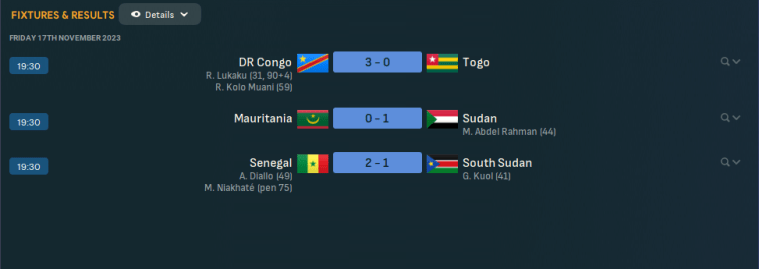
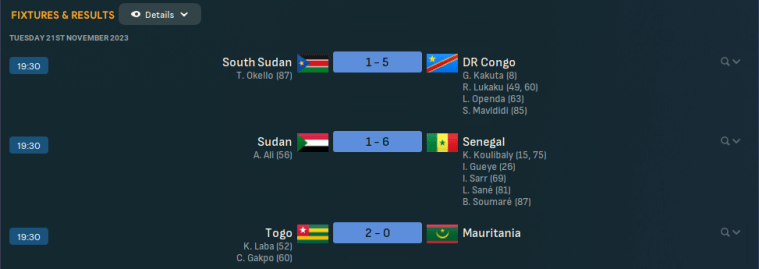
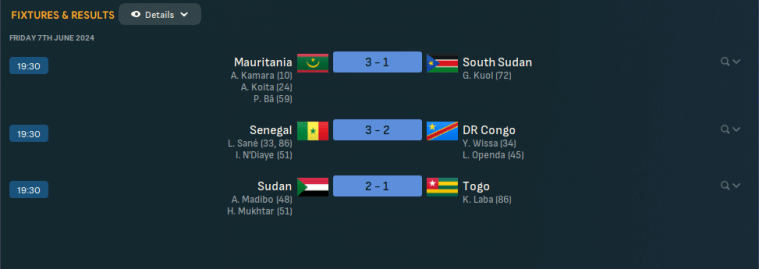
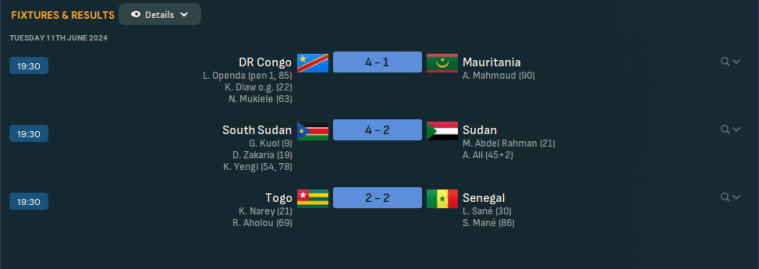
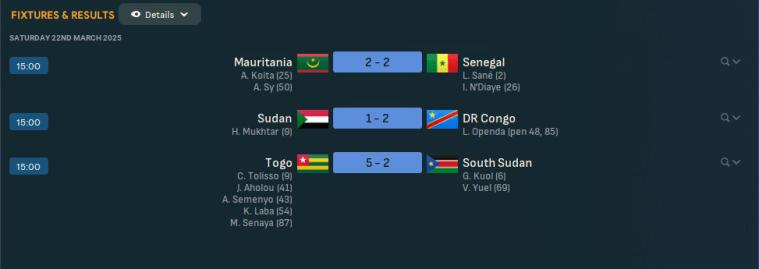
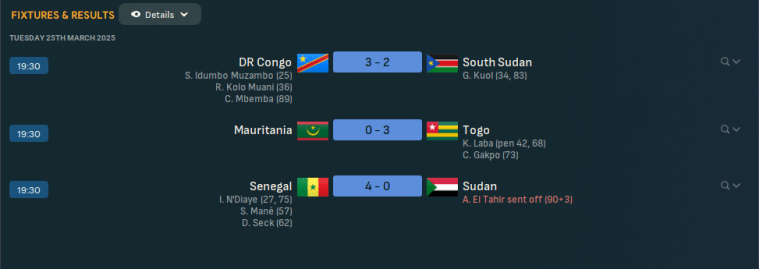
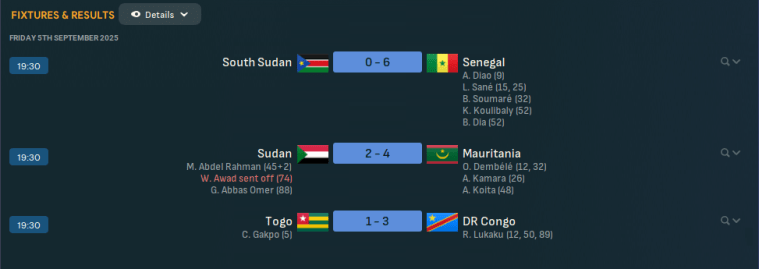
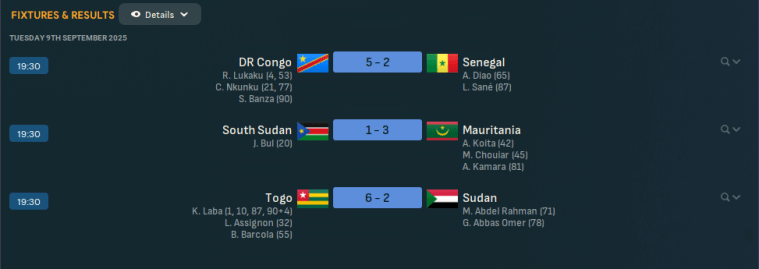
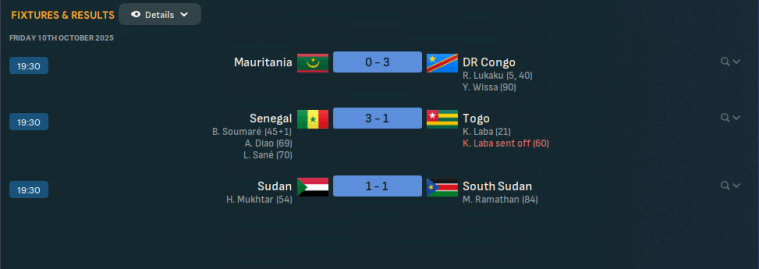
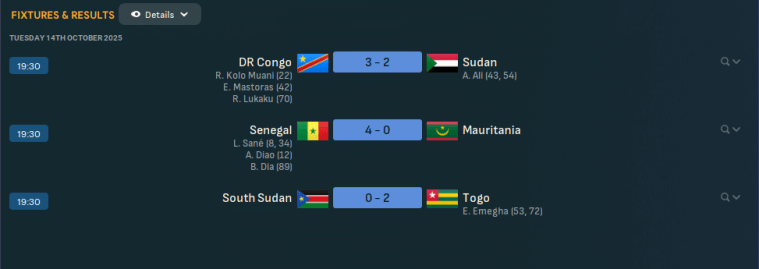
Group 2 was always likely to come down to either Senegal or DR Congo. Senegal struck an early blow when Leroy Sané’s late strike secured a thrilling 3-2 win in Dakar, but a couple of poor draws allowed their biggest challengers to leapfrog them. Six goals from RB Leipzig’s Loïs Openda had put DR Congo in the driver’s seat after their first six matches.
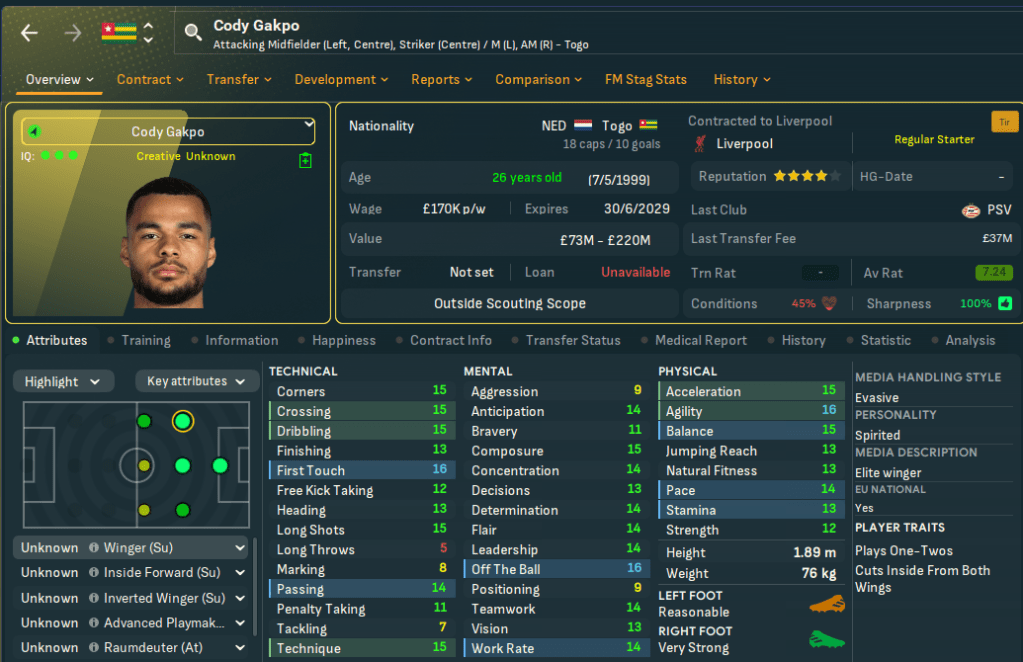
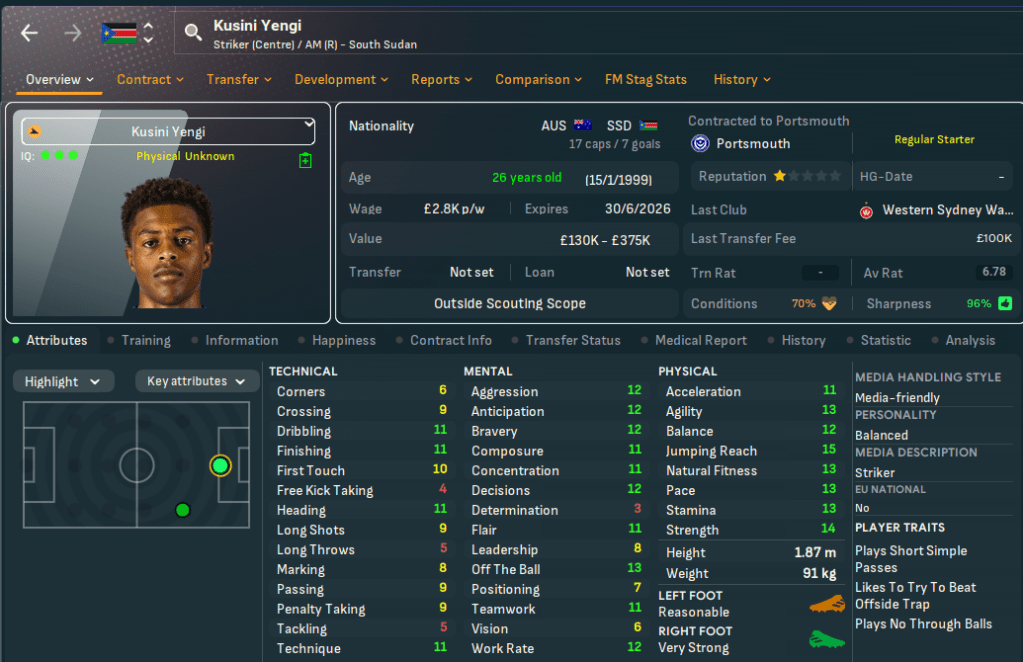
Cody Gakpo might have taken Togo up to 3rd, but they were perhaps unlikely to last the distance. And even though Kusini Yengi’s double had secured South Sudan a famous 4-2 victory over their bigger neighbours Sudan, the world’s youngest country was still bringing up the rear.
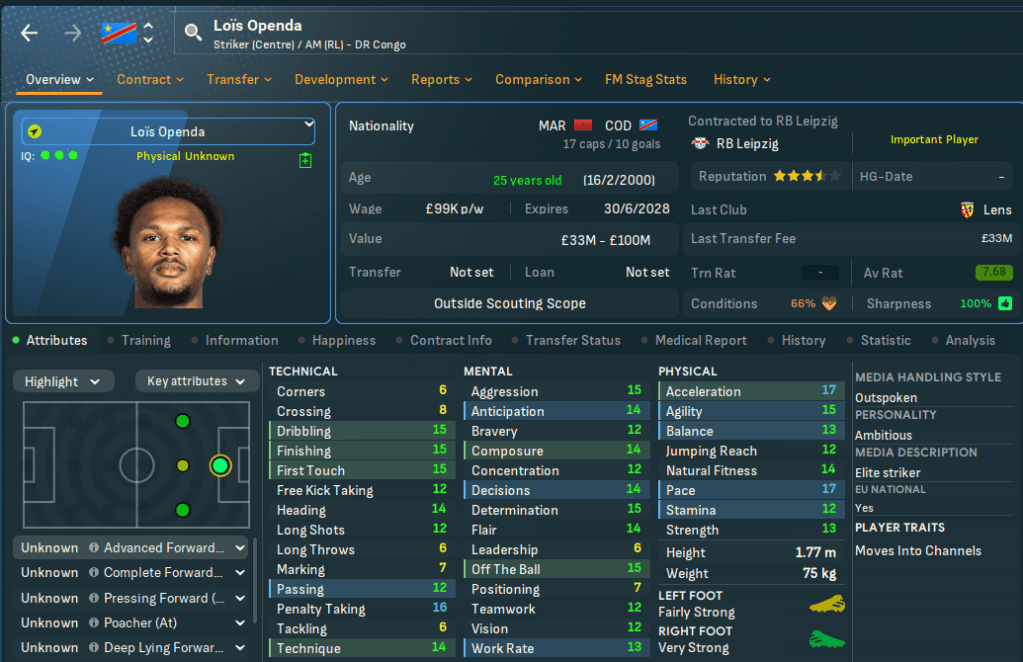
The battle for top spot effectively came down to a high-octane battle in Kinshasa. Romelu Lukaku and Christopher Nkunku notched up two goals apiece as DR Congo exacted revenge and prevailed 5-2 over Senegal – essentially sending them on their way to the World Cup. Lukaku would finish the qualifying campaign with the joint-most goals in Africa (12) and the highest average rating (8.78).
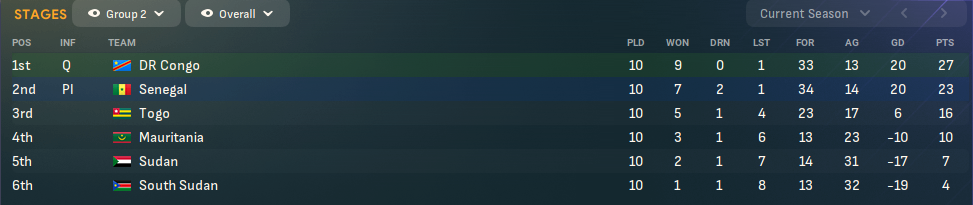
So it was Round 2 for Senegal. With Leroy Sané having found the net 11 times already, the Lions of Teranga would likely be the team to beat.
GROUP 3
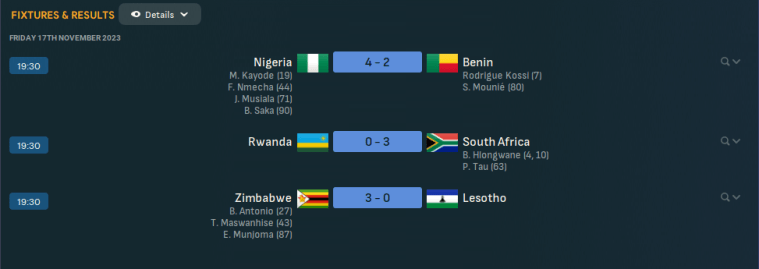
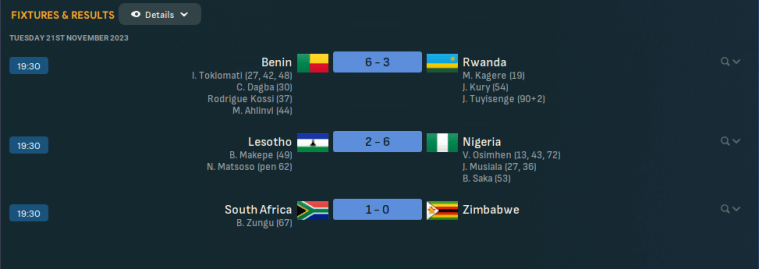
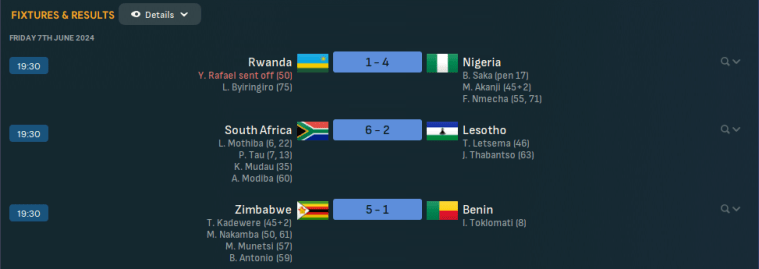
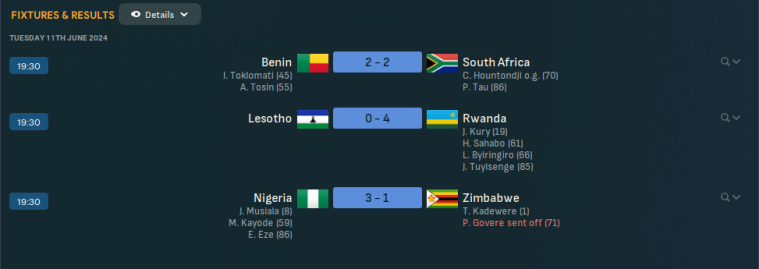
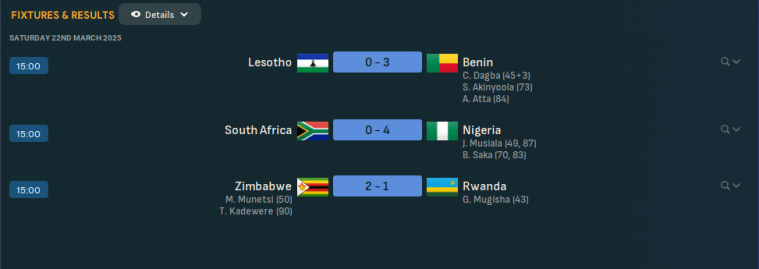
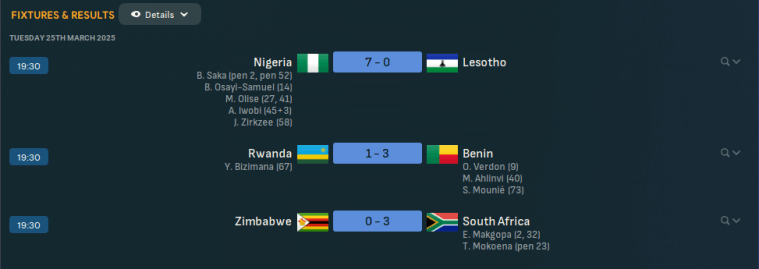
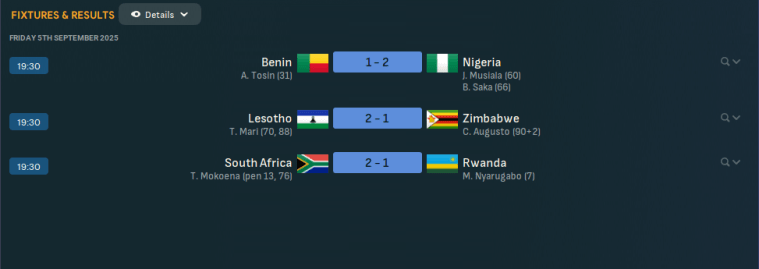
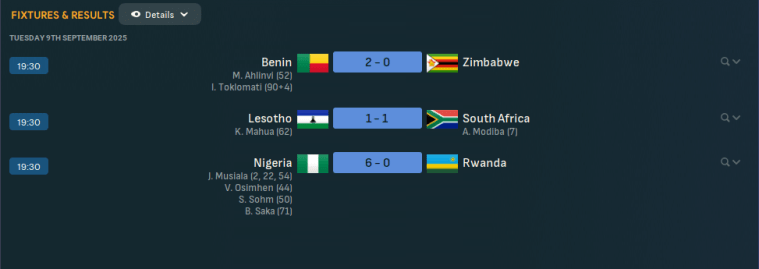
Nigeria meant business. Six straight wins, seven goals for Bukayo Saka, and some sensational midfield performances from Jamal Musiala left the Super Eagles comfortably clear in Group 3 at the halfway stage. It would take a greater catastrophe than their real-life 2026 qualifying campaign to deny them a place at the Fairer World Cup finals.
So now it appeared everyone else was fighting for 2nd. South Africa were looking good after a narrow win over Zimbabwe, and a spirited comeback from 2-0 down in Benin. Perhaps it might be time to get your vocal cords warmed up, Peter…
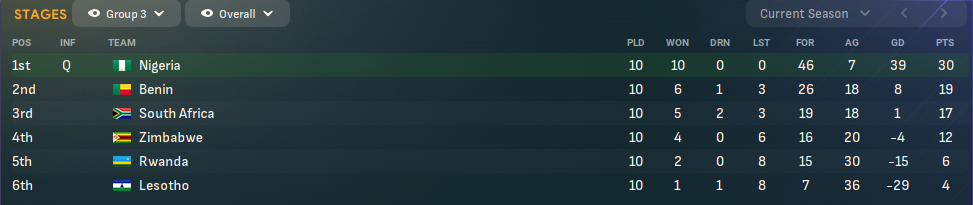
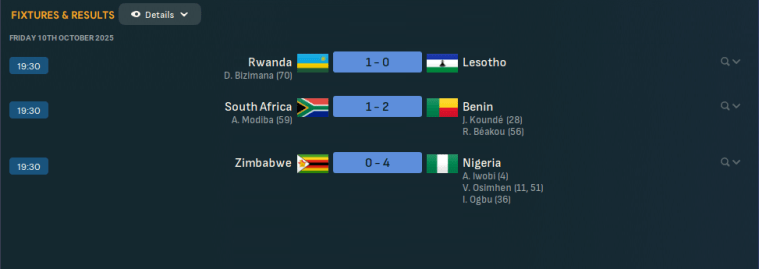
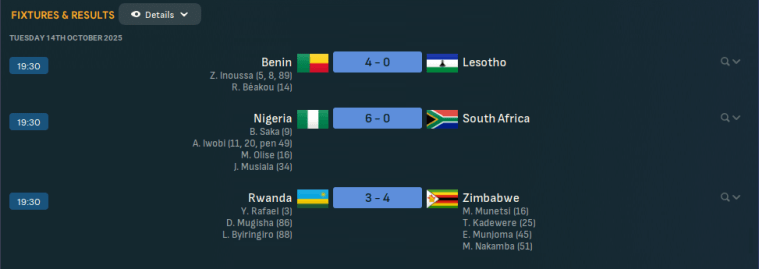
Sure enough, Nigeria qualified for the 2026 World Cup with absolutely no problems whatsoever. They would power over the line with a perfect 10 wins out of 10 – the only African team to achieve that feat. Watch out for the Super Eagles when they land in North America.
South Africa held 2nd place right up until the final straight, when they lost 2-1 at home to Benin and were then hit for six by the rampant Nigerians. Benin overtook them at the death, but unfortunately had not picked up enough points to reach Round 2. Jules Koundé would not be going to the finals.
GROUP 4
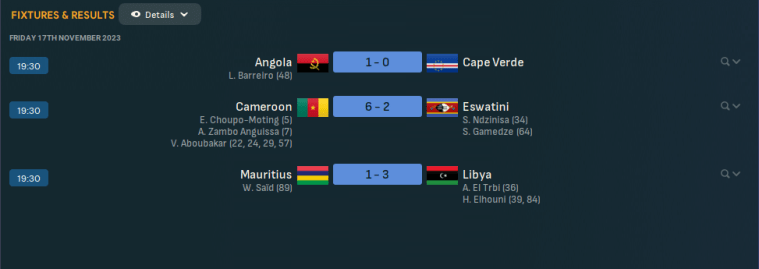
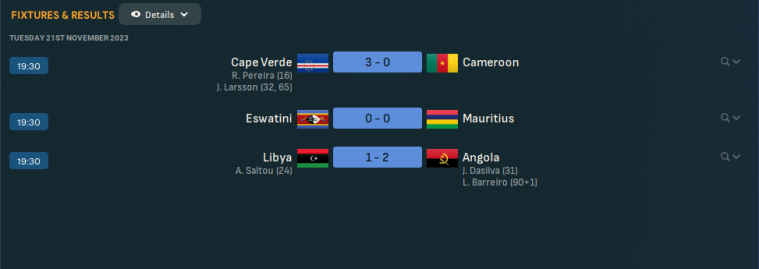
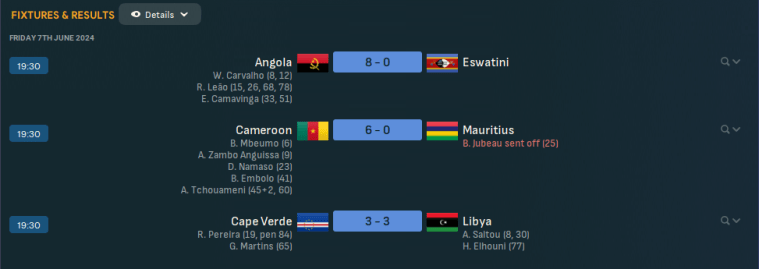
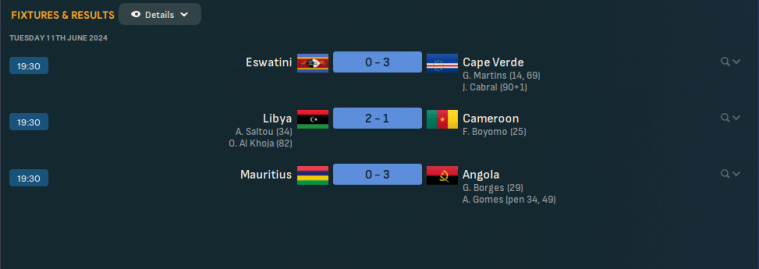
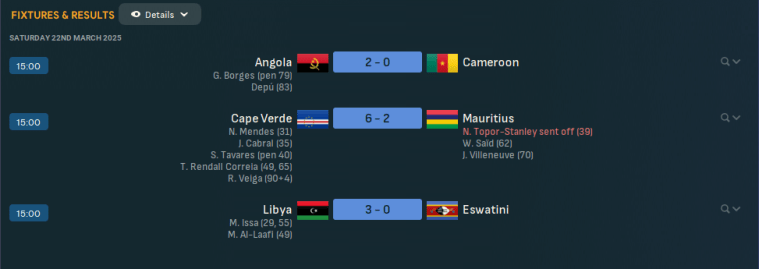
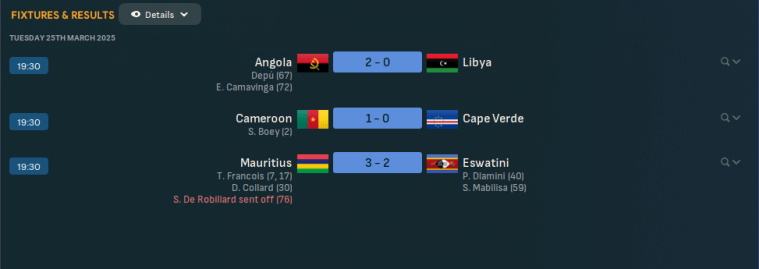
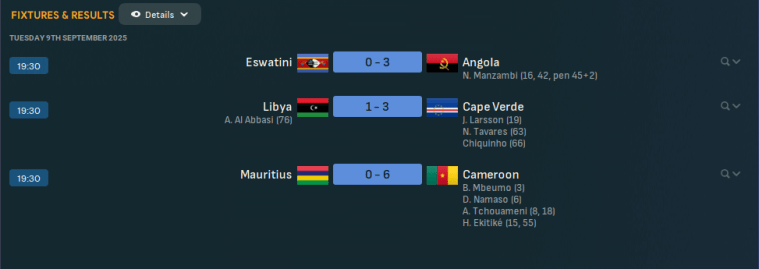
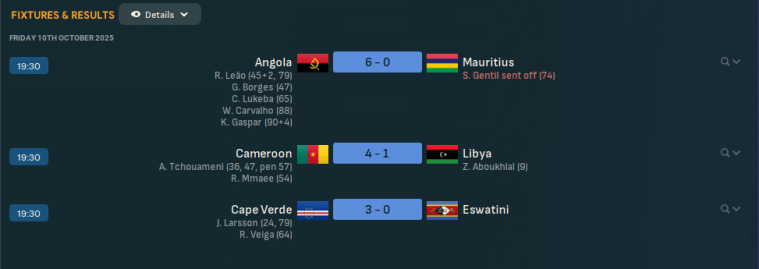
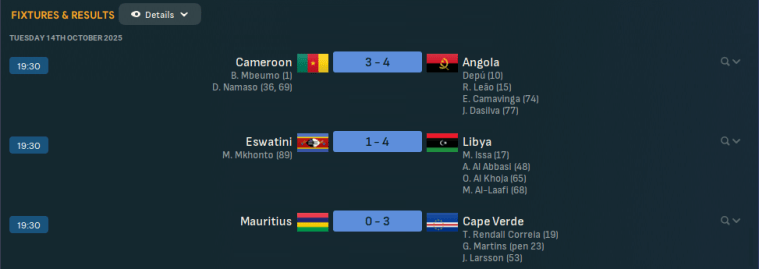
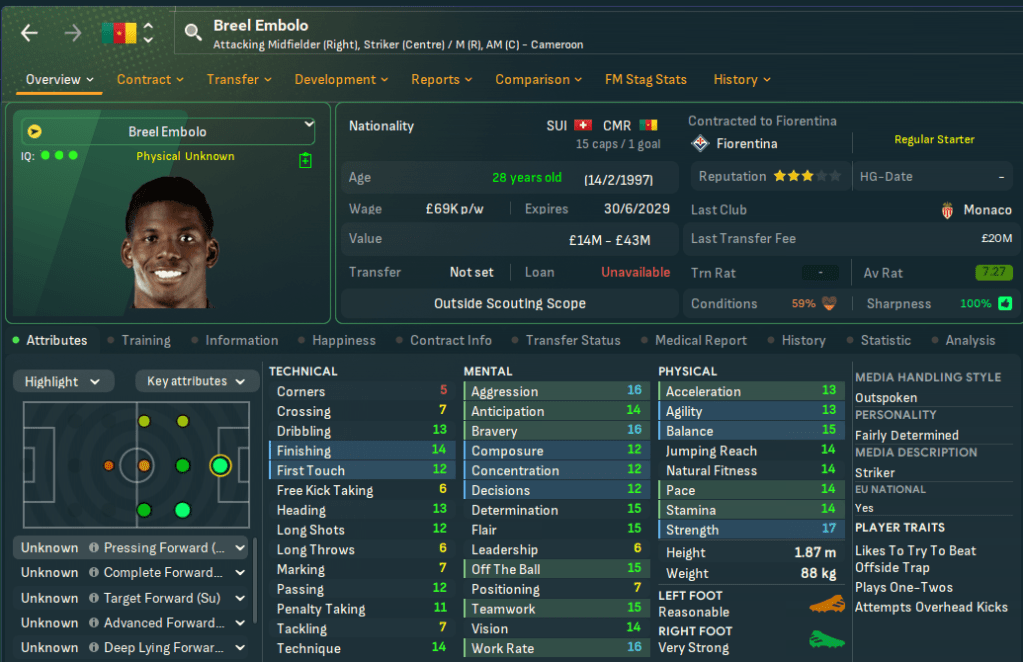
Oh my word, what happened to Cameroon? Indomitable on home soil, but indefensible on the road! With Breel Embolo unable to hit a barn door against any team not named Mauritius, Rigobert Song’s troops faced an almighty battle just to give themselves a sniff at qualifying.
By contrast, Angola were racing away with the group. After pinching a 1-0 victory over Cape Verde in their opening fixture, the Palancas Negras just couldn’t stop winning. Thanks to a classy midfield three of Florentino Luís, Eduardo Camavinga and William Carvalho, they were already miles clear at the halfway stage.
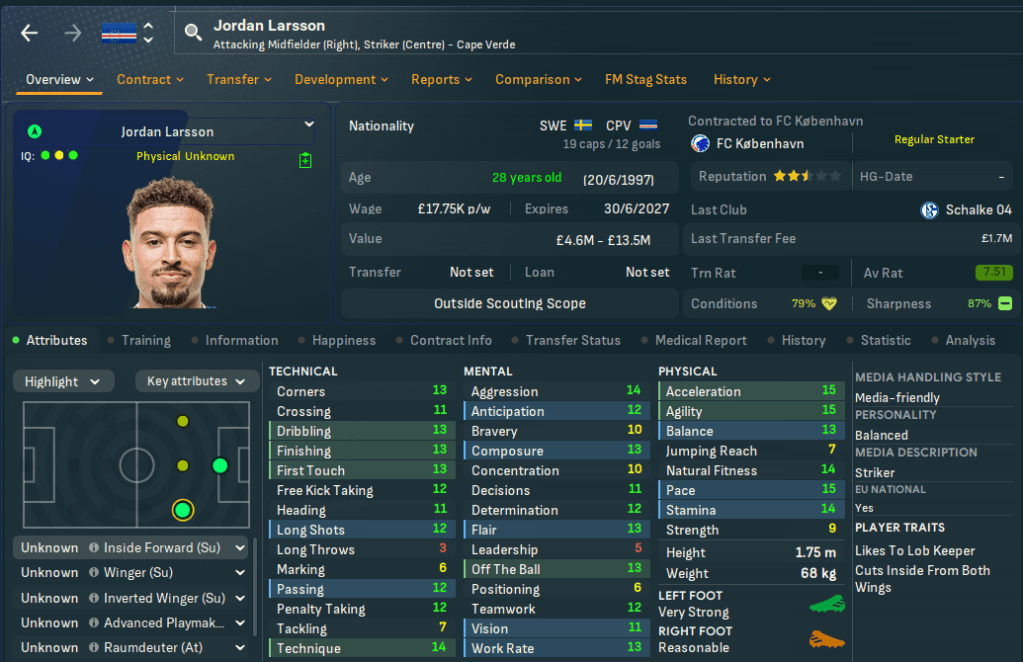
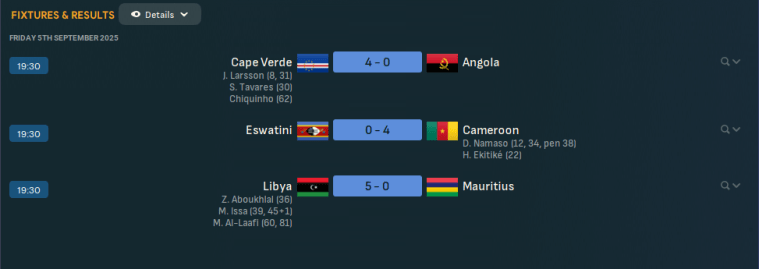
Angola did indeed qualify with ease… but they weren’t quite as perfect as Nigeria. Their one slip-up was a 4-0 towelling at the hands of Cape Verde, in which Jordan Larsson scored twice. Jordan was born in Glasgow in the summer of 1997, so you could probably guess who his old man is.
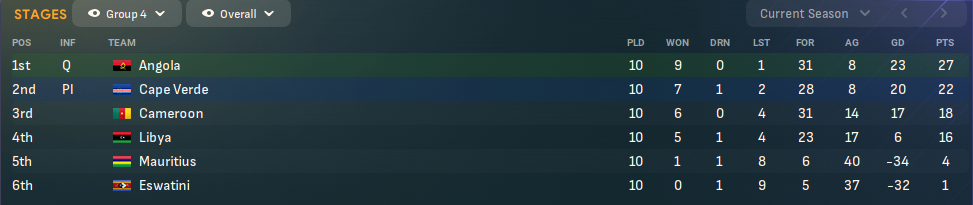
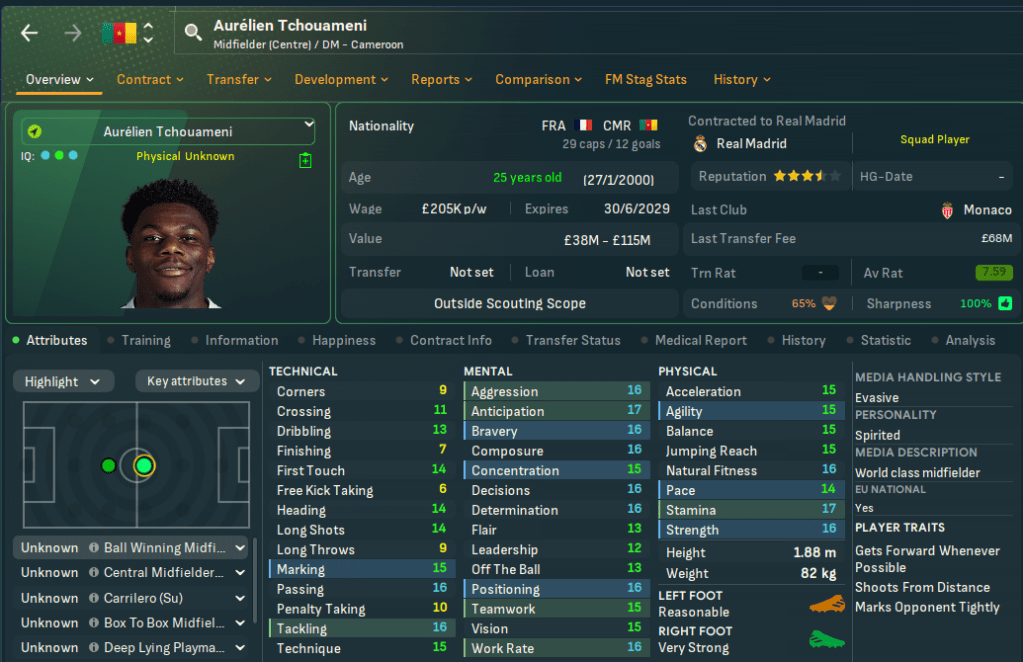
That demolition job proved crucial for Cape Verde, who finished 2nd and qualified for Round 2. Unfortunately for Cameroon, Aurélien Tchouameni’s compatriots had lost too many matches away from home.
[Crickets] I’ll get my coat.
GROUP 5
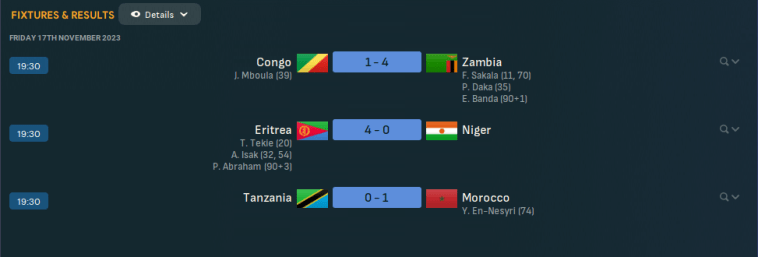
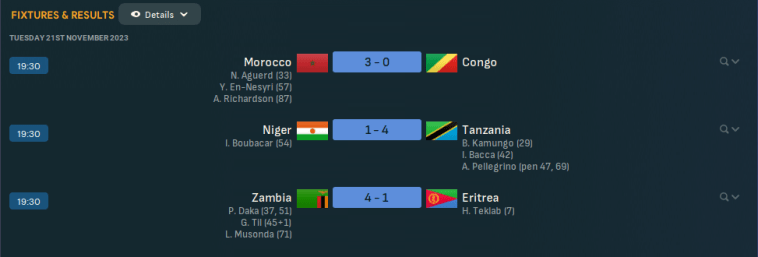
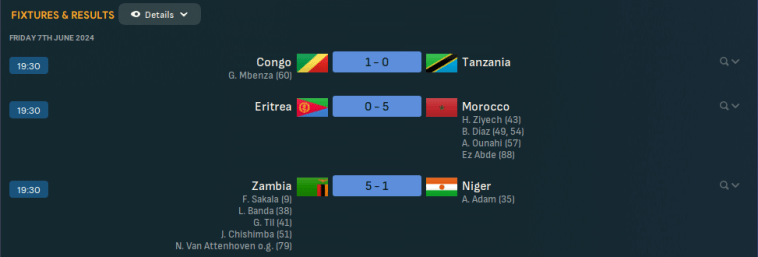
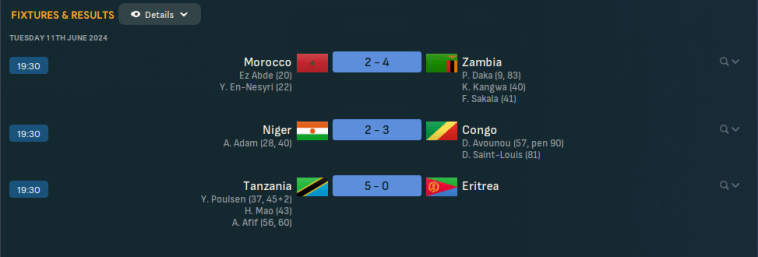
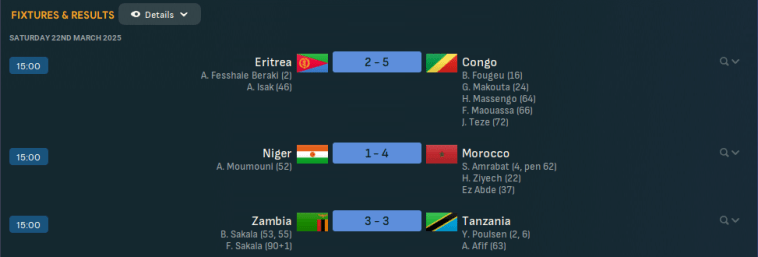
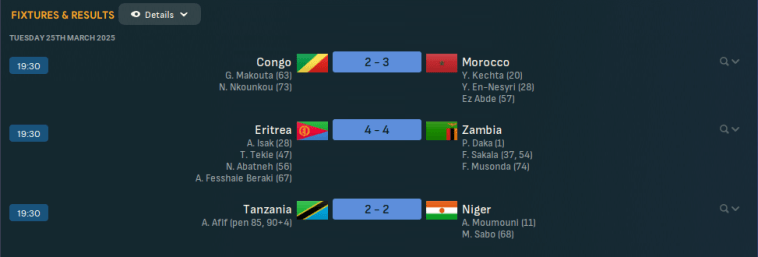
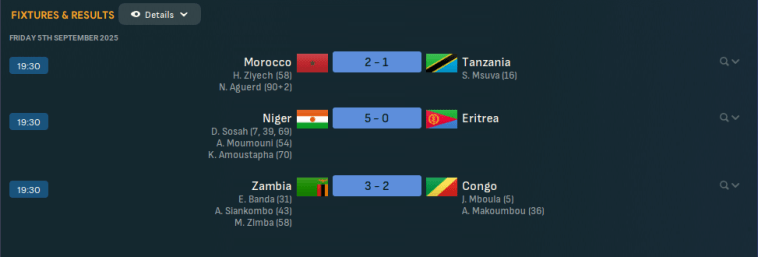
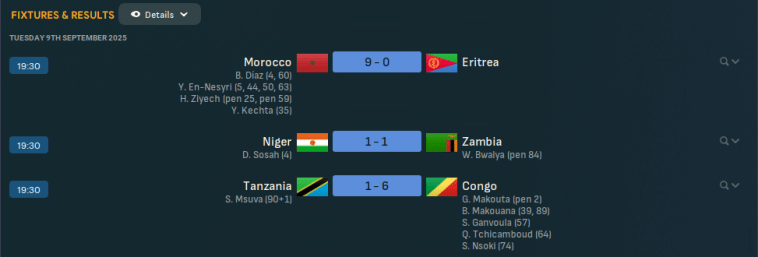
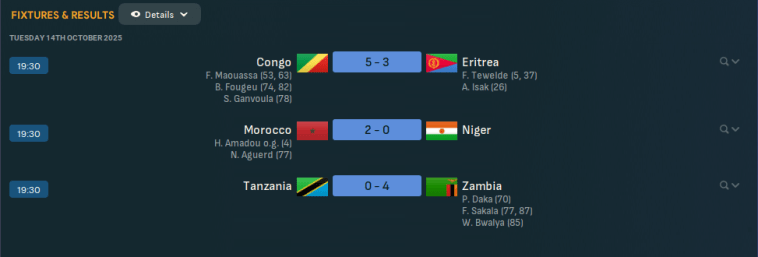
The battle for Group 5 supremacy looked a lot tighter. After Morocco made a strong start, Zambia threw a spanner in the works with a surprise 4-2 victory in Tangier. Patson Daka had clearly remembered how to score goals again, but the leaky Zambian backline would need to learn how to defend again if they were to finish top.
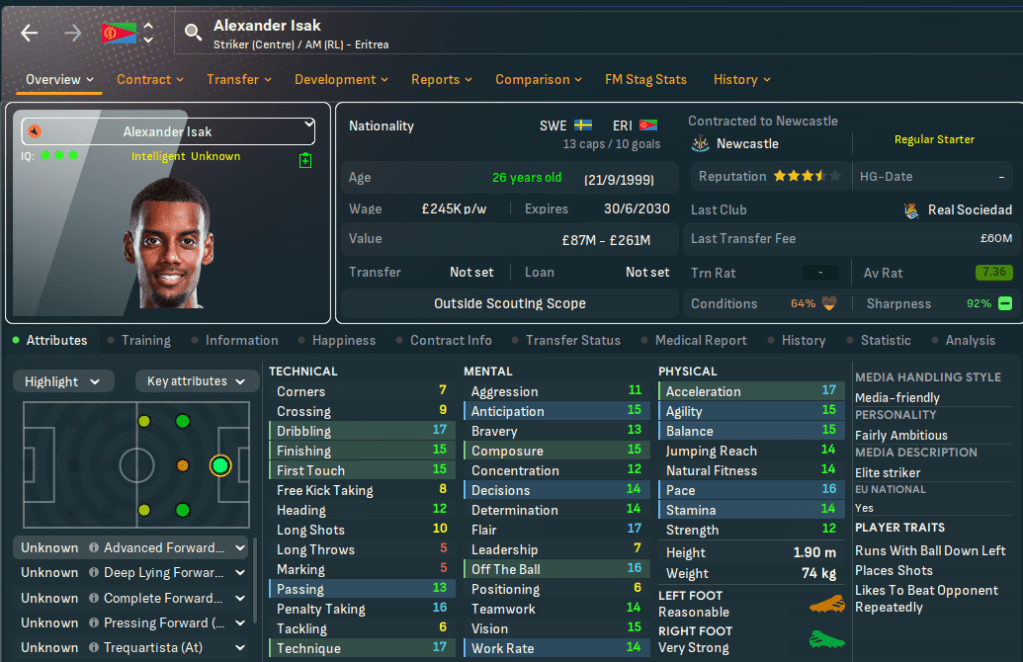
Fronted by Newcastle fan favourite Alexander Isak, Eritrea enjoyed a fantastic start when they tonked Niger 4-0. Unfortunately, the minnows lost their next four games before playing out a breathtaking 4-4 draw with Zambia. Their hopes of a shock qualification might have gone, but they could yet have a huge say in the race for qualification.
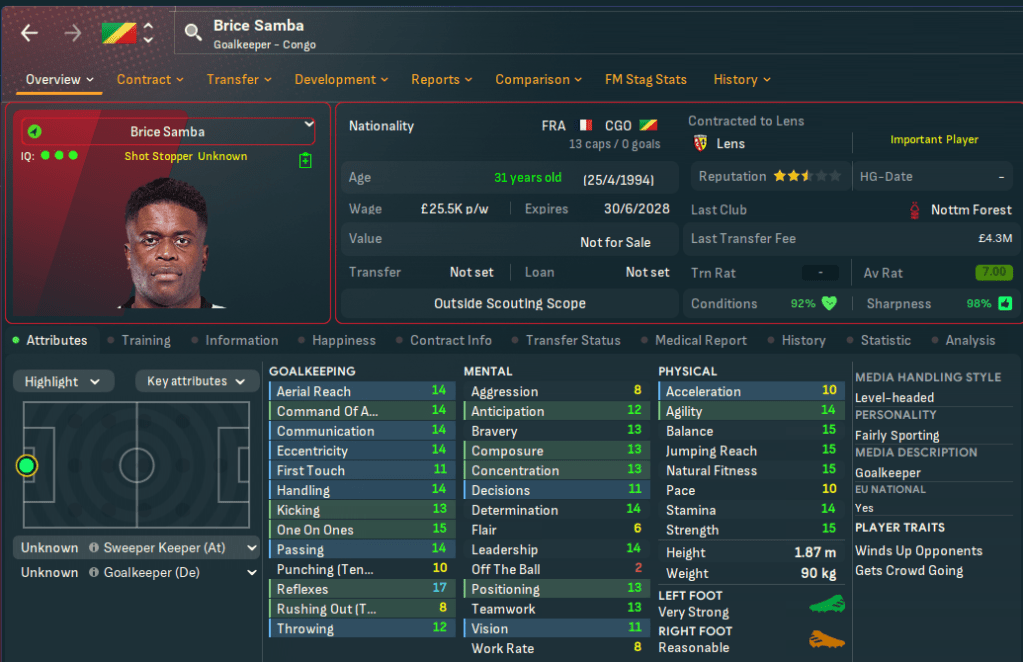
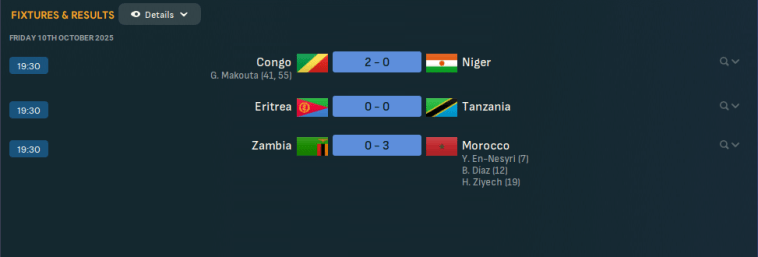
That 4-4 draw was indeed a deadly result for Zambia, but the final nail in their coffin was a 3-0 home defeat to Morocco in the penultimate round. Though they still managed to hold off Brice Samba’s Congo and finish 2nd, it was not quite enough to stay in the running.
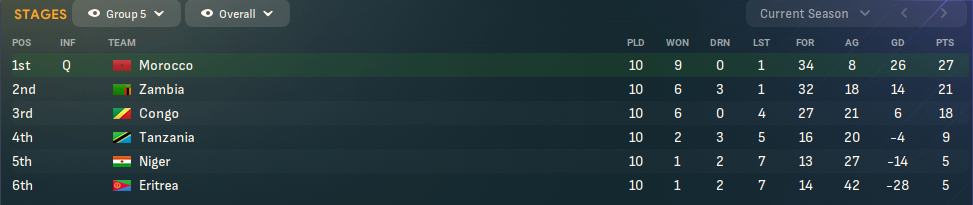
As you have probably gathered by now, Morocco comfortably won the group. Before their latest crack at World Cup glory, the Atlas Lions would now prepare to host the 2026 Africa Cup of Nations, which they were hopeful of winning – barring any awful Panenka penalties from Brahim Díaz. But even if they did cock it up, CAF would almost certainly find a way to give them the trophy.
GROUP 6
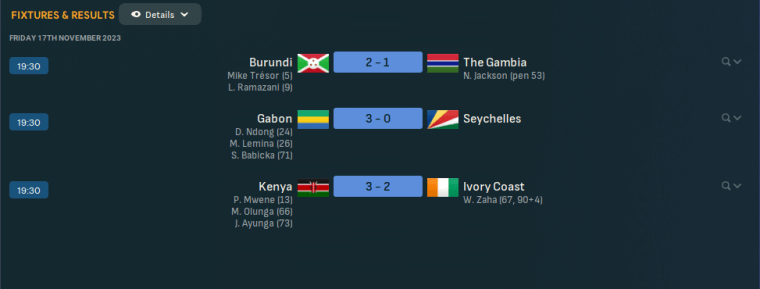
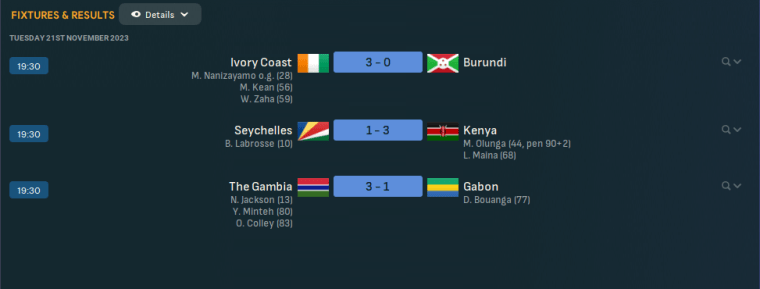
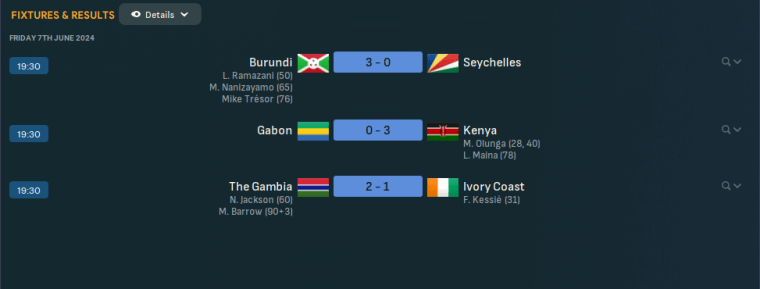
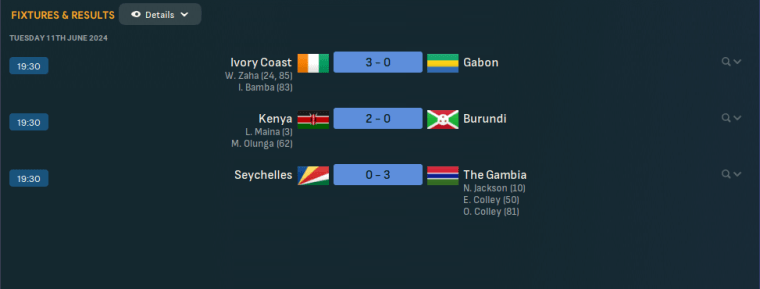
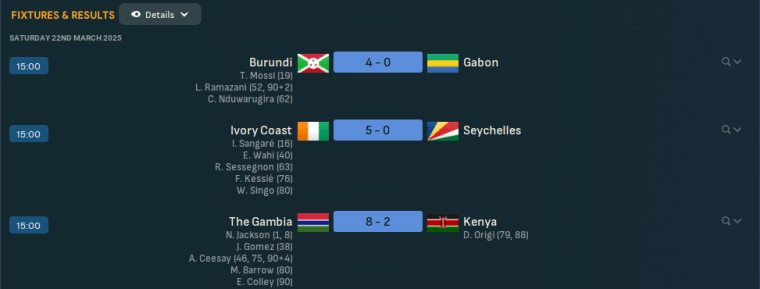
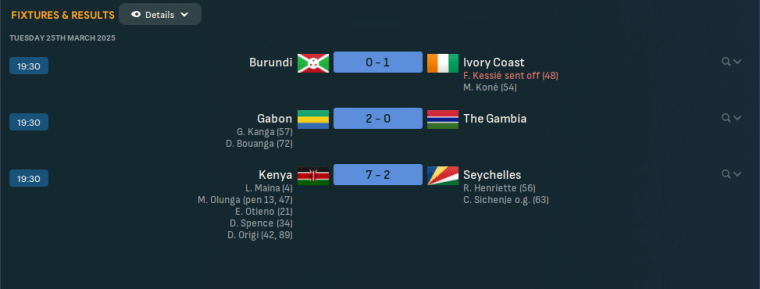
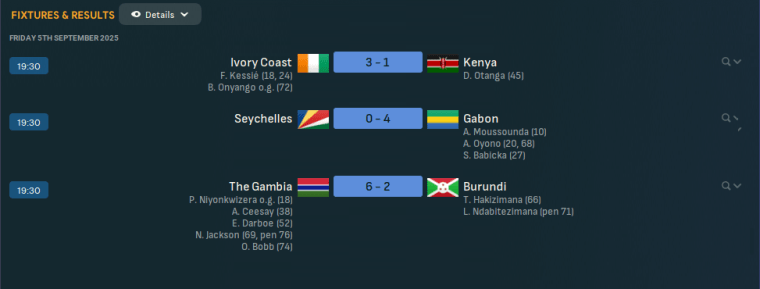
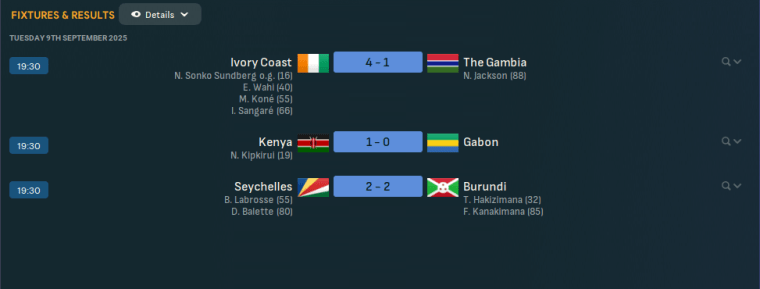
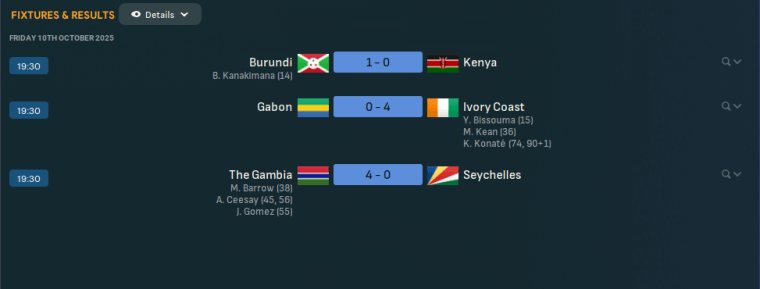
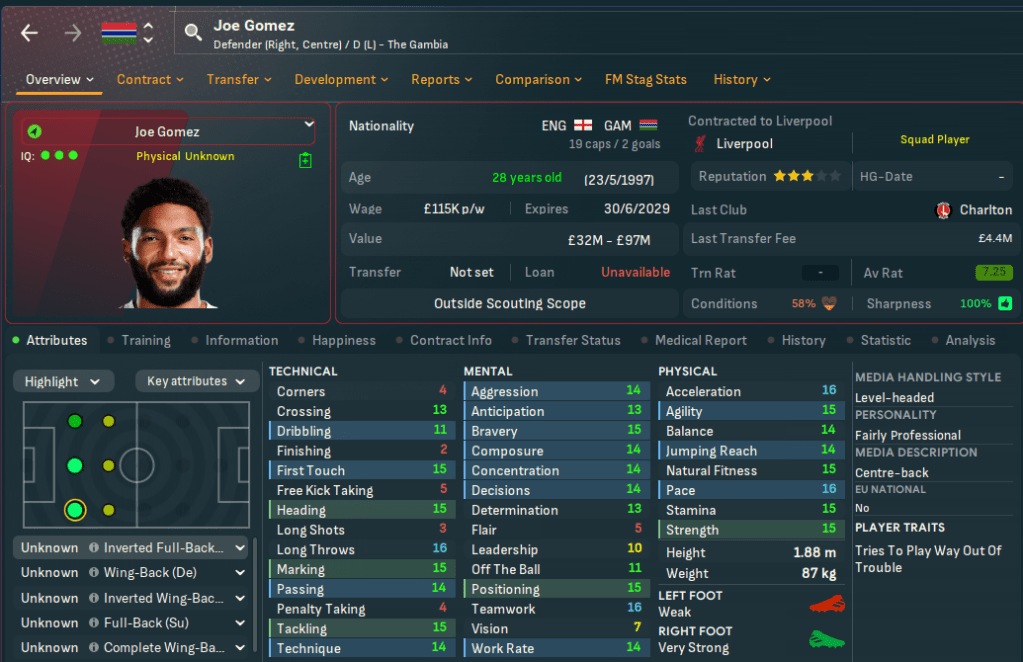
Kenya gracefully snuck up to top spot in Group 6, winning their opening four games with very few problems. And then, in true Football Manager fashion, the close-knit Kenyans went back to strangers and were smashed 8-2 by The Gambia – with Joe Gomez scoring his first ever international goal. Uh-huh, uh-huh, uh.
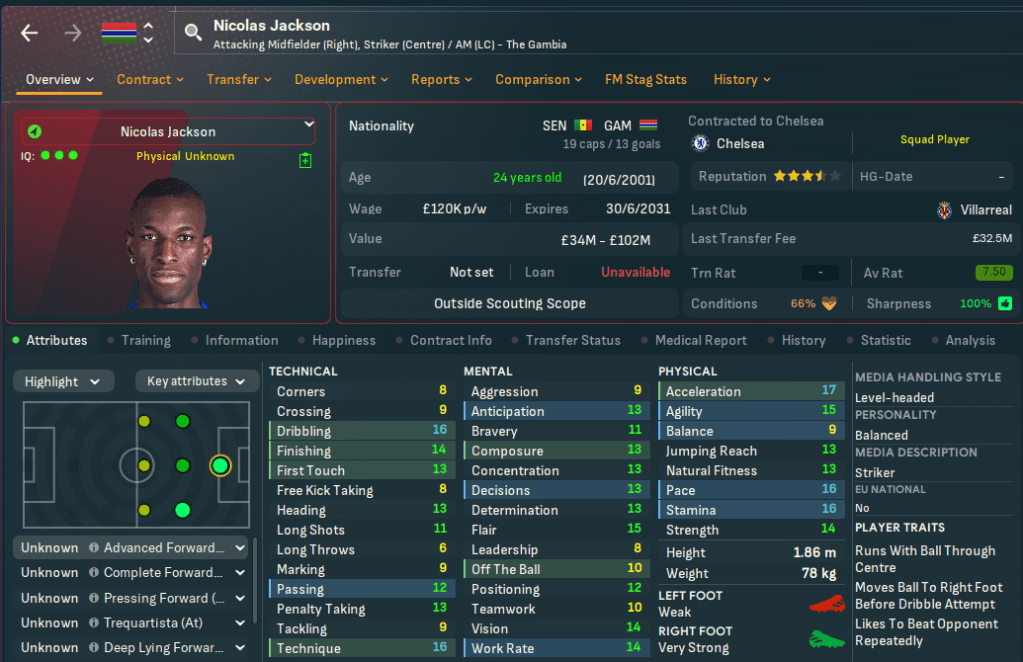
That shock result opened the door for the Gambians – who also had Nicolas ’14 Finishing’ Jackson in their ranks – and the Ivory Coast to renew their challenges for automatic qualification. The top three teams would all face each other in a thrilling run-in.
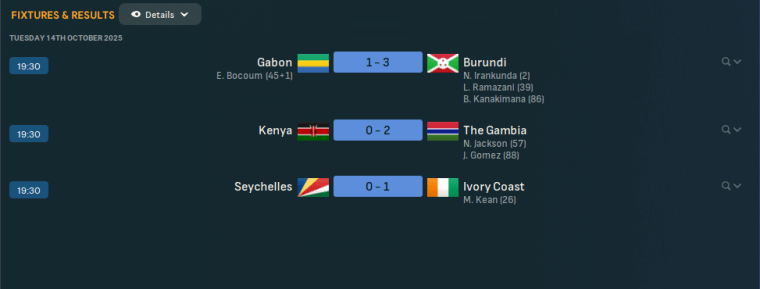
Kenya’s collapse continued in their final four games, of which they lost three (and they only just squeaked a win against Gabon as well). That saw them finish in 3rd place behind The Gambia and the Ivory Coast, who were three points clear going into the final day.
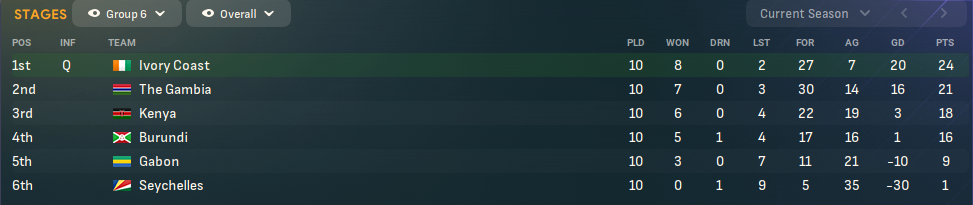
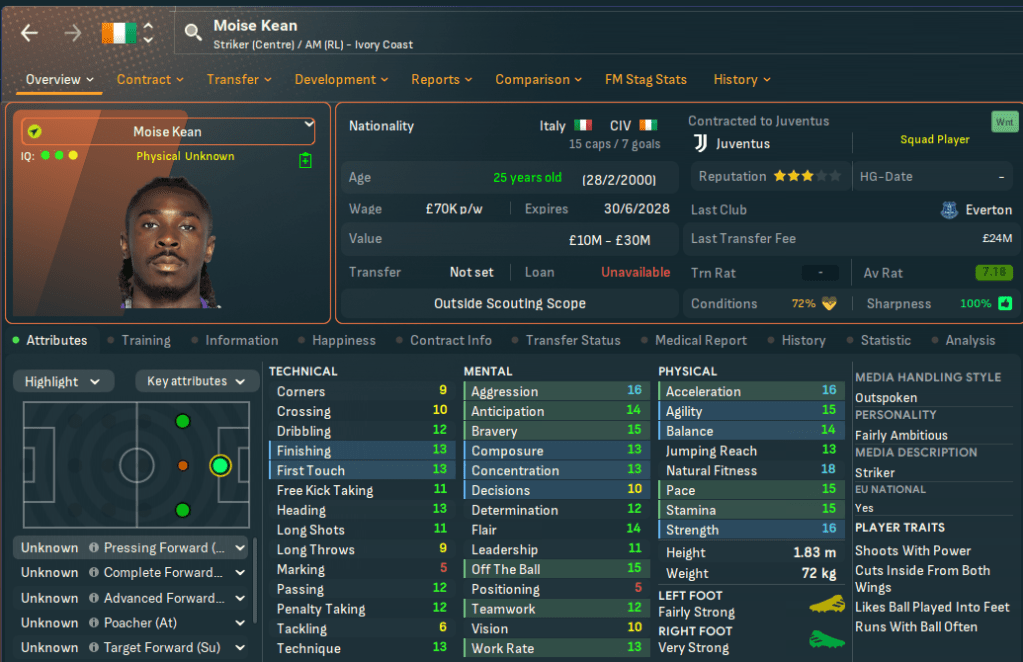
In truth, Les Éléphants were practically home and hosed anyway, given that their last remaining match was away to a Seychelles side with just one point to their name. A single Moise Kean goal midway through the first half was all the Ivorians needed to qualify for the World Cup.
As for The Gambia… well, we’ll get to them later. At least Gomez scored another goal, to the delight of his biggest fan.
GROUP 7
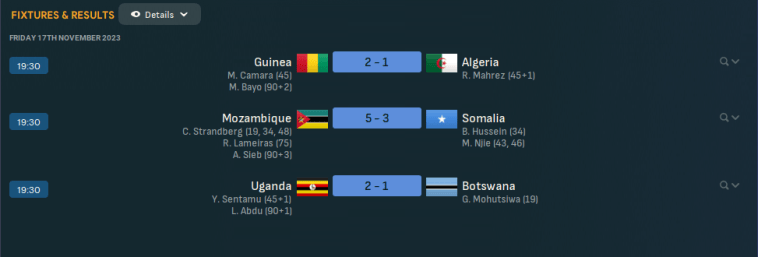
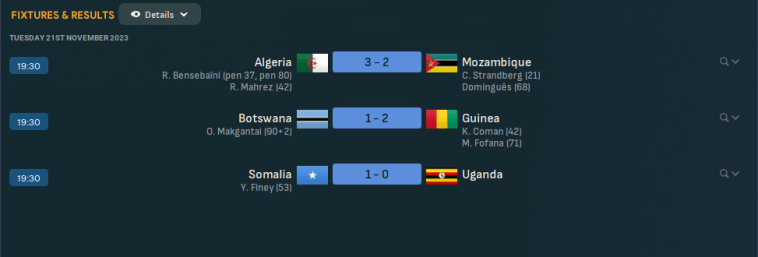
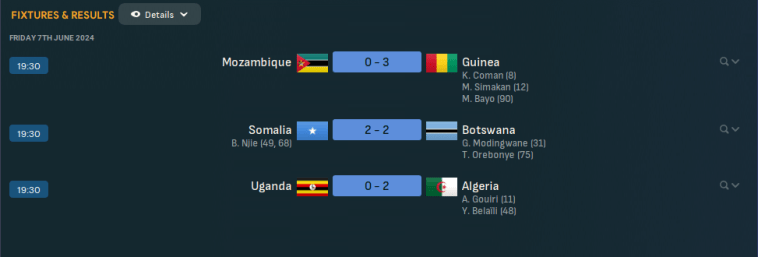
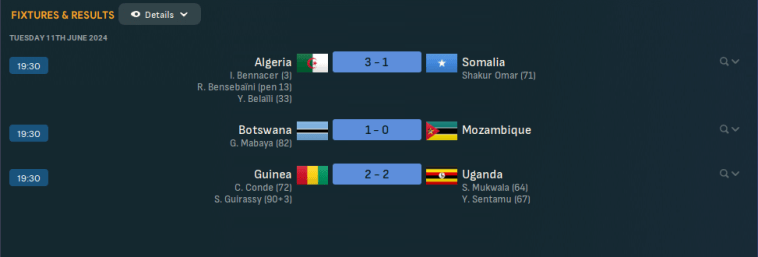
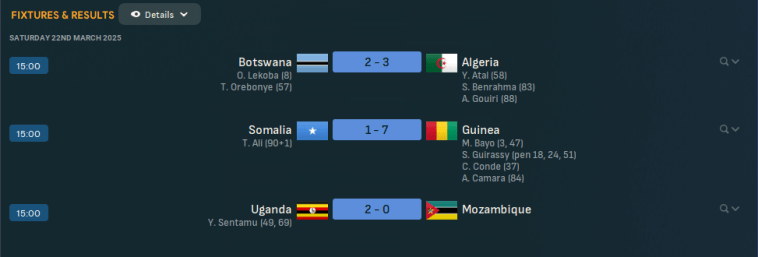
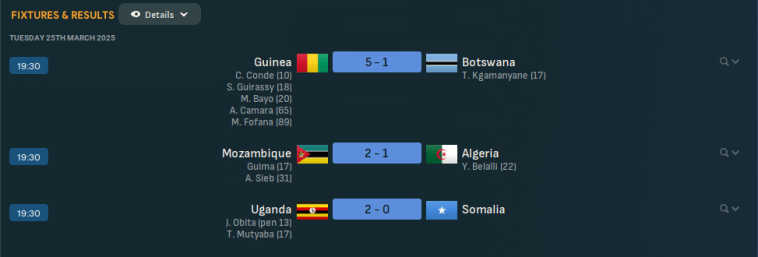
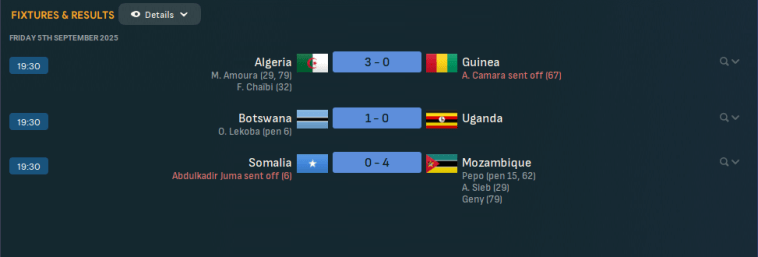
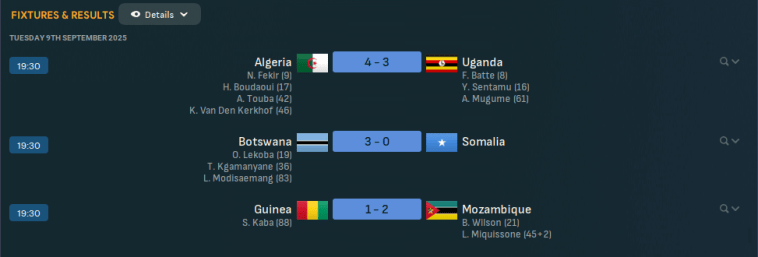
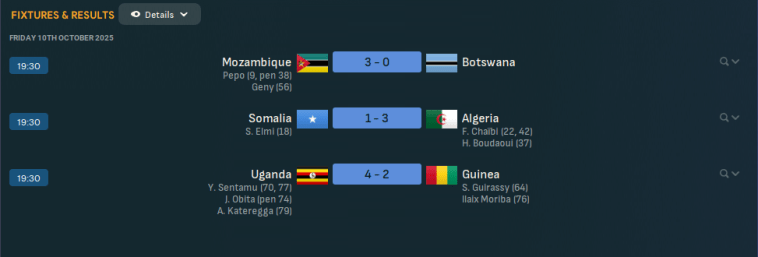
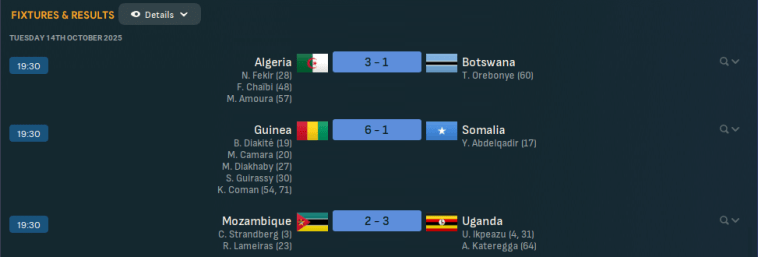
Algeria haven’t gained as many world-class French stars as you might expect (Karim Benzema is retired, and most of the others already played for Les Fennecs anyway). Perhaps their biggest gain was Betis playmaker Nabil Fekir, but he struggled to hit top form as the group favourites suffered a couple of unexpected losses in Guinea and Mozambique.
And so instead, it was Guinea who were on course to qualify for their maiden World Cup. Paul Pogba might have been unavailable (kids, say no to drugs), but his big brother Florentin captained Guinea to top spot, while Serhou Guirassy helped himself to back-to-back hat-tricks. Could they now last the pace?
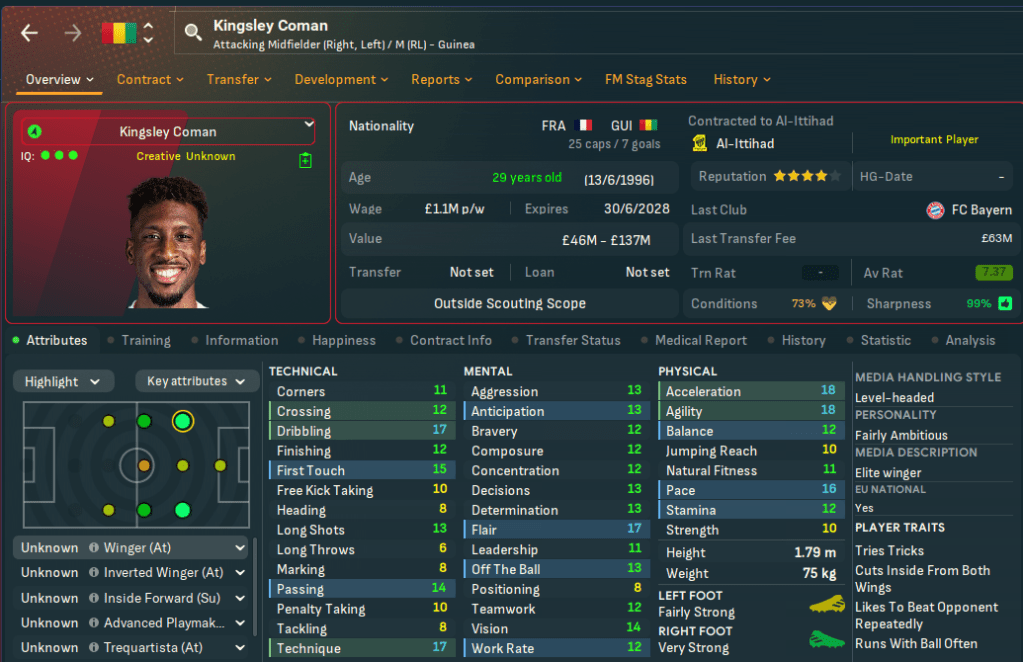
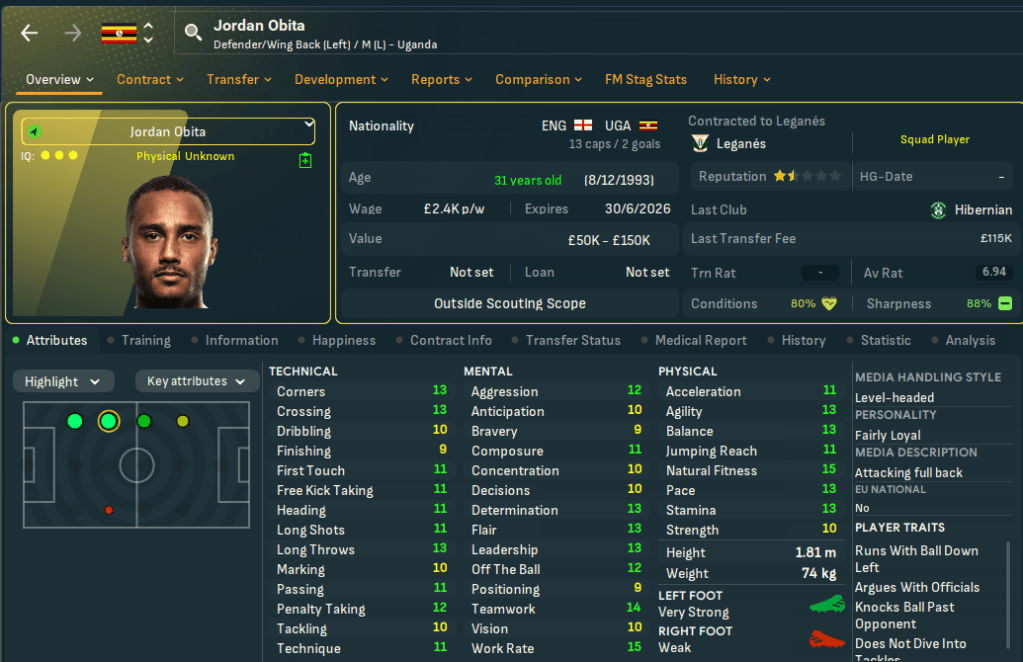
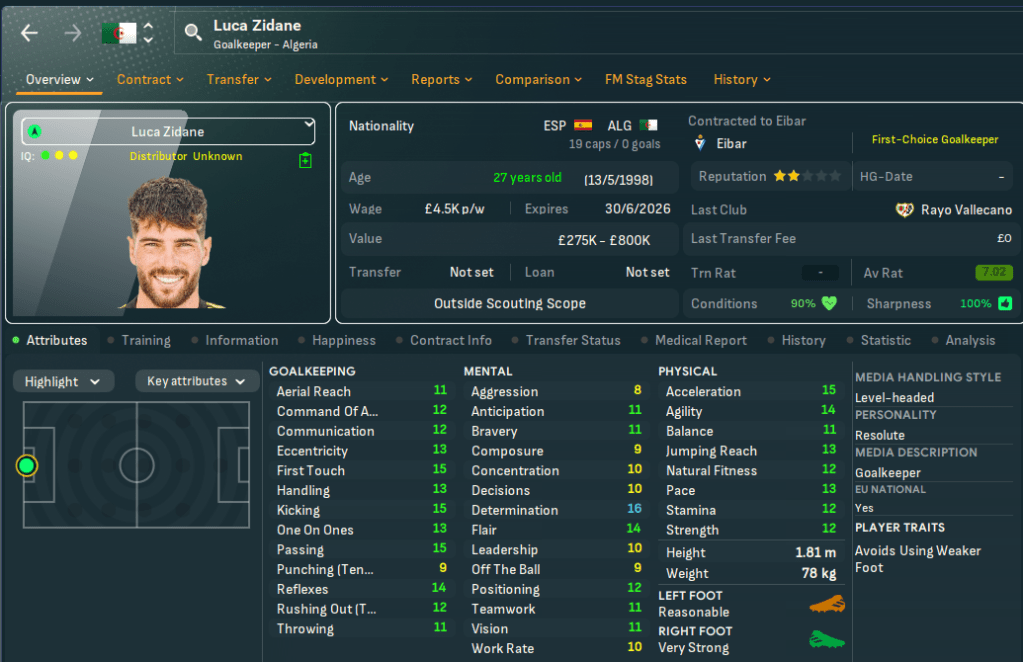
They could not. After being soundly beaten 3-0 in Algeria, Guinea’s star winger Kingsley Coman played more like Kingsley the Partick Thistle mascot as the West Africans were FMed at home by Mozambique. An even more farcical 4-2 defeat to Uganda (and former Reading left-back Jordan Obita) hammered the final nail in the coffin, which means no World Cup adventure for Coman and co.
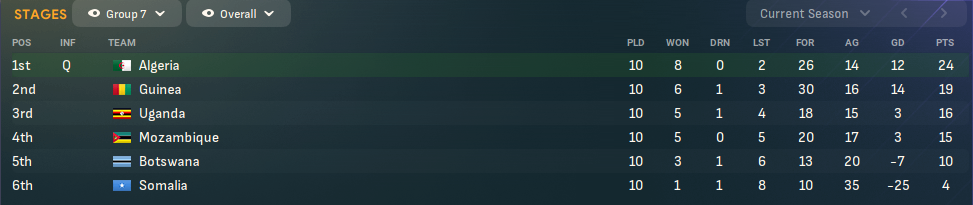
Algeria topped the group in the end, though they somewhat stumbled over the line after conceding early goals to both Uganda and Somalia. If keeper Luca Zidane was going to emulate his papa and get his hands on the World Cup trophy, the Algerian defence would need to be much, much tighter.
GROUP 8
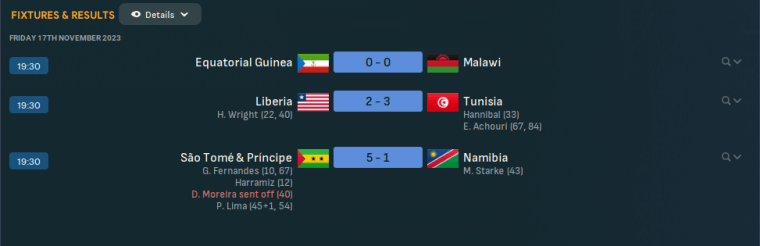
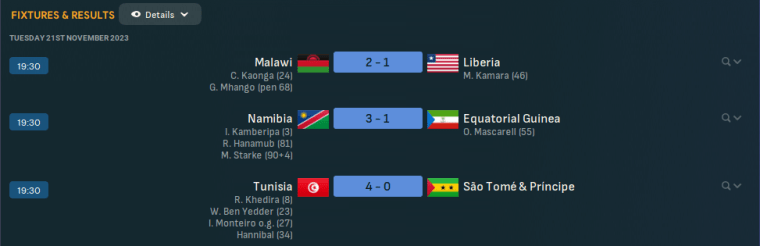
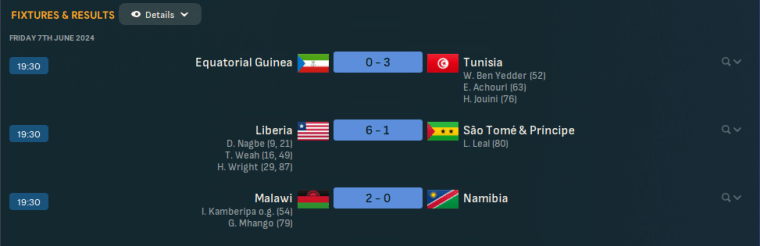
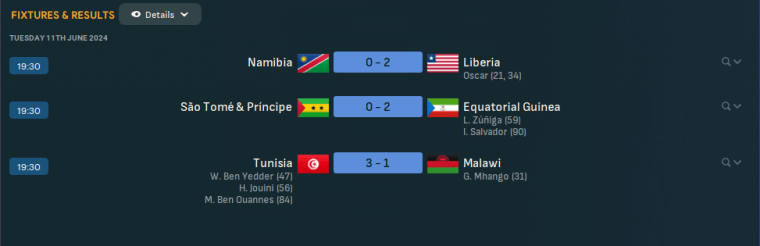
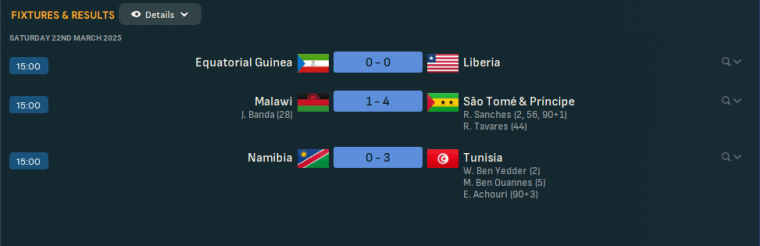
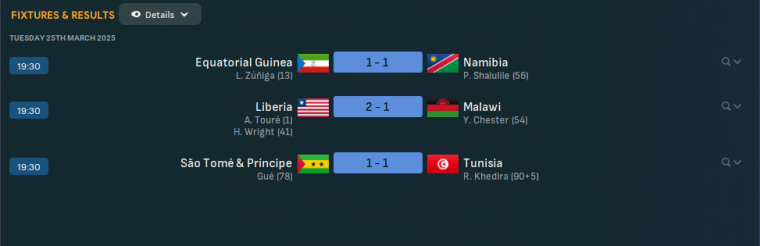
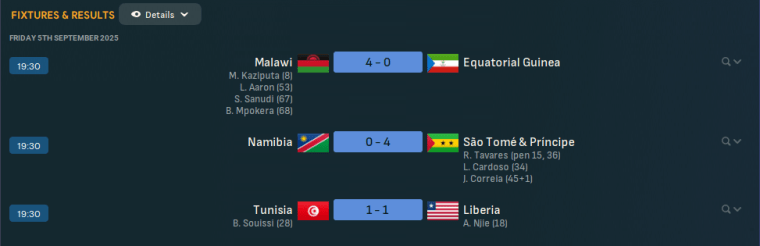
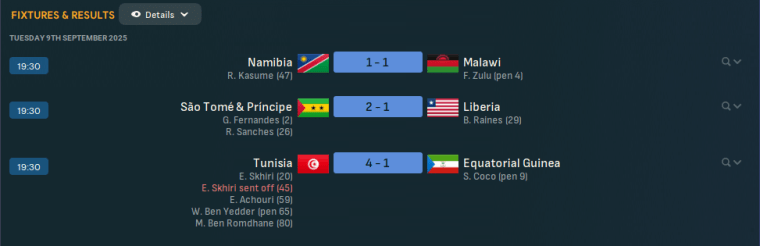
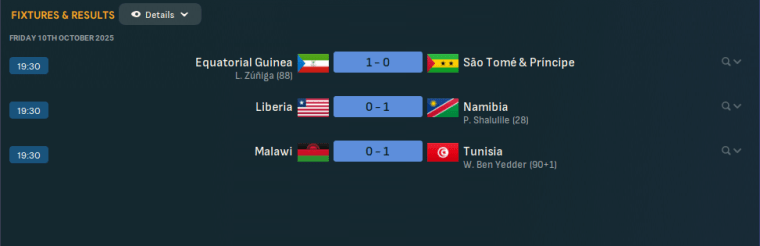
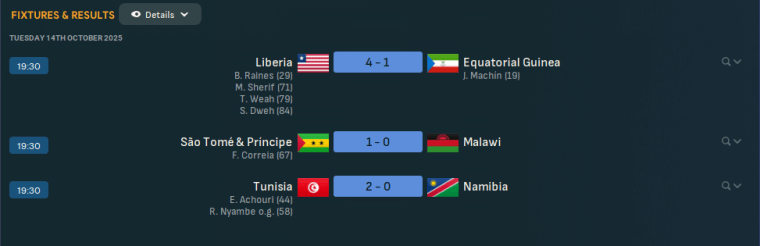
Sadly, it looked like Equatorial Guinea would be no-shows. With the prodigious Lamine Yamal often staying in Barcelona to brush up on his homework, his compatriots failed to win any of their first five fixtures before finally seeing off São Tomé & Príncipe. However, it had surely come too late to save them.
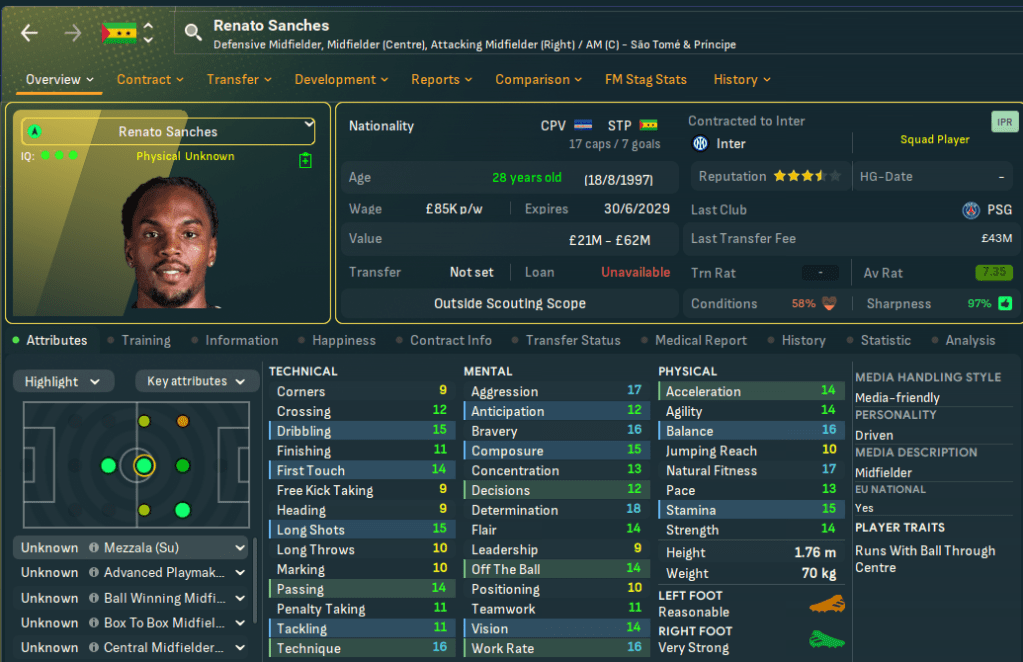
In stark contrast, Tunisia – and the aptly-named midfield dynamo Hannibal – conquered all their group rivals to take a firm grip on top spot. Naturally, they then almost lost their next game in São Tomé. Swansea legend Renato Sanches assisted what looked like being a shock winner for STP… until Rani Khedira bailed Tunisia out in the 95th minute. Spoil-sports.
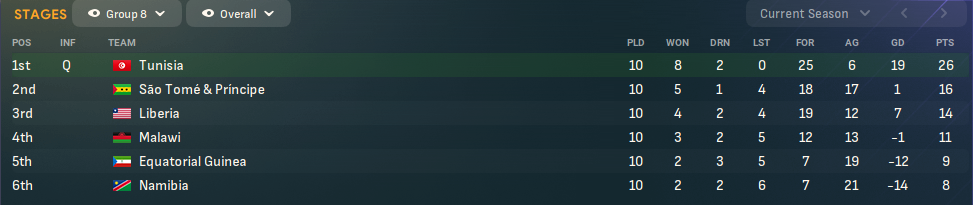
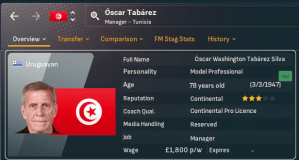
With none of their group rivals showing any kind of consistency, Tunisia enjoyed somewhat of a procession to the finals. Even a 1-1 draw against Liberia didn’t stop them from finishing the campaign unbeaten. That meant yet another World Cup for their Uruguayan manager Óscar Tabárez, who was incredibly still going strong at the age of 78!
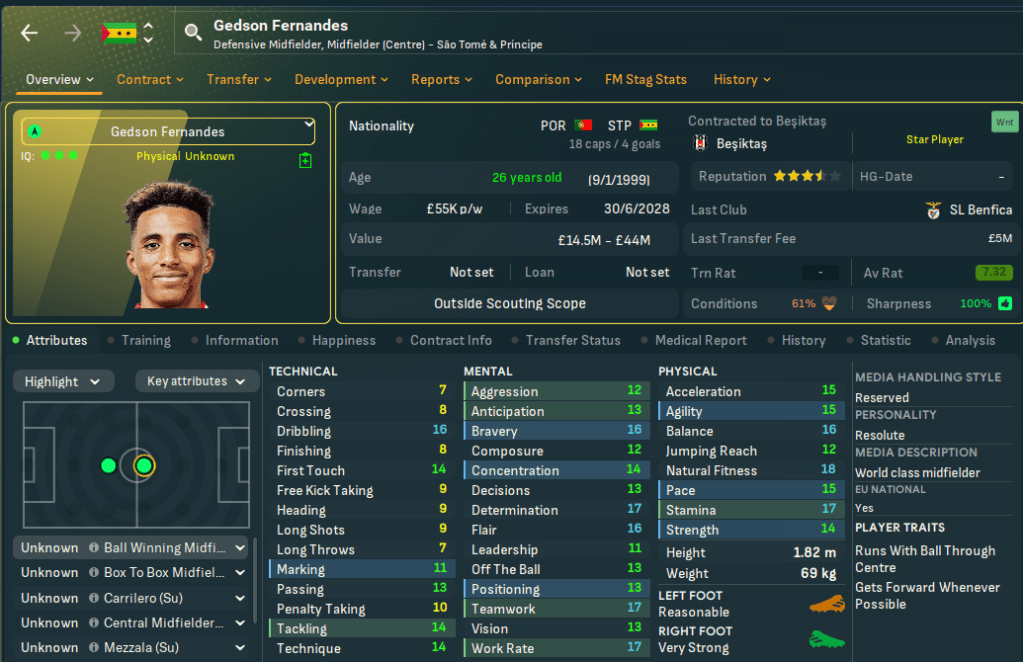
And who finished 2nd? Unbelievably, it was the lowest-ranked team in the group! São Tomé & Príncipe had won half their matches, and even though they were never going to pick up enough points to get into Round 2, their squad – which also included the combative midfielder Gedson Fernandes – had shown a lot of potential.
GROUP 9
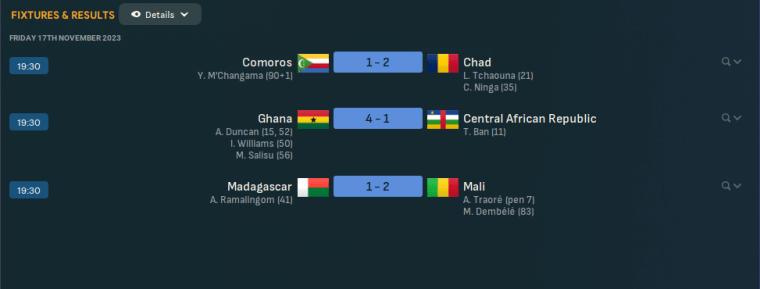
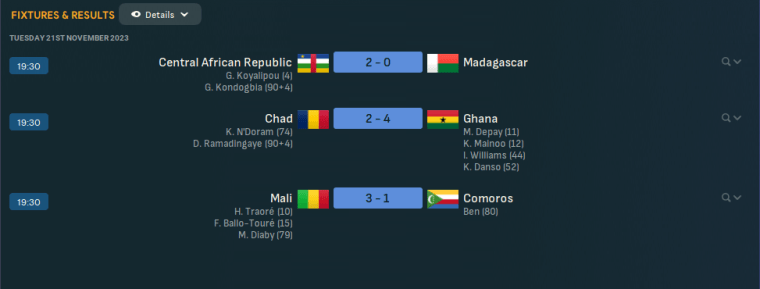
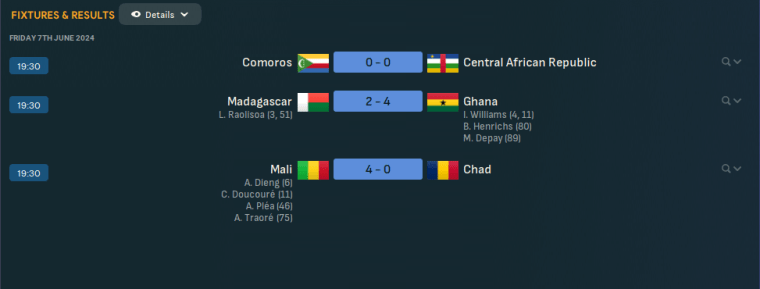
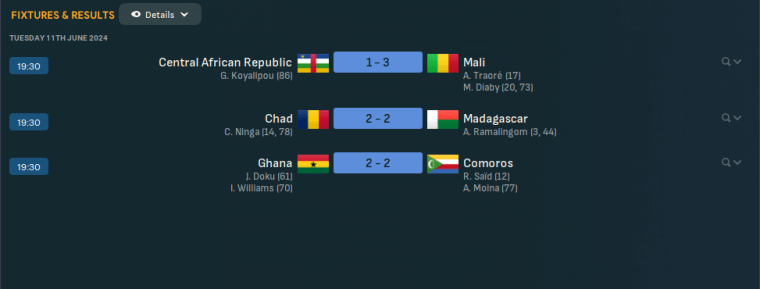
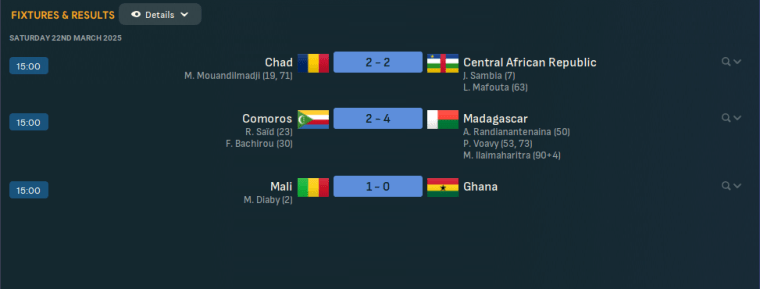
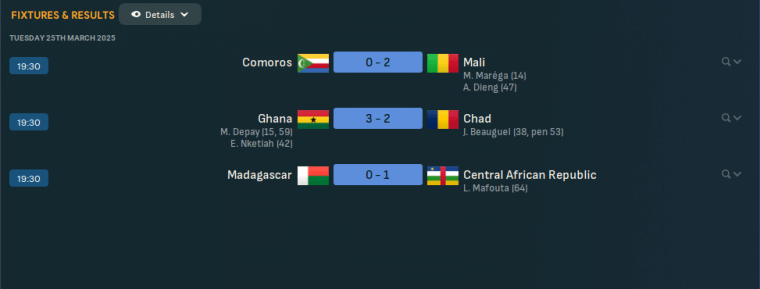
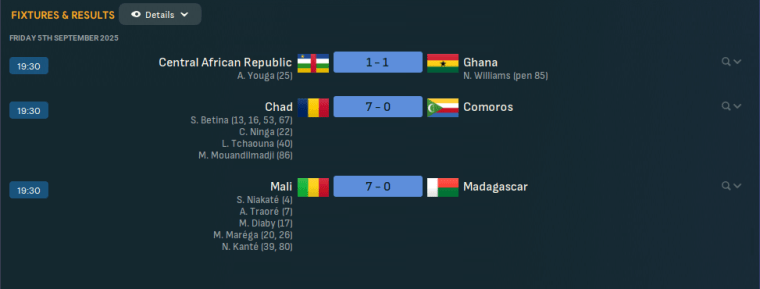
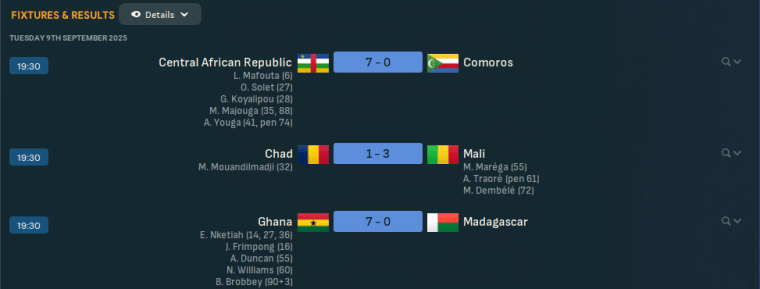
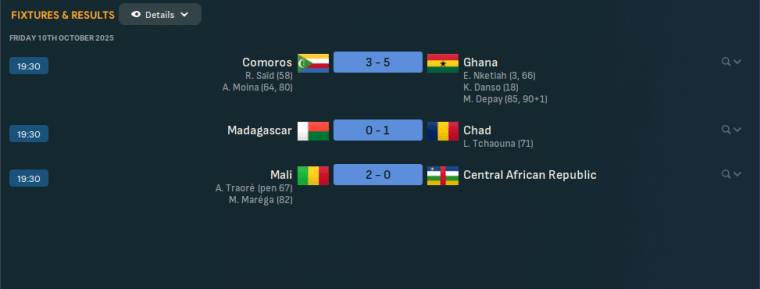
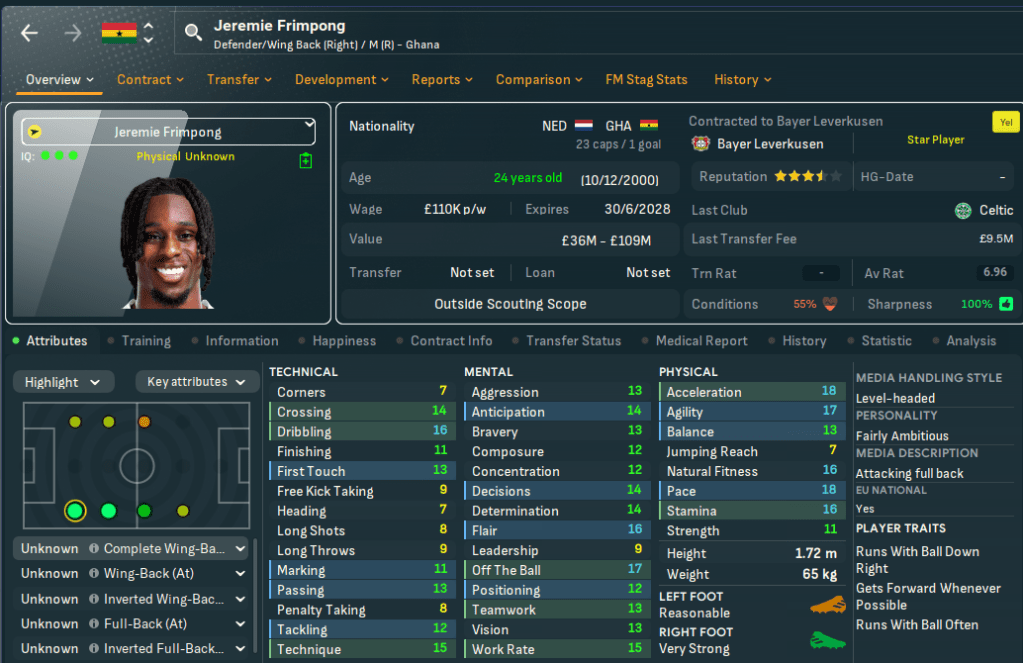
Last, but not least, we meet the Black Stars of Ghana. Things started well enough for Jeremie Frimpong and co up… until they stumbled at home against Comoros. Then Frimpong’s former Leverkusen team-mate Moussa Diaby nabbed an early opener for Mali, setting them on their way to what would be their fifth consecutive win.
After picking up another victory over Comoros, Mali were now proudly five points clear at the top of the standings with a 100% record. They had only conceded three goals at this point (fewer than everyone else except Angola) and were surely on track to qualify for the World Cup. What could possibly go wrong?
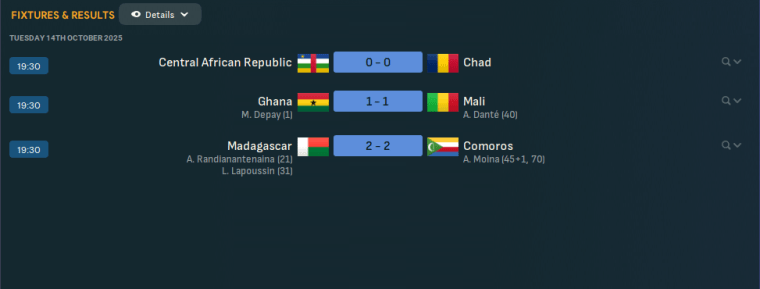
Nothing, really. Thanks to a clinical frontline and a watertight defence, Mali sauntered through with two games to spare. In fact, only a 1-1 draw in Ghana denied them an impeccable record on the final day.
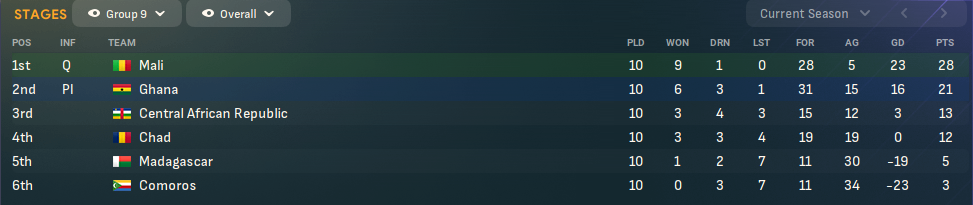
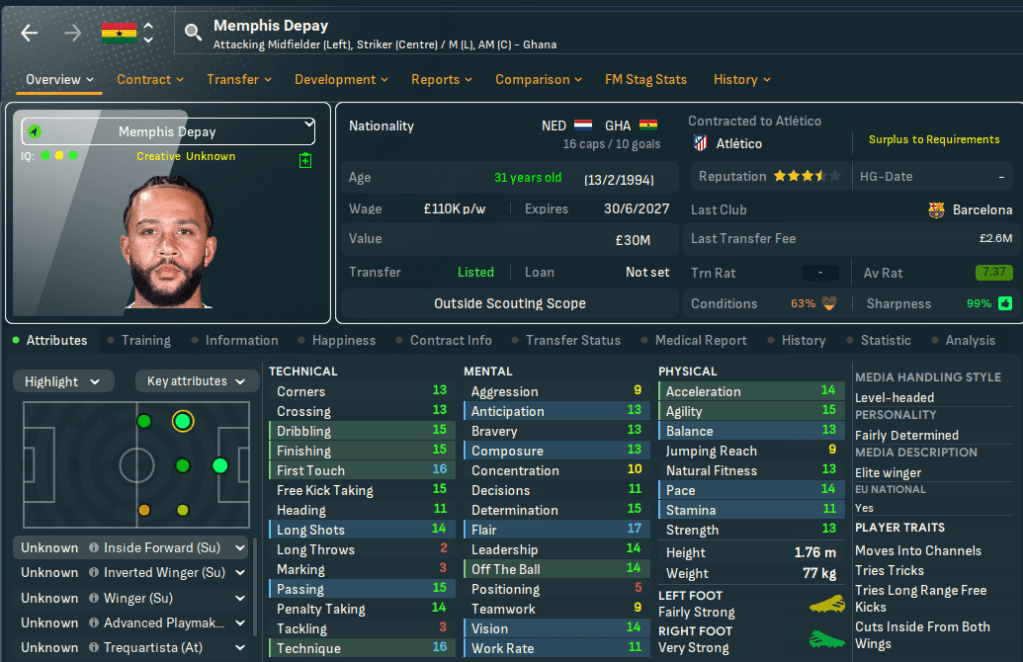
That very early opener by Memphis Depay kept alive Ghana’s dreams of putting on their blue suede shoes and going to Graceland (I wish I was going somewhere with this). Their record was just about enough to reach Round 2… but it was a close-run thing. How close, you say?
2ND-PLACED TEAMS
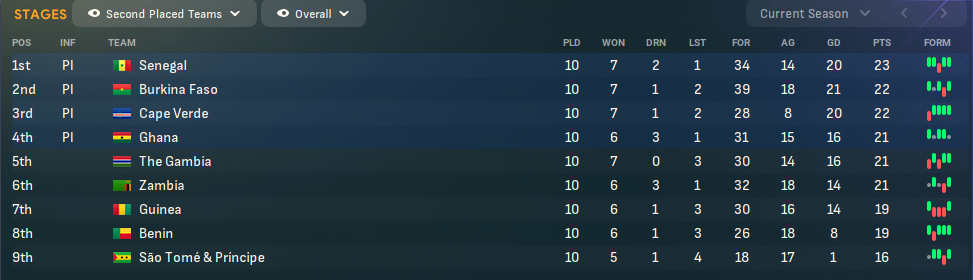
Exceedingly close, that’s how. Ghana beat The Gambia to the final spot by ONE GOAL.
If only Joe Gomez had scored just once more, it would have been a different story…
ROUND 2
And so the four best runners-up battled on for one final round, with a place in the intercontinental play-offs up for grabs. In real-life, this consisted of a straight knock-out tournament on neutral soil… but on FM24, it’s actually a World Cup-style group phase, with the teams playing three matches apiece.
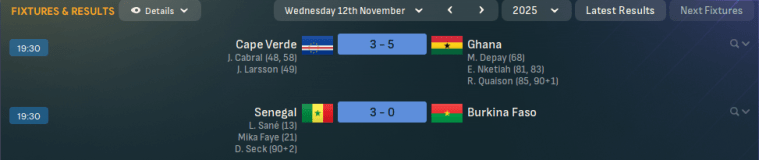
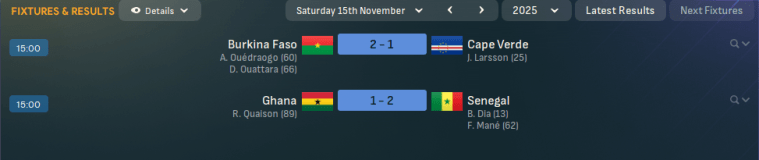
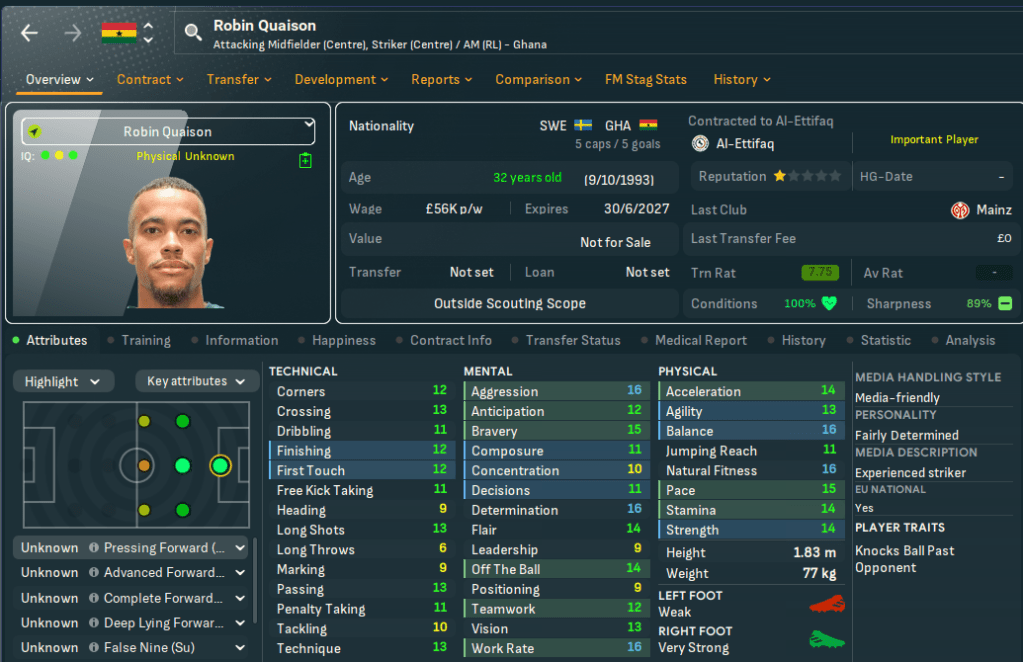
Cape Verde dreamed of emulating their real-life counterparts by qualifying for a debut World Cup… until the wheels fell off against Ghana. A breathless second half saw them go 3-0 up, before the Black Stars surged forward and won 5-3 – with Eddie Nketiah and Robin Quaison each scoring twice late on. The stunned Creoles then blew another lead against Burkina Faso to end their play-off ambitions.
Meanwhile, Senegal kicked off with a 3-0 win over Burkina Faso before squeezing past Ghana 2-1 to put themselves in pole position. They only needed a point against the rock-bottom Cape Verdeans to go through to the intercontinental play-offs. Sounds simple, right?
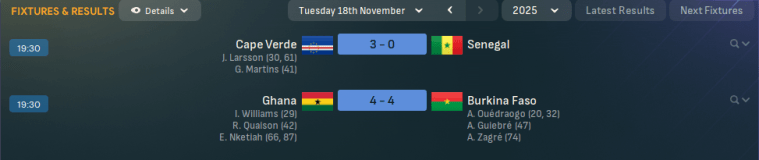
Naturally, Cape Verde took a three-goal lead once again… and this time, they held onto it. Fortunately for Senegal, neither Ghana nor Burkina Faso could get the win in Accra they needed to leapfrog them on goal difference. The resilient hosts scored FOUR equalisers in a thrilling 4-4 draw, which knocked both teams out of the running.

Despite being the lowest scorers in Round 2, Senegal had booked their place in the intercontinental play-off, where they would surely be among the favourites to qualify. Could we yet see Sadio Mané and co grace the big stage once again?
CAF QUALIFYING STATS
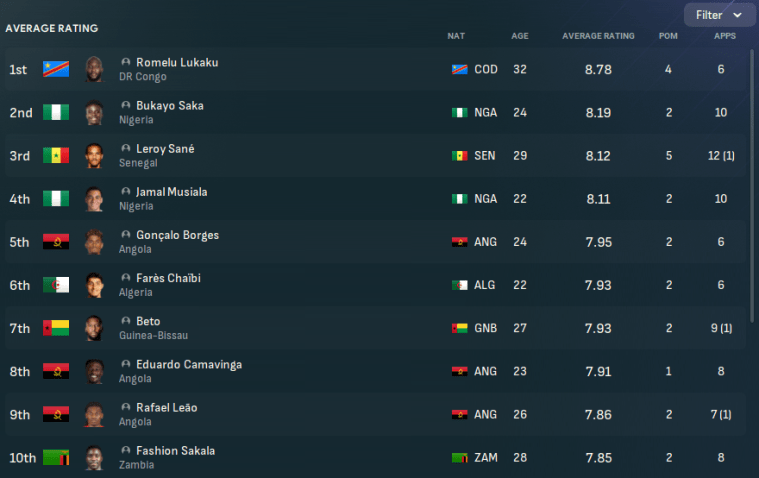
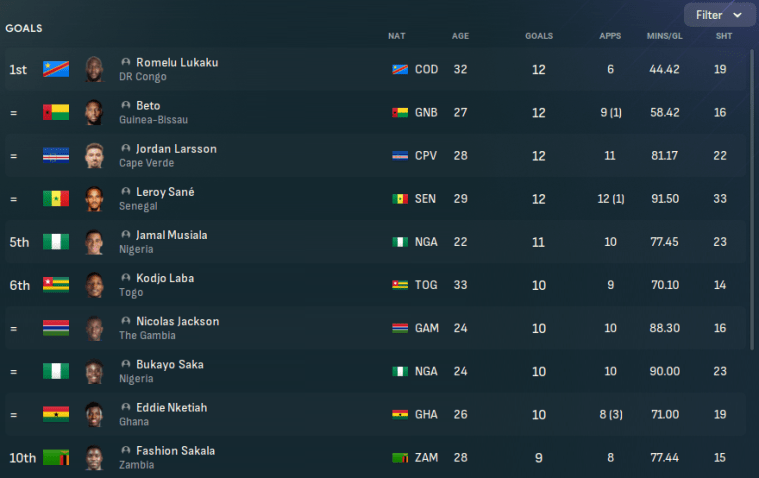
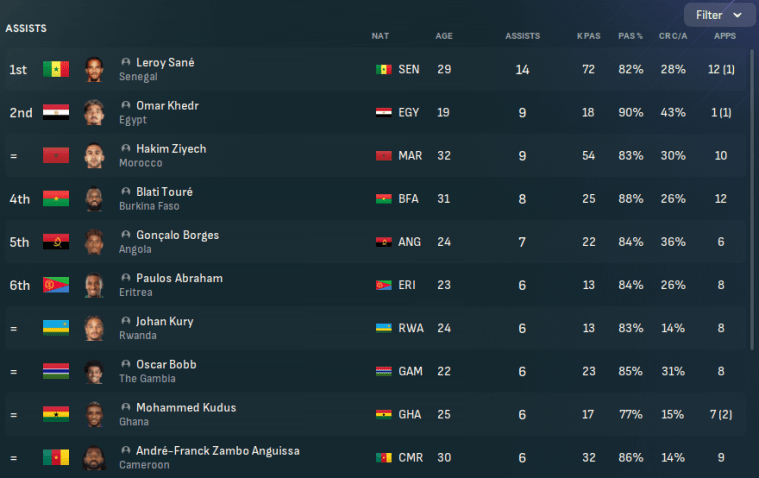
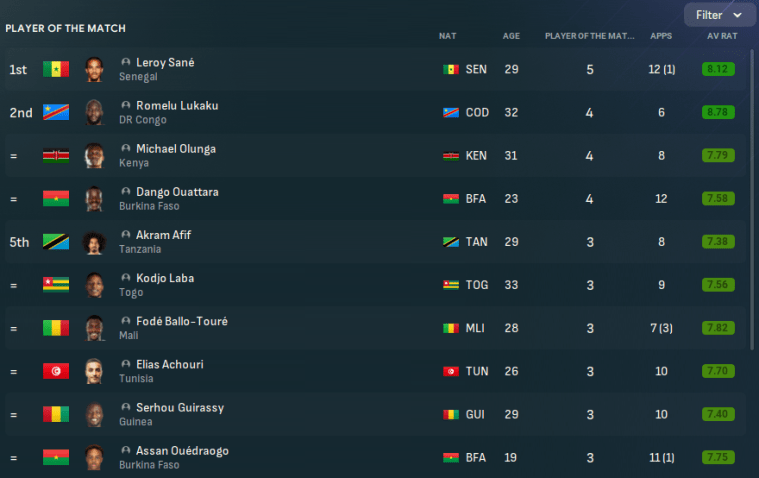
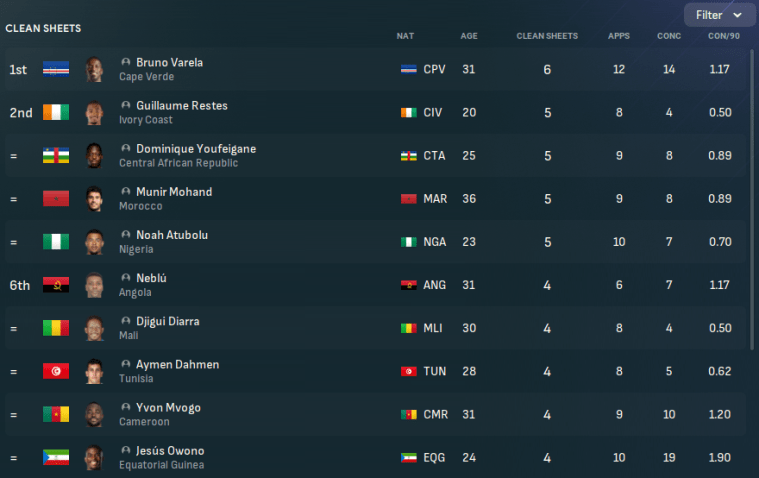
And with that, Senegal’s adventure continues. Can they join the likes of Nigeria and DR Congo and stake a serious claim for winning the Fairer World Cup? We’ll find out soon.
Next Monday, it’s destination Europe for the UEFA qualifiers. Will the big boys survive without many of their leading players?

