
The 2026 World Cup is on the horizon. That means five weeks of non-stop football in the scorching North American heat, where ICE will be disappearing any spectators who look or sound foreign, while everyone else endures the ramblings of an egocentric fascist dictator… or those of his friend Donald. I’m sure you’re excited too.
And although there are 48 teams in this year’s king-sized event, there are realistically only a handful who might actually win it. Argentina are the holders after beating France in the 2022 Final, Spain are the European champions, and then you have the perennial contenders like Brazil, Germany and the Netherlands… but it’s hard to see anyone else going all the way. Maybe Scotland, at a push.
But what if the World Cup was more competitive – fairer, even?
Over the course of this series, I will use Football Manager 2024 to find out what would happen if all players could only play for the WORST nation they were eligible to play for. How would England cope without many of their biggest stars? Could Harry Kane, Jude Bellingham and Declan Rice turn the Republic of Ireland into serious contenders? Do France and Germany have enough depth to survive their teams being decimated as well?
Maybe Raheem Sterling can lead Jamaica’s Reggae Boyz to glory? Could we even see a first African winner of the World Cup – with the likes of Nigeria, Ghana and DR Congo all benefitting from their huge diaspora in western Europe?
I will seek to answer all those questions – and more – over the coming weeks. Let the Fairer World Cup begin…
INTRODUCTION
First off… why have I gone back to Football Manager 2024?
Despite the imminent reintroduction of international management to Football Manager 26, the new game is still in a very shoddy state. There are still so many major bugs and so little quality of life, and I have about as much patience with the clunky user interface as the Chelsea board whenever their new manager is on a losing streak.
But that’s only half the reason why I’m returning to FM24. More important is that I can go back to the summer of 2023 and replay through the entire qualifying campaign. That means a second chance for teams like Cameroon, Chile, Nigeria and Serbia – all of whom missed out on their tickets to North America. Maybe Italy will find yet another way to screw up qualification?
Because I’ve gone back three years, I obviously won’t be using any custom season updates – just the regular 24.2 database that came with the last major FM24 update. I’ve then edited the database to swap the nationalities of thousands of players, declare them for their new nations, and remove any international caps they won for their previous teams.
If you want to try this out for yourself and use the same database that I am, I’ve uploaded it onto the Steam Workshop and also on MEGA for your perusal.
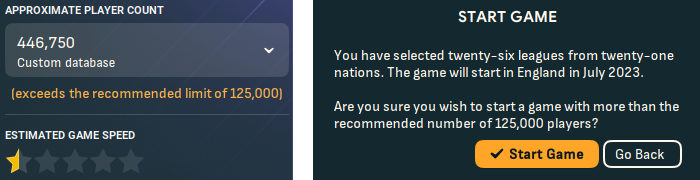
In terms of the save itself, I’ve loaded 26 leagues from 21 nations across the world, and there are well over 400,000 players. Naturally, this will be quite taxing on my computer… but since the only matches I’ll be simulating will be World Cup qualifiers and the tournament itself, it shouldn’t be too bad. I’ll also be using the Sas2025Final skin from sasmaz, just ‘cos it makes things look a bit nicer.
This challenge was partly inspired by Adrian Worton, who runs an annual ‘Draft World Cup’ on Football Manager. In his version, players typically represent the countries that they currently play their club football in. For example, Cristiano Ronaldo represents Saudi Arabia in the 2026 DWC, while Kevin De Bruyne has now switched his allegiance from England to Italy. There are also a few extra rules that allow for some lesser nations to have slightly more competitive squads.
By contrast, the rules for my Fairer World Cup are rather different – perhaps a little simpler.
THE RULES
All players will represent the lowest-ranked nation that they are eligible for. This is according to the FIFA World Rankings at the start of the save game on 3 July 2023.
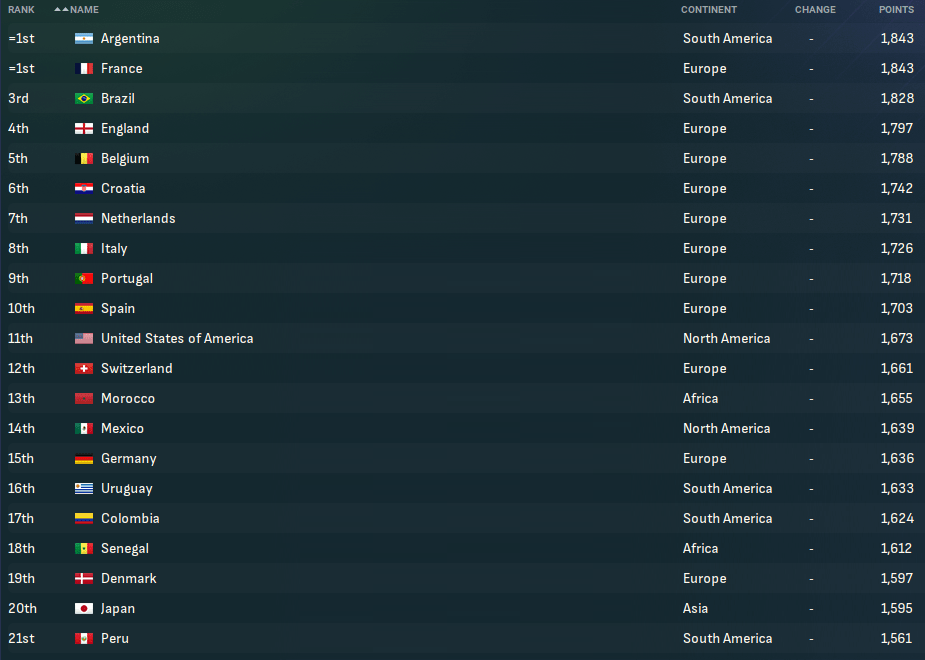
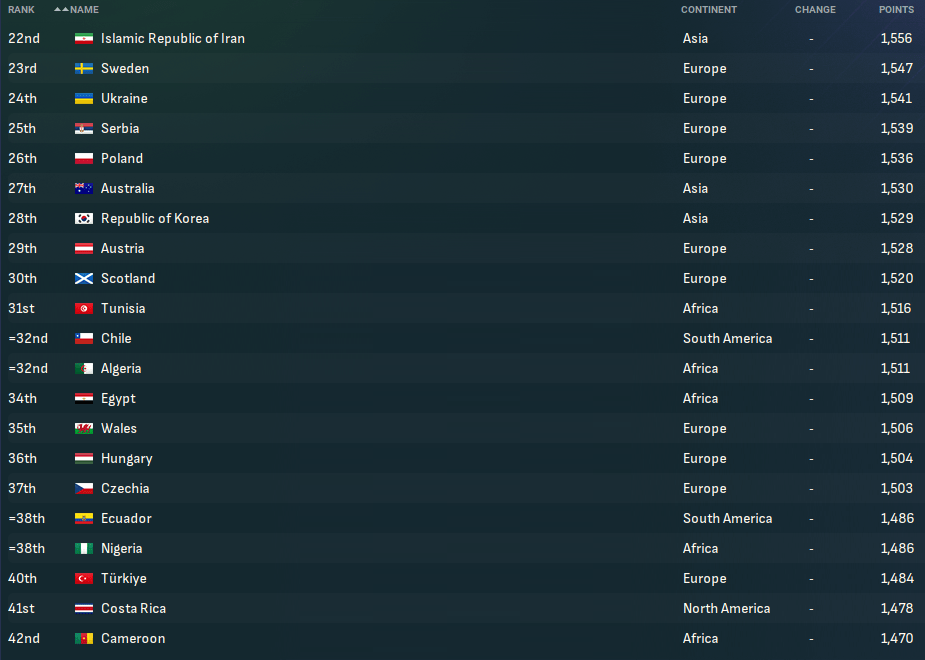
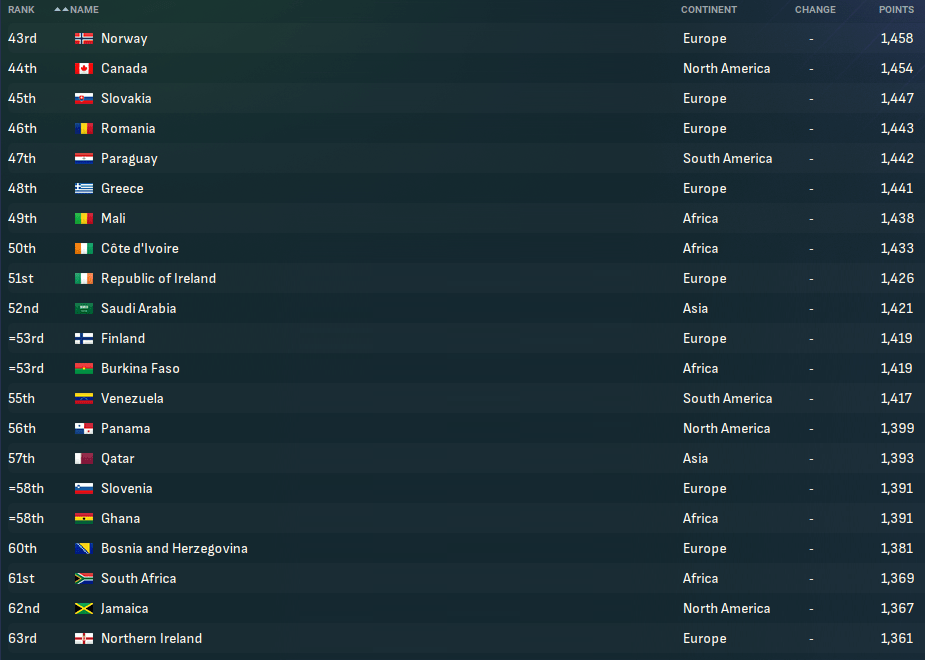
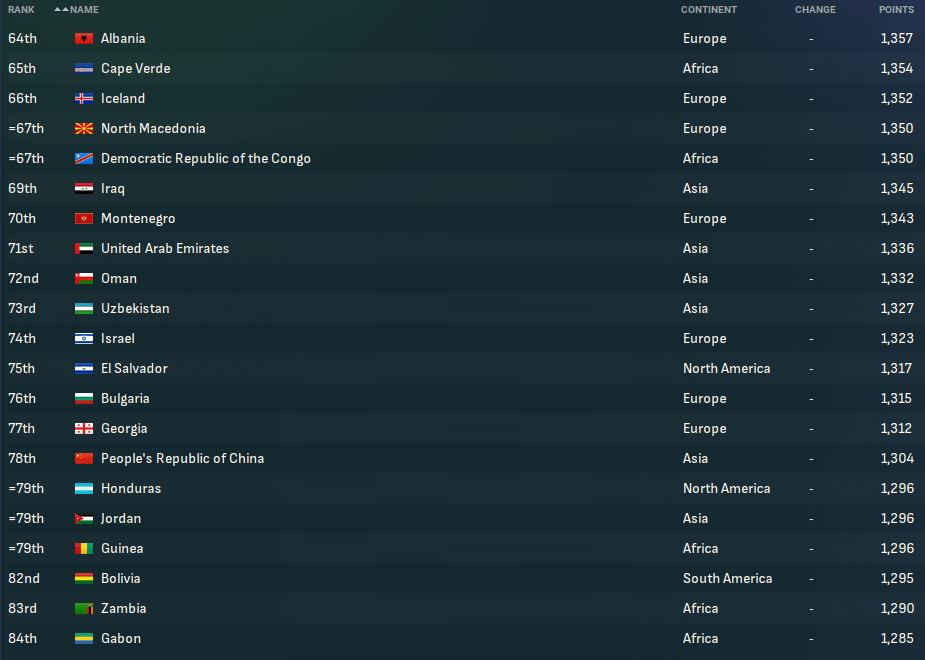
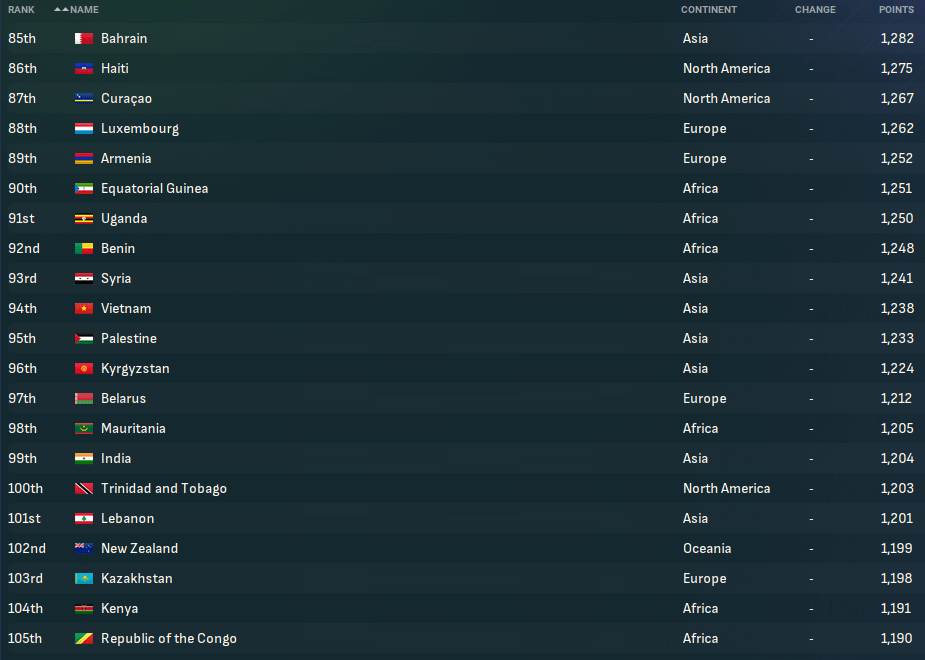
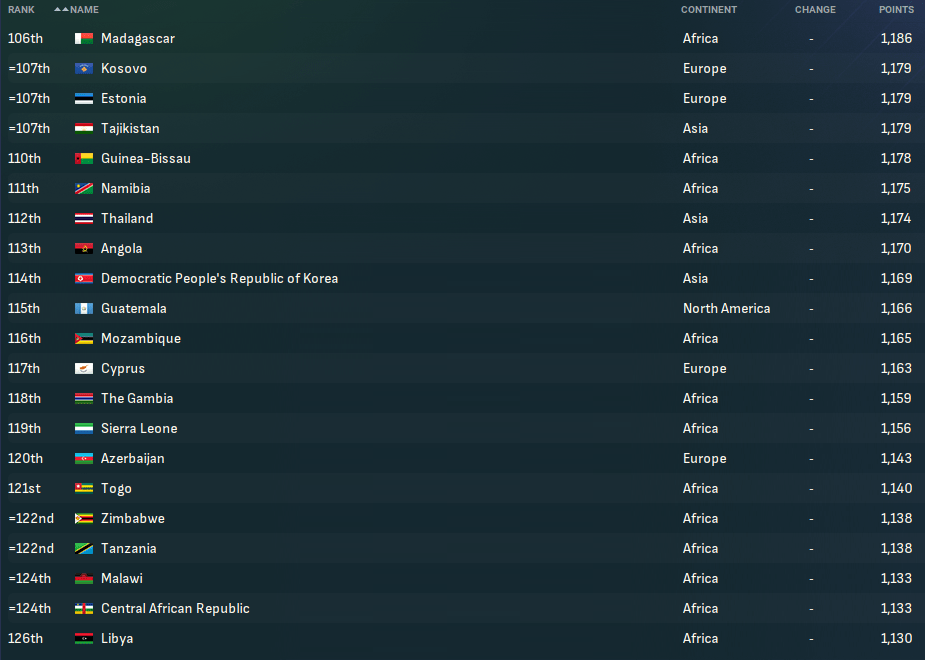
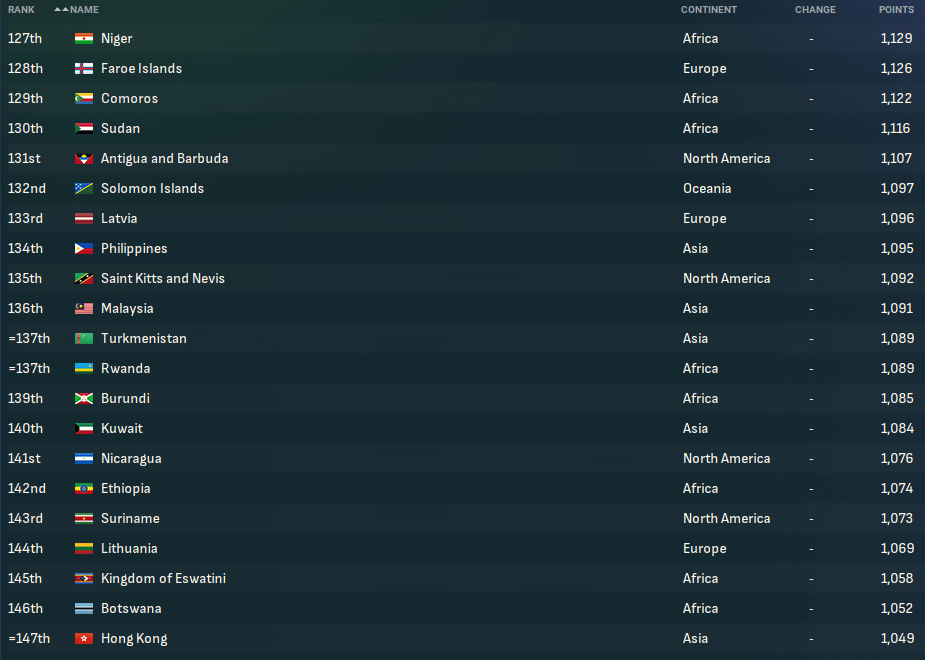
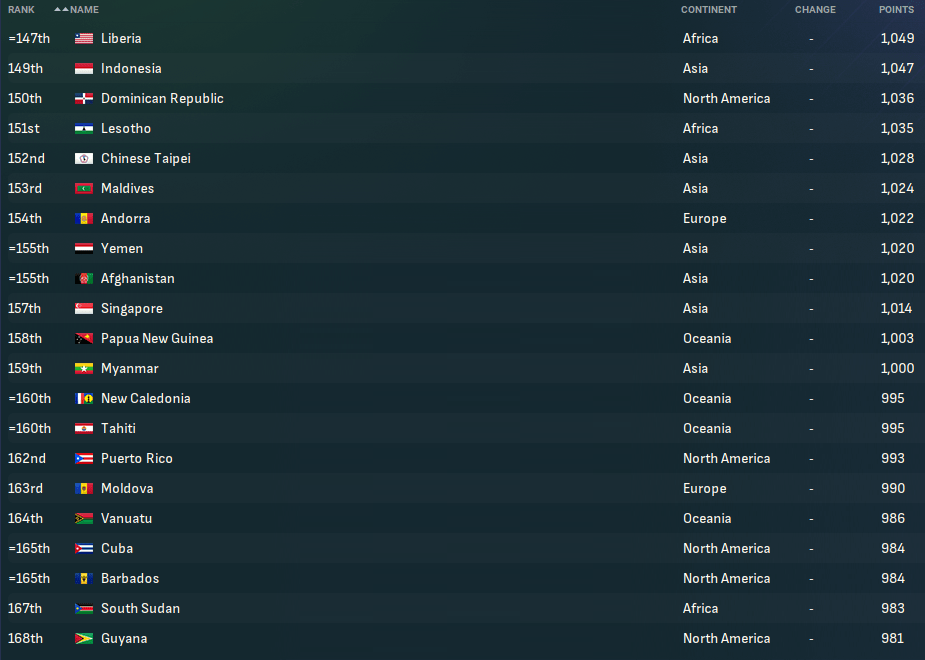
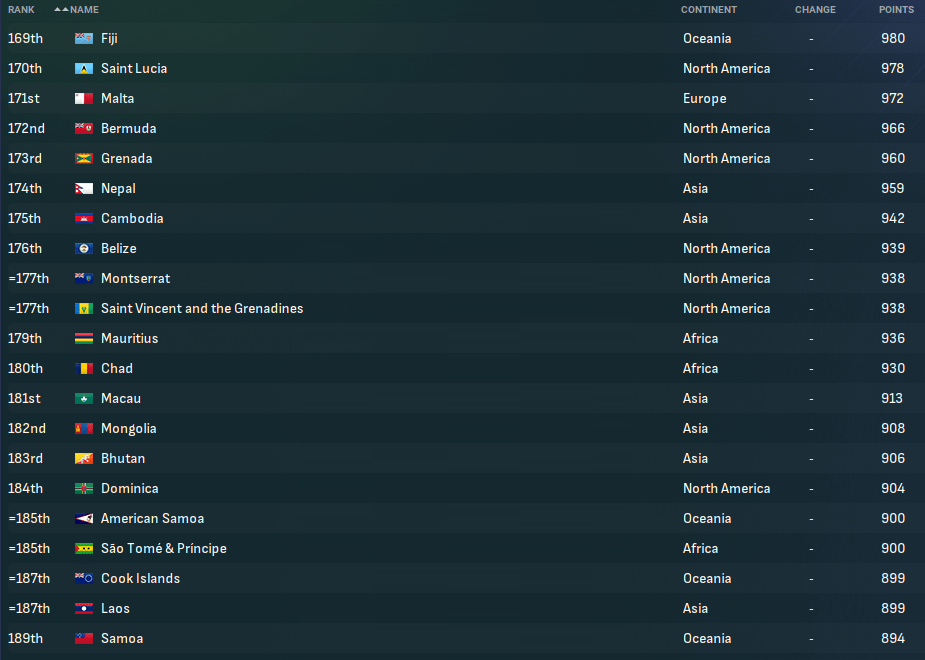
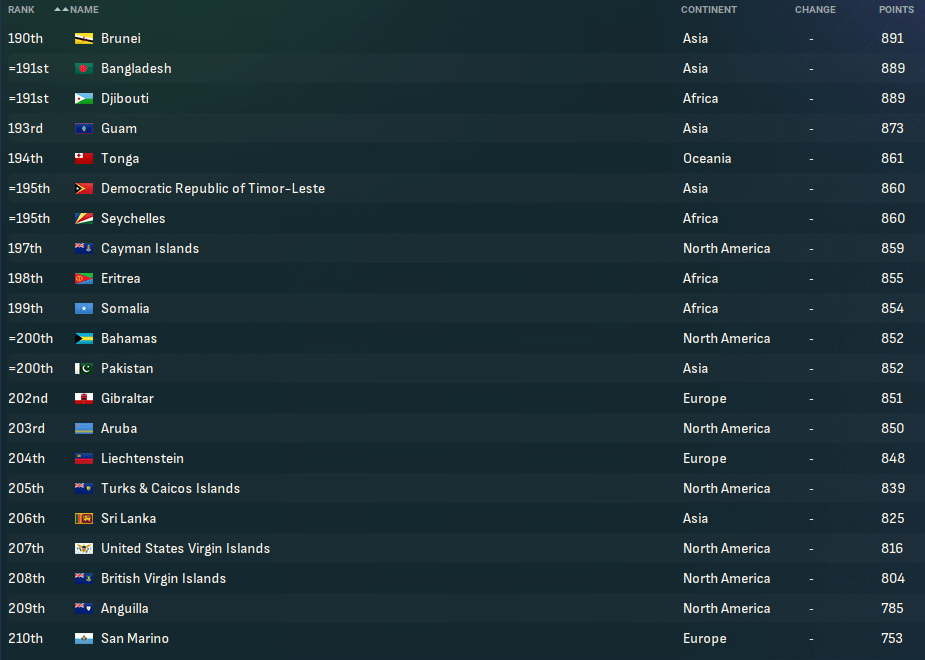
Whether a player got their nationality through birth, residency, a parent or a grandparent… it doesn’t matter. As long as he has that nationality available to him in the base game, he can represent that nation.
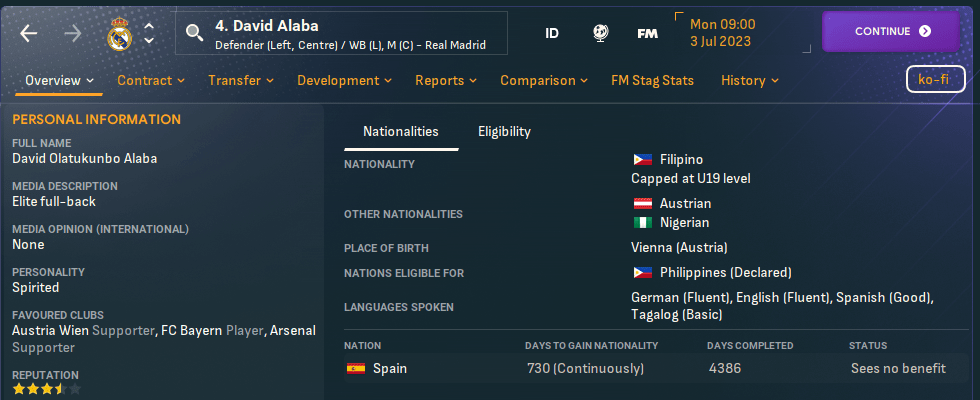
I’m going to use David Alaba as an example. The Real Madrid left-back is Austrian, but he also qualifies as Nigerian and Filipino through his parents. At the start of the save game, Austria are ranked 29th by FIFA, Nigeria are ranked =38th, and the Philippines 134th. That means Alaba will represent the Philippines in this competition.
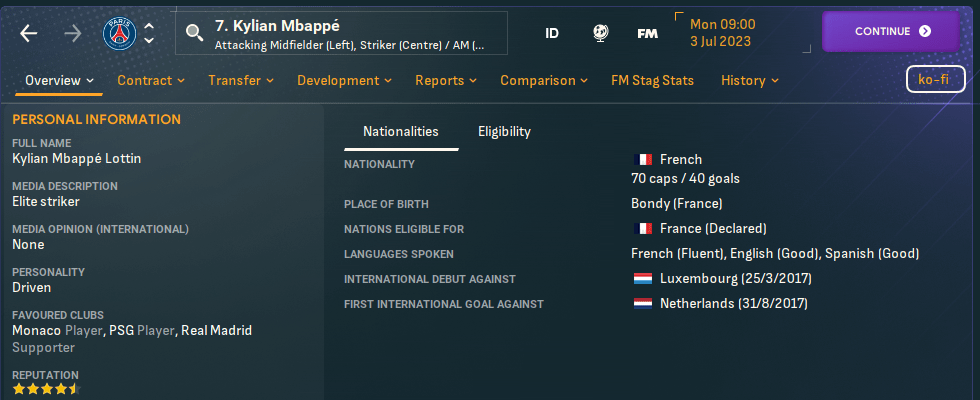
I will also only take into account nationalities that are assigned to a player in the original FM24 database. It’s common knowledge that Kylian Mbappé’s mum is from Algeria, and his dad is from Cameroon – but, for whatever reason, he doesn’t have these second nationalities in the database. Therefore, Mbappé will still play for France at the Fairer World Cup.
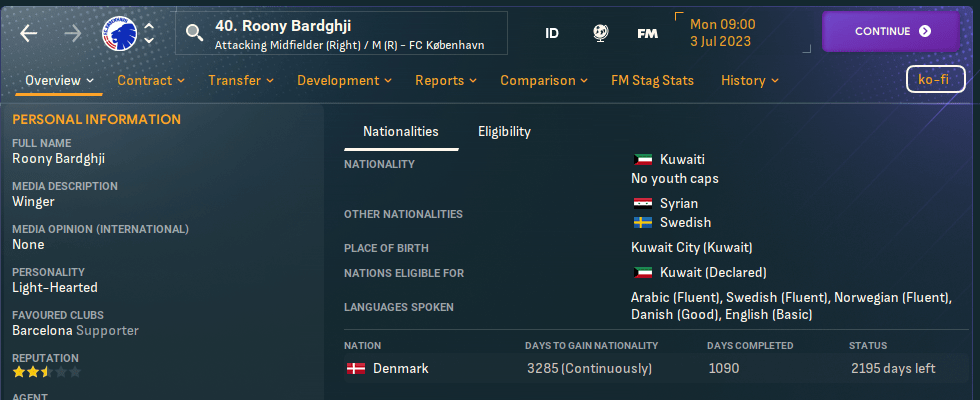
The only exception to this rule is if a player was born in a nation that is not one of his nationalities. That player can represent his nation of birth, but ONLY IF he does not qualify for any lower-ranked nations first – and I can verify that their birthplace was entered correctly in the database. (I noticed a suspiciously high number of non-league players in north-west England who were apparently born in Kendal, Indonesia rather than Kendal, Cumbria.)
Players who have switched nations via this rule include Roony Bardghji (Kuwait) and Rhys Norrington-Davies (Saudi Arabia).
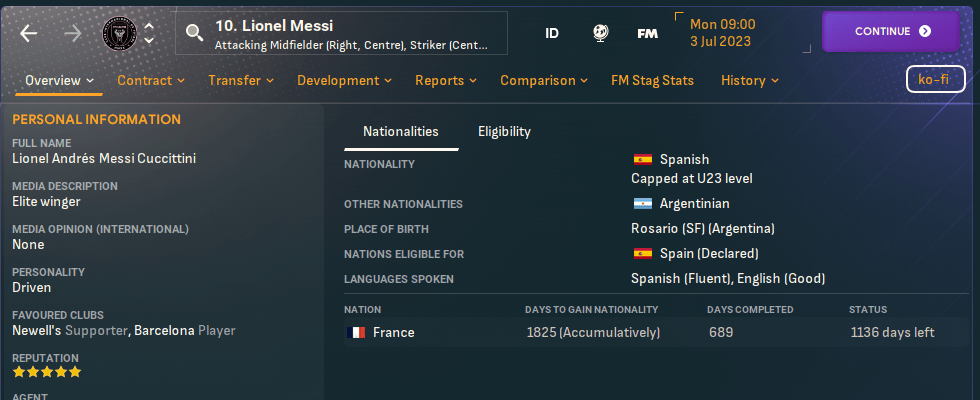
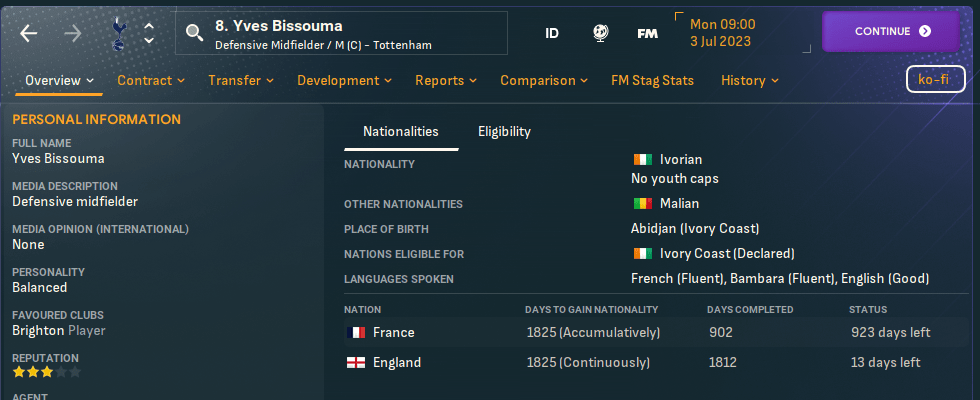
Even if there is a small gap between a player’s main nationality and their lowest eligible one, they will still have to switch. Lionel Messi will therefore play for Spain (10th), rather than Argentina (=1st). Likewise, Yves Bissouma will play for the Ivory Coast, even though they are only one position and five points behind Mali in the rankings.
This means that Argentina and France – as the joint-highest nations in the FIFA rankings – will essentially be restricted to only selecting players who don’t have any other nationalities. Inevitably, they will be annoyed at having much weaker squads… but this is the Fairer World Cup, after all. It’s designed to help out the ‘weaker’ nations and give them more of a fighting chance.
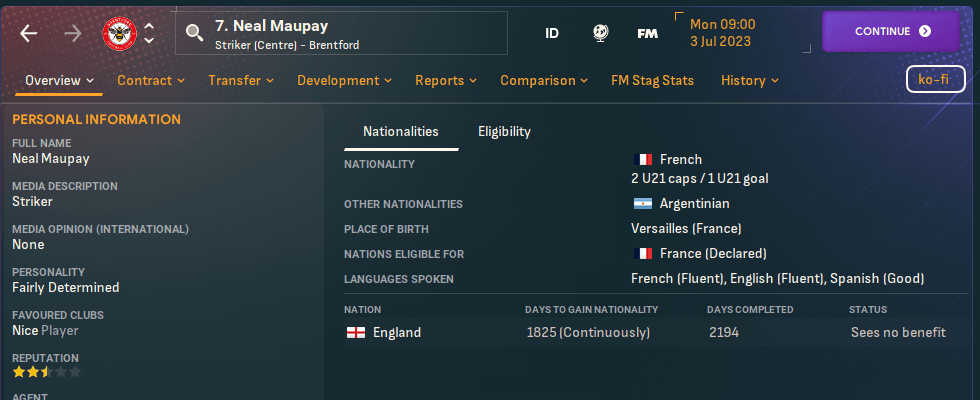
If a player has two available nationalities that are tied on the FIFA World Rankings (e.g. Zimbabwe and Tanzania in =122nd, or New Caledonia and Tahiti in =160th), I will give preference to the nation that was already assigned as their main nationality.
If a player has a nationality that is not a member of FIFA or is currently suspended from FIFA, that nation will be disregarded – and the player will instead represent the next-lowest nationality they have.
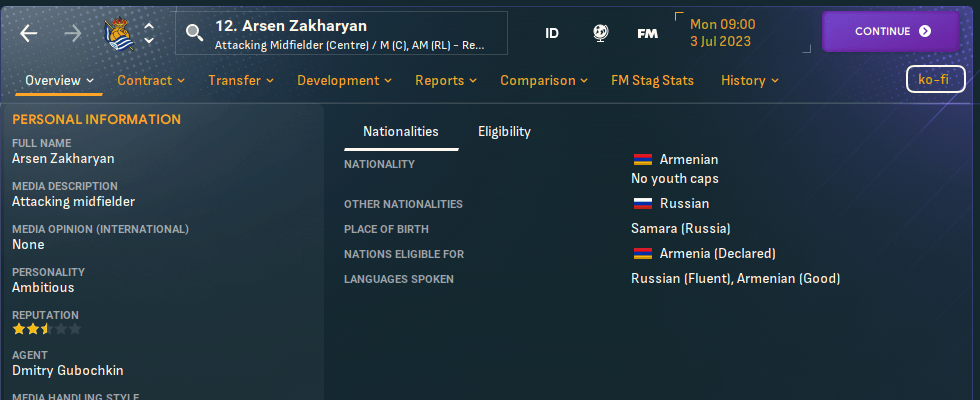
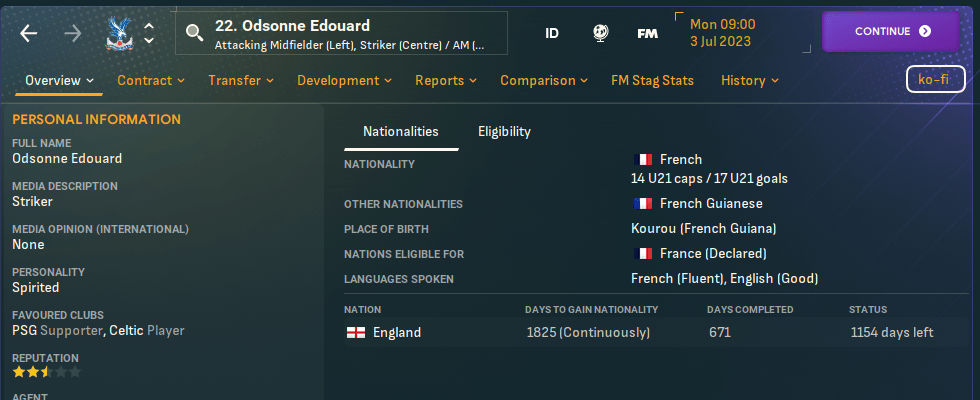
This means that several Russian players will be eligible to represent other nations at the Fairer World Cup. One Russian player who benefits from this rule is Real Sociedad’s attacking midfielder Arsen Zakharyan, who will represent Armenia. Likewise, because French Guiana and Guadeloupe are not in FIFA, players such as Odsonne Edouard and Thomas Lemar will still be eligible for France.
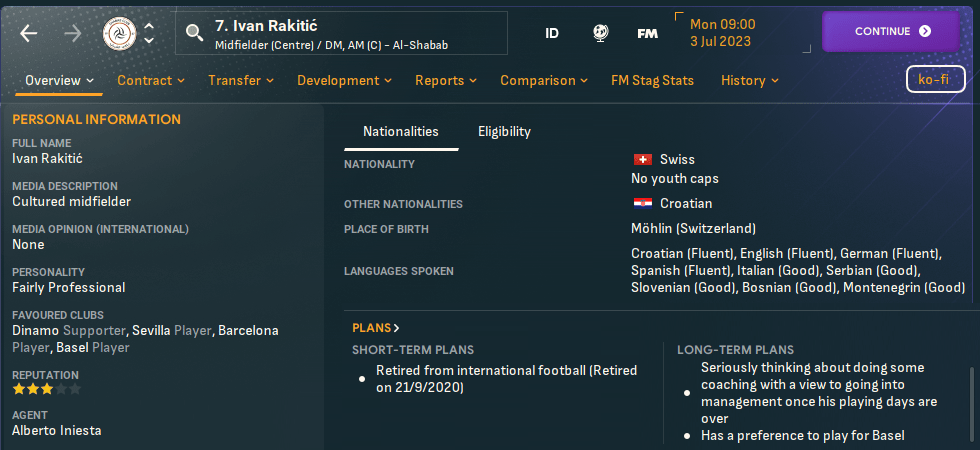
If a player is already retired from international football, he will stay retired – regardless of any nationality switches. Because Ivan Rakitić retired from Croatia duty in 2020, he will not play for Switzerland in the Fairer World Cup (though he will probably retire in-game before the tournament anyway).
I have excluded several players from the tournament for geopolitical reasons (e.g. ethnic Armenians from the Nagorno-Karabakh region will not be forced to represent Azerbaijan). I will also not be including any players who have sadly passed away since the last FM24 update, or anyone who has recently been charged with or convicted of serious crimes.
Newgens WILL be allowed to play in the Fairer World Cup, though they are subject to the same nationality rules as real-life players. As soon as they come on the international radar, I will use the official FM24 in-game editor to change their nationalities and/or declare them for their nations.
Lastly, I will use save-game editors – either FMRTE or the official FM editor – to try and keep some of the older elite international players active for the 2026 World Cup. I don’t really want Croatia to lose Luka Modrić to retirement after the first season, even if he is pushing 40. To be clear, I won’t force Croatia to pick Modrić; I just want them to still have the option of picking him.
But, of course, this is a three-season project on a save game with a large database, so I cannot keep everything hyper-realistic. Inevitably, some big players will retire before the World Cup – a few might even disappear completely unnoticed – but I will do whatever I can to keep as many of them available as possible.
THE QUALIFIERS: OCEANIA
Before the tournament kicks off properly, I’m going to make separate posts covering the qualifying campaigns in each of the six confederations. My next post will cover the AFC (Asia) qualifiers, followed by CAF (Africa), UEFA (Europe), CONCACAF (North & Central America and the Caribbean), and finally CONMEBOL (South America) and the intercontinental play-offs.
But first, we’re going straight to Oceania for the OFC qualifiers – where one automatic ticket to the World Cup and one play-off berth are at stake. Even though the other Oceanic nations might have gained an extra half-decent player here or there, New Zealand will probably still cruise through with ease, so we might as well get this out the way now.
Curiously, the World Cup qualifiers are folded into the OFC Nations Cup. The top six teams from the Nations Cup tournament in June 2024 will then come back to contest the qualifying rounds over the following season.
OFC NATIONS CUP
ROUND 1
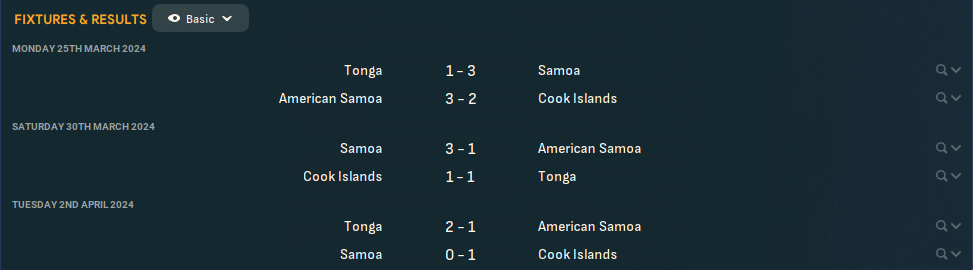

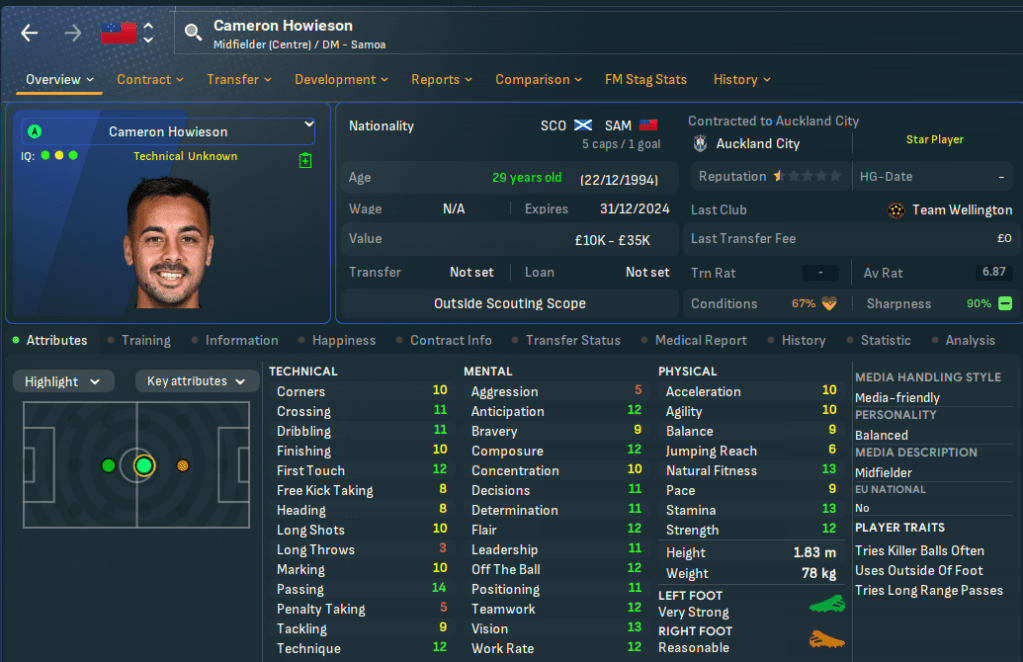
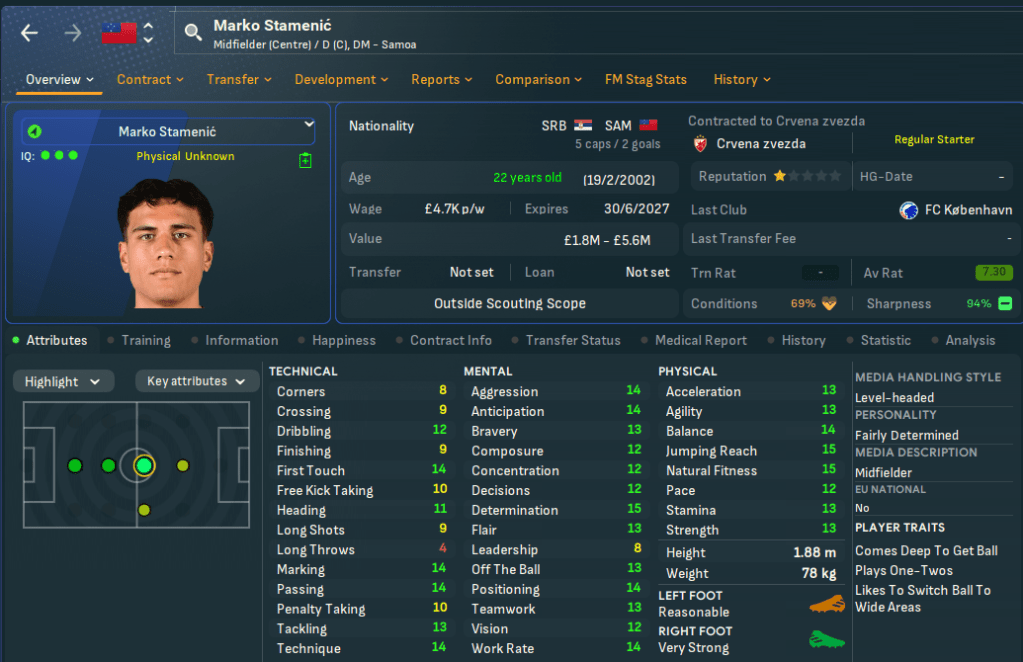
Samoa bossed the preliminary group stage – qualifying for the Nations Cup with a game to spare before losing a dead rubber against the Cook Islands. Their midfield has been boosted by a couple of former New Zealanders. Marko Stamenić is a skilful playmaker with Serbian giants Crvena Zvezda, while Cameron Howieson made a couple of Championship appearances for Burnley in…, er, 2012.
ROUND 2
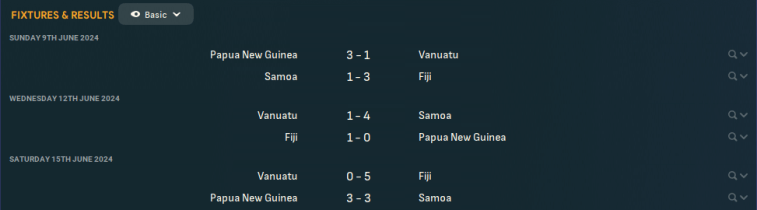
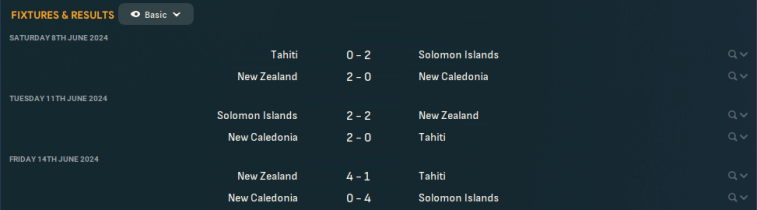
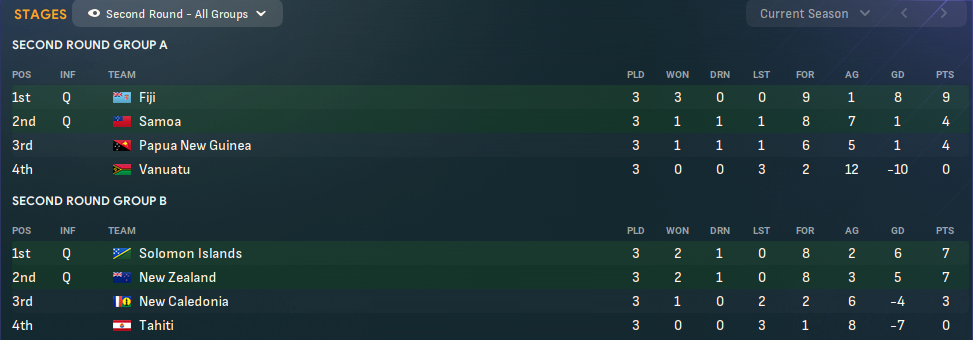
Despite only finishing 2nd in their group after drawing 3-3 with the Solomon Islands, New Zealand still won the Nations Cup – eventually beating the Solomons 2-1 in the Final. But we don’t care about that. All you really need to know is that Vanuatu and Tahiti finished bottom of their groups, which means they missed out on the World Cup qualifiers.
Now let’s fast-forward a few months, until the road to North America truly begins…
THE *ACTUAL* WORLD CUP QUALIFIERS
The remaining six teams played through another group phase – this time in groups of three. The group winners would then face each other to decide who would qualify automatically for the World Cup, and who would move on to the intercontinental play-offs.
GROUP STAGE
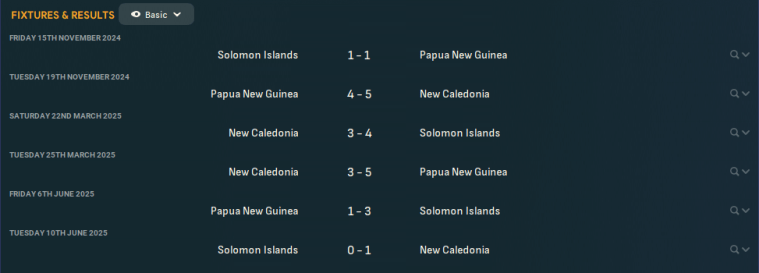
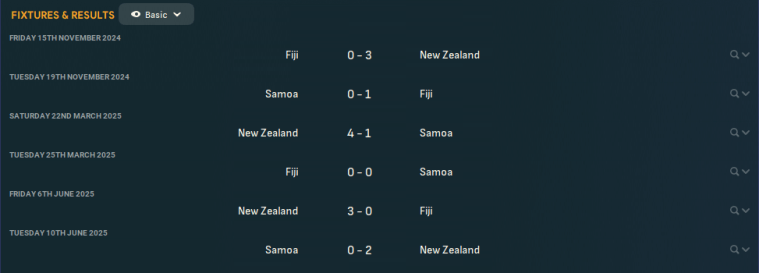
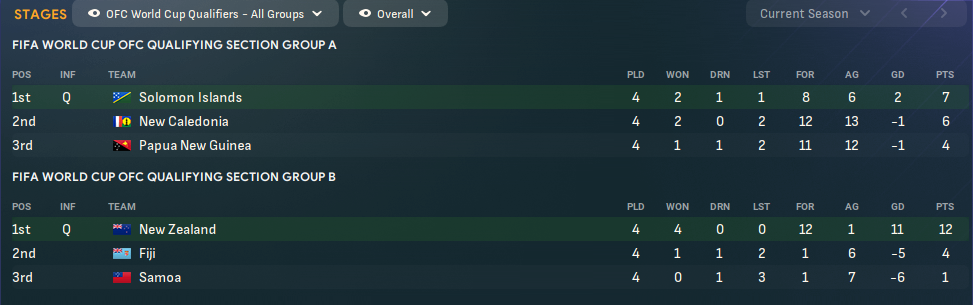
Stacey and Manor will be thrilled that the Solomon Islands won Group A. While they were the lowest scorers in their pool, they were also the only team who had something resembling a functional defence. A couple of thrilling away wins in New Caledonia and Papua New Guinea proved crucial.
There were absolutely no surprises in Group B, with New Zealand ruthlessly sweeping past Fiji and Samoa. It definitely helps when the All Whites have big Chris Wood up top and a newly-naturalised Ben Chilwell at left-back, while the best player Fiji could come up with – the Salford defender Adrian Mariappa – is now retired!
FINAL
And so it came down to a two-legged tie between the Solomon Islands and New Zealand – for a place at the World Cup finals. Who would come out on top? (You can probably guess.)

Okay, maybe it wouldn’t be so obvious. Danish-based winger Callum McCowatt gave New Zealand a very early lead in Honiara, but they then wasted a shedload of chances before throwing it away in the 90th minute. A sloppy back-pass from Wood was followed by a clumsy foul on Tim Payne to give the Solomon Islands a penalty, which was scored – naturally – by their left-back John Aeta.
So it was 1-1 heading into the return leg in Auckland. Could we yet get a major shock?

Ahem… no, we couldn’t. A brace from Wood and another McCowatt strike had New Zealand home and hosed by half-time. The Solomons fought valiantly in the second half to pull it back to 3-1, but they would get another chance through the intercontinental play-offs.
After all that, New Zealand had qualified for the World Cup as the best team in Oceania. Who’d have thunk it?
OFC QUALIFYING STATS
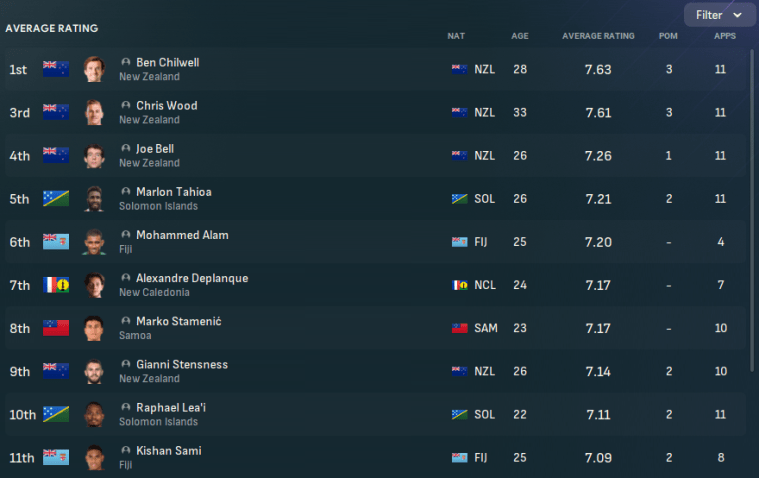
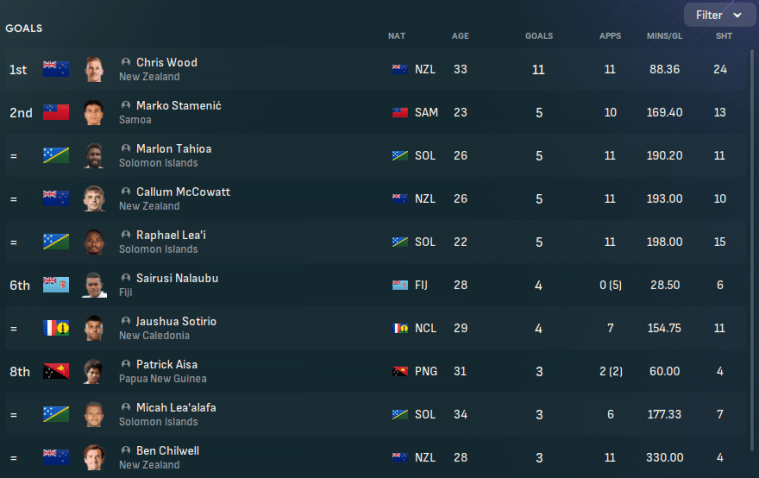
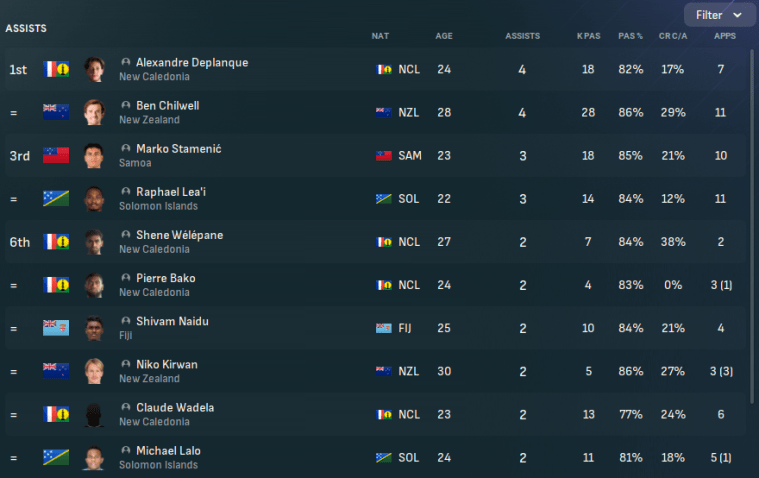
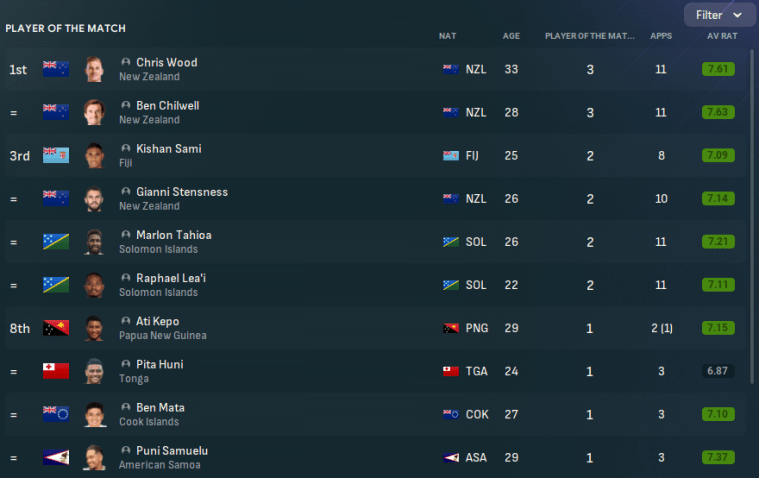
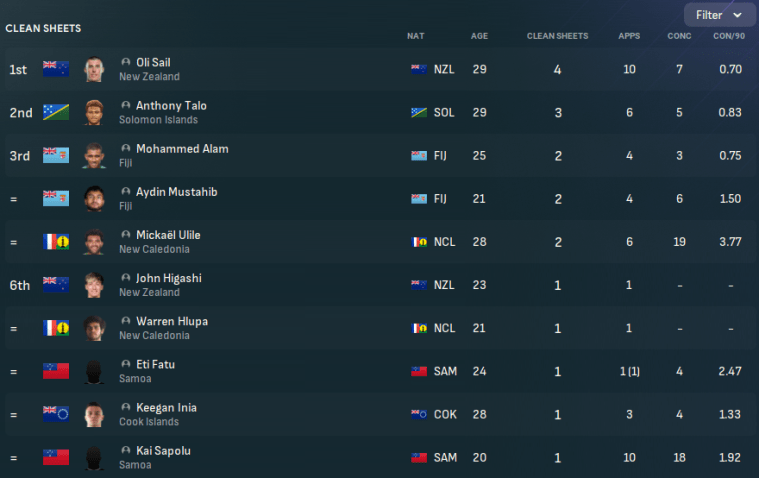
(No, this isn’t FM forgetting how to count. The player with the 2nd-highest average rating retired before the end of the qualifiers.)
That was my introduction to the Fairer World Cup. If this sounds intriguing to you, feel free to press the ‘Follow’ button below to be notified when the next post goes live.
You can also find me on Threads and Bluesky. This is my most ambitious Football Manager project in years, so any shares or reposts would be greatly appreciated.
I will be posting regular updates over the next few weeks, as we go through the qualifying rounds and then obviously the tournament itself. I hope you’ll join me as we find out who would win a World Cup in which more nations could pick their best players.
The adventure continues on Wednesday, when the Asian qualifiers get underway. Until next time…

