
It’s time for another installment of the Fairer World Cup – the Robin Hood of international tournaments. We’ve taken several players from stronger national teams and given them to ‘weaker’ nations that they are also eligible to represent.
For example, both Brazil and Croatia have lost several regular starters to lower-ranked nations, while Jamaica have gained almost an entire squad’s worth of English-born talents. If you want to see how they got on earlier in the Group Stage, check out my recaps of Groups E and F.
This chapter is all about Groups G and H, which feature the likes of Norway, Uruguay, and the defending champions Argentina.
GROUP G
ARGENTINA
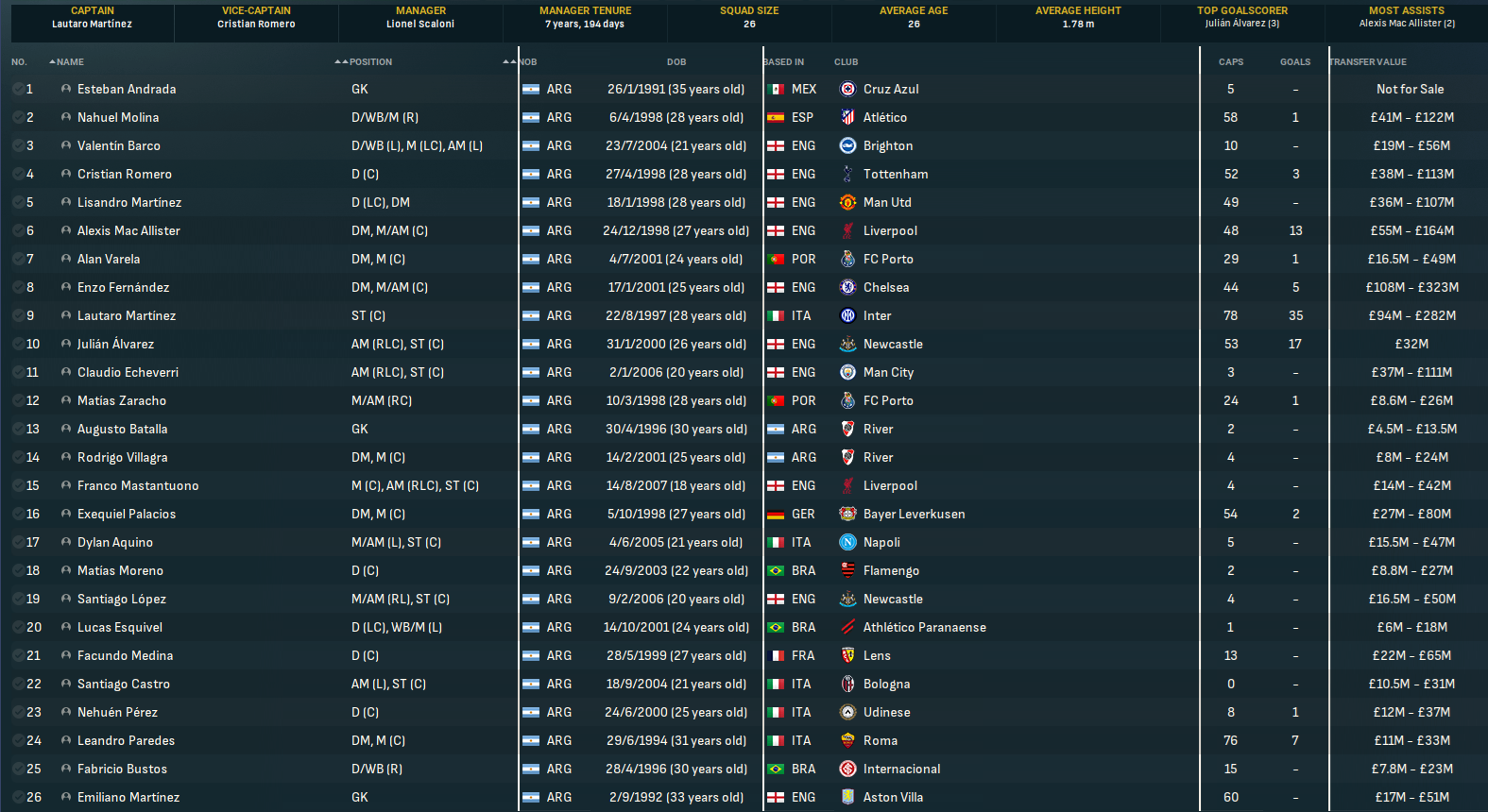
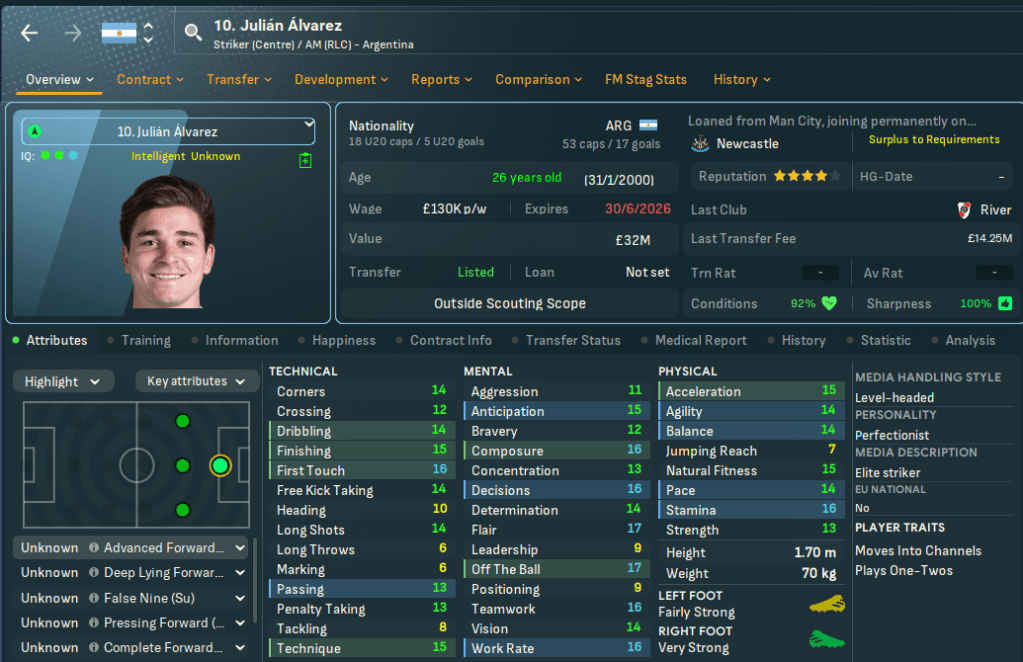
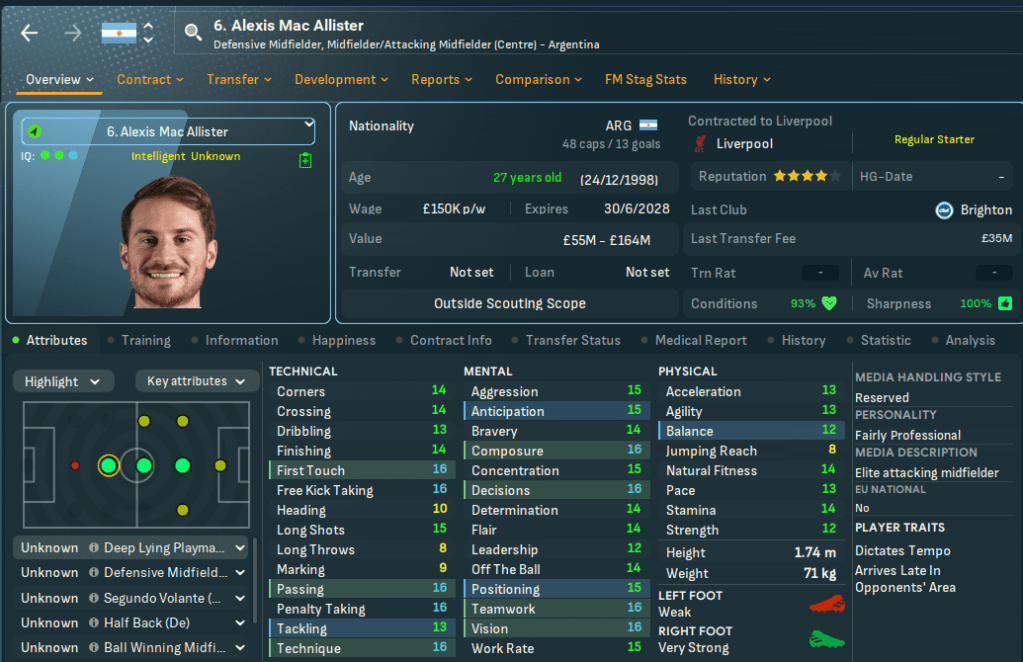
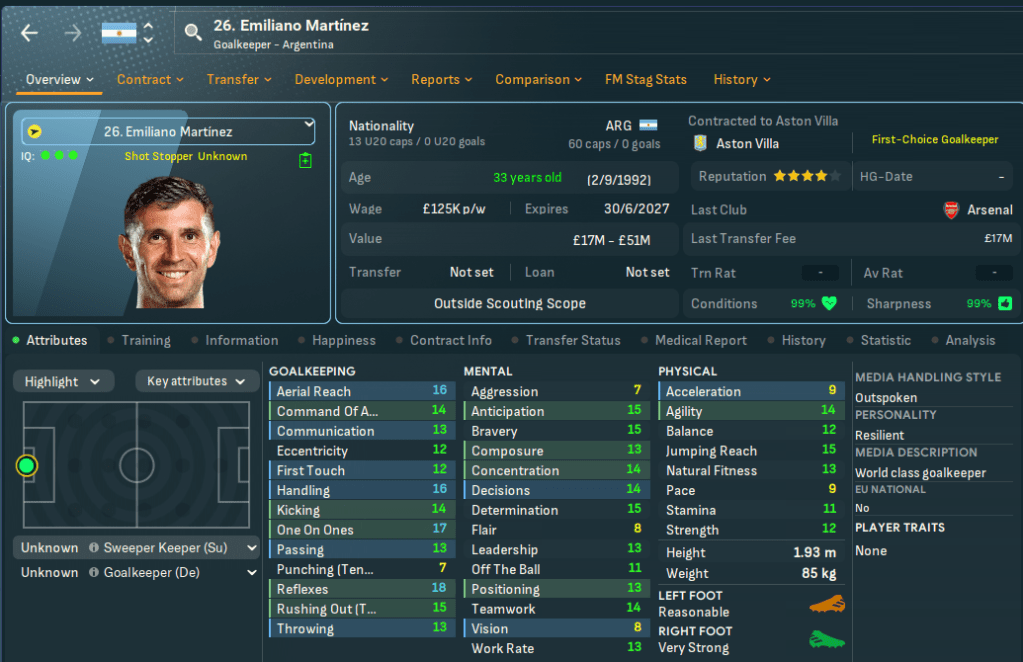
Argentina were joint-top of the FIFA rankings before the qualifiers… but unlike France, the holders had no problems booking their tickets to North America. Even without Lionel Messi and various other European defectors, they still won the Copa América in 2024 and have an exceptional squad in all departments.
Energetic striker Julián Álvarez may be the new golden boy of Argentine football, but La Albiceleste’s top scorer in qualifying was actually their set-piece maestro Alexis Mac Allister. Lionel Scaloni’s team are especially sturdy at the back, with Emiliano Martínez possessing a safe pair of hands… when they’re not defiling the Golden Glove.
So, can Argentina keep their dirty paws on the silverware? Well… a somewhat short defence could be vulnerable to set-pieces, and their aggressive tackling might get the better of them. But if they can control their discipline, perhaps they could do it again.
UKRAINE
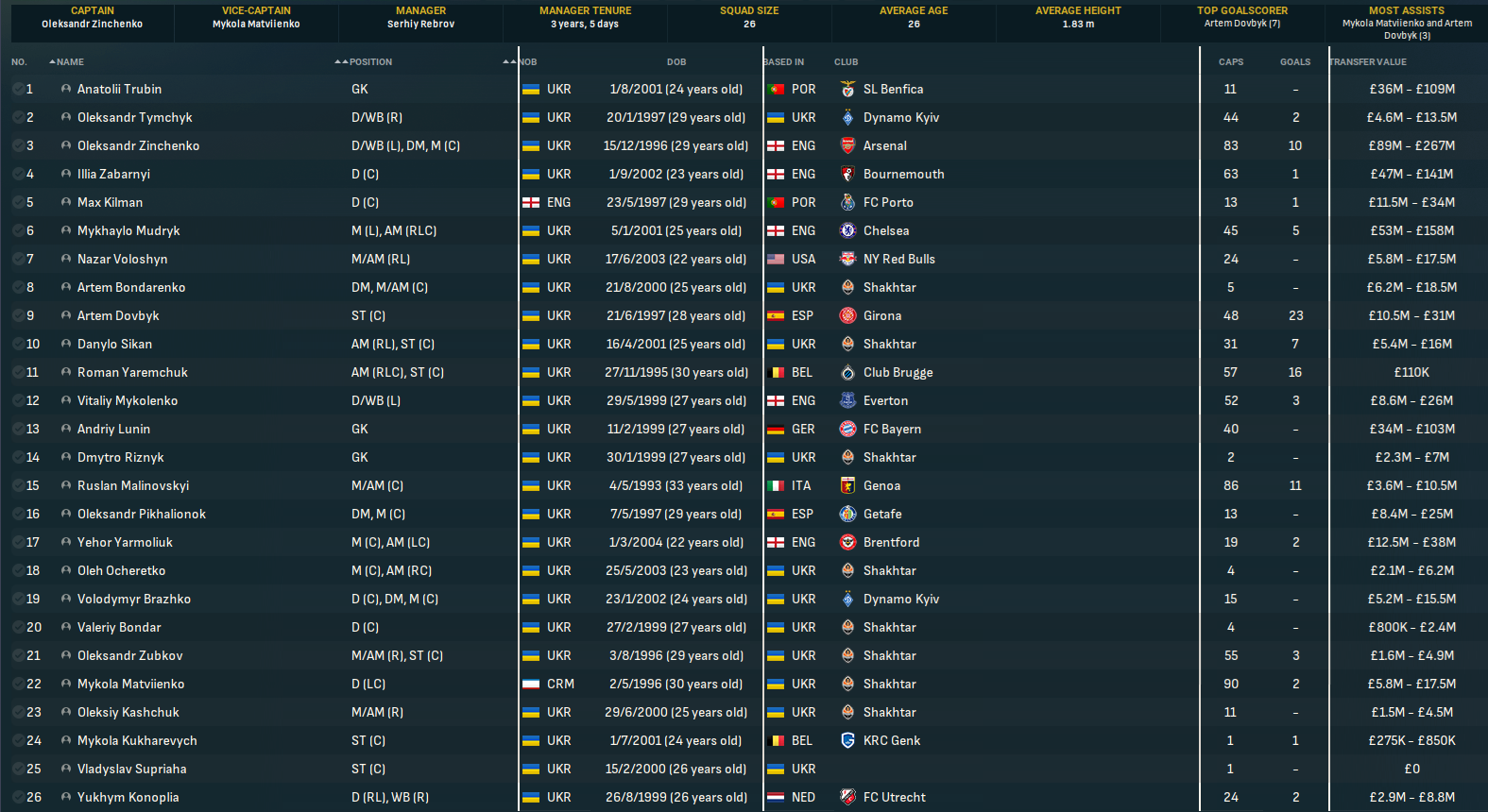
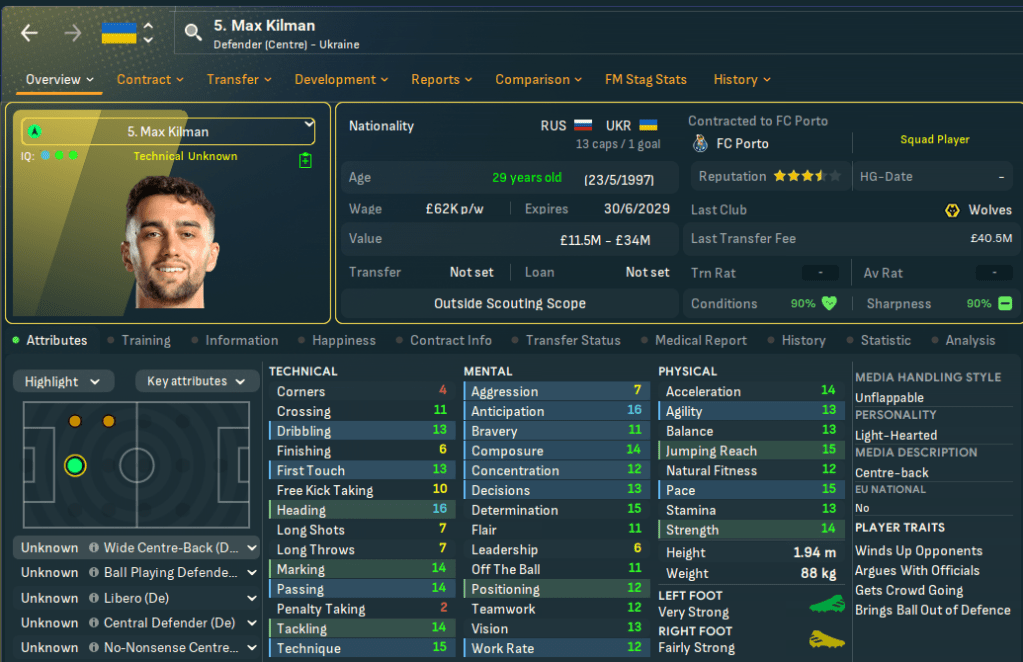
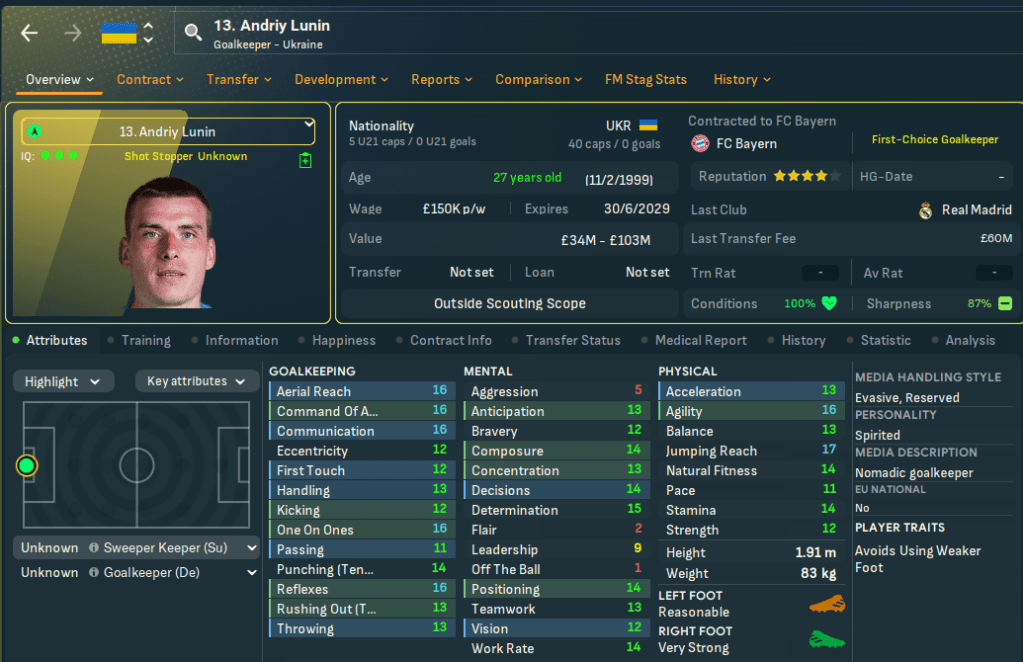
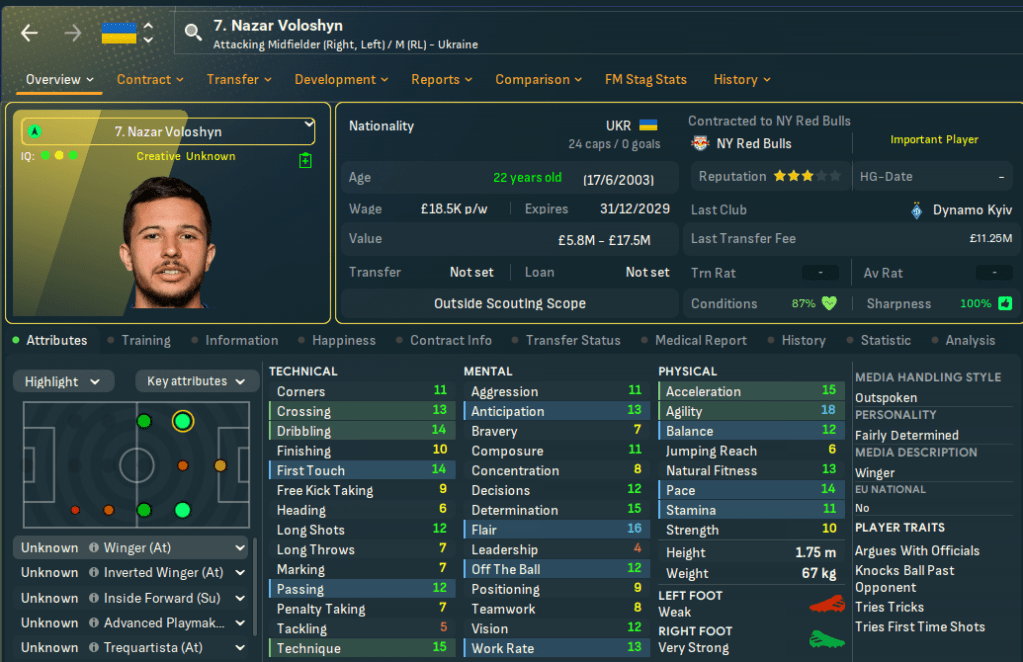
Ukraine’s qualification for the World Cup was emotional for so many obvious reasons. But as well as being the second-favourite team of many spectators, they will also enter the competition in good form and full of confidence. Perhaps their dream run to the Euro 2024 Final wasn’t a fluke?
Former England futsal international Max Kilman – now a giant presence in Porto’s defence – is the only non-native in the Zhovto-Blakytni squad. Goalkeeper Andriy Lunin – who succeeded the great Manuel Neuer at Bayern München – is set to get the nod over Benfica’s Anatolii Trubin, while the young creative winger Nazar Voloshyn moved to New York earlier this year.
Ukraine are somewhat lacking on the mental side of things, and with few natural leaders, they could struggle when the chips were down. They will also be desperate for star striker Artem Dovbyk to rediscover the ruthless scoring form he had two or three years ago.
MALI
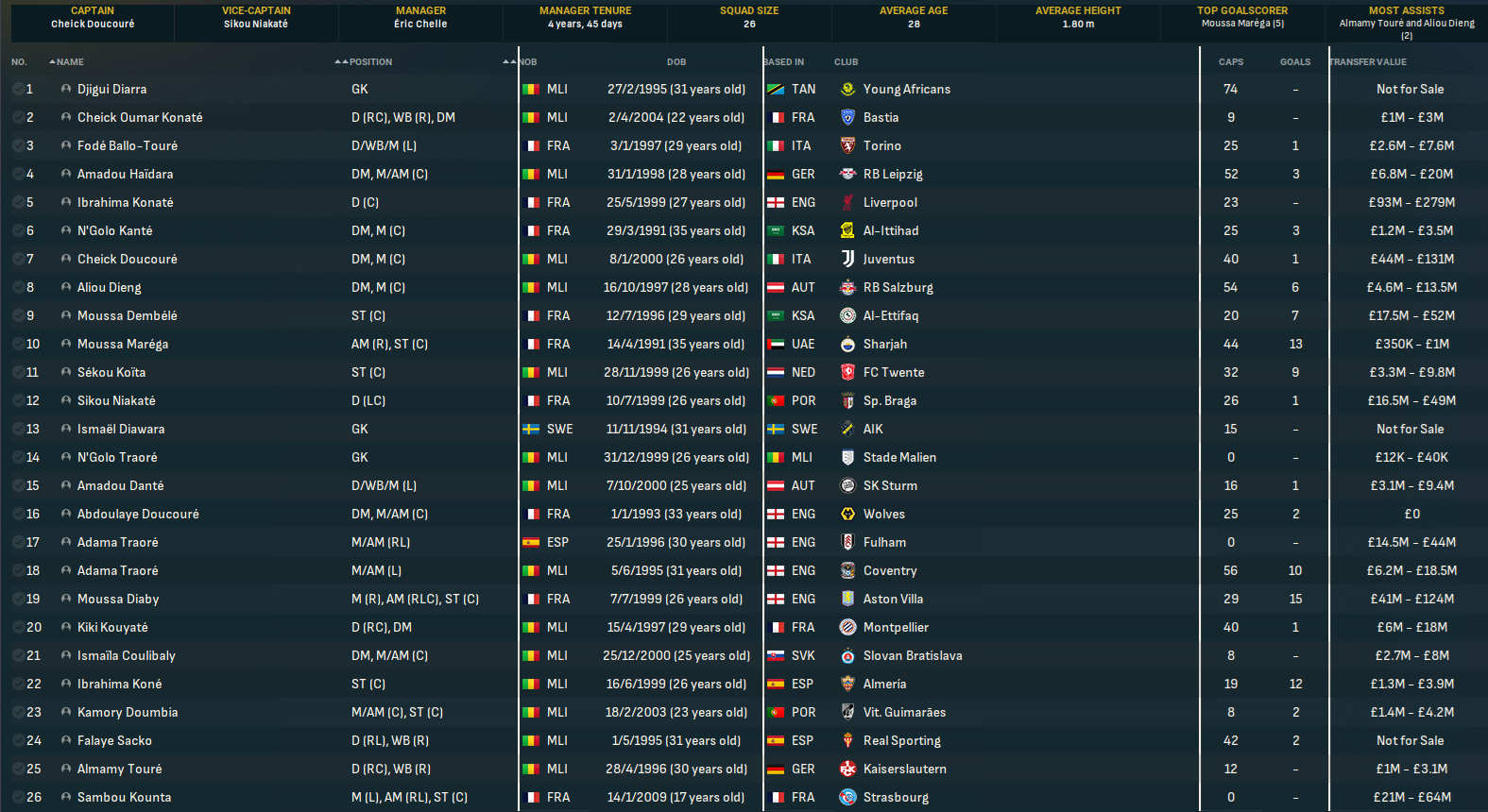
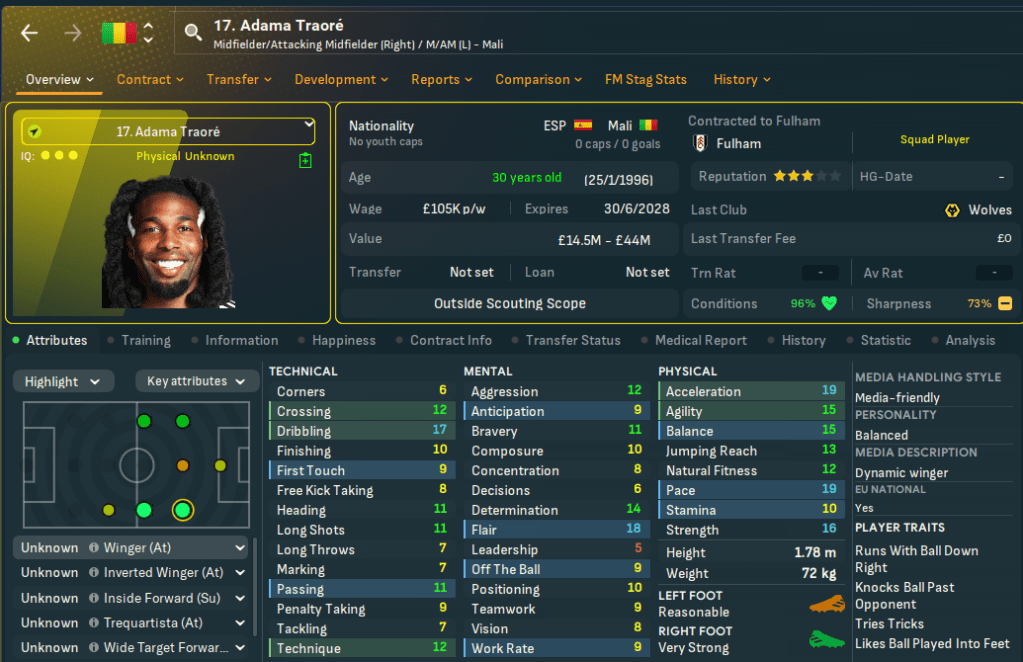
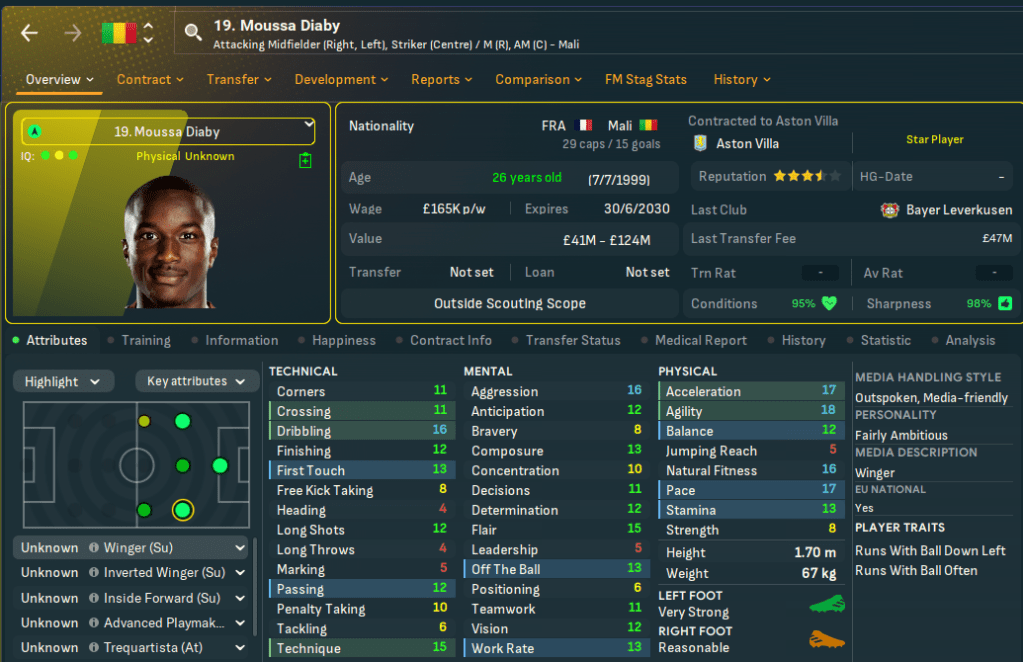
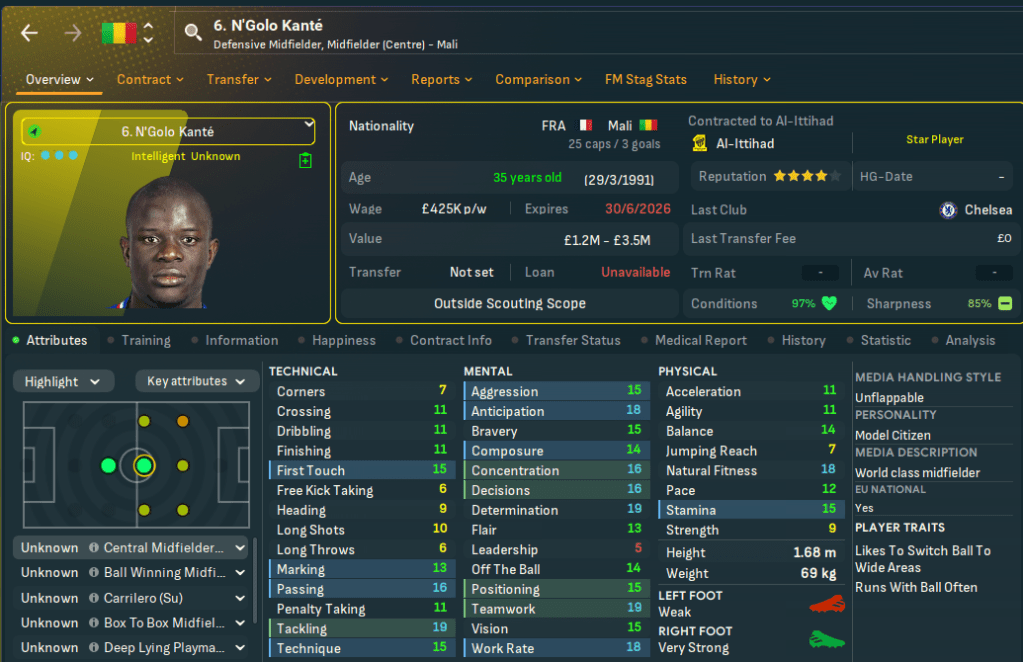
Mali may be debutants, but they won’t play like rookies. They eased through the qualifiers undefeated and then pushed the highly-fancied Nigeria close at the Africa Cup of Nations in January.
With some incredible physical presences in attack, Mali could cause a lot of damage. They don’t come much bigger than Fulham’s Adama Traoré, who – incredibly – is yet to play for the Eagles (incidentally, another winger also named Adama Traoré has over 50 caps). Likewise, the diminutive Moussa Diaby has blistering pace to burn.
While it’s impossible to ignore the Duracell bunny that is N’Golo Kanté, Mali are perhaps lacking a little penetration in midfield. The lack of a reliable big-league goalkeeper could also cost them in the later stages.
NEW ZEALAND
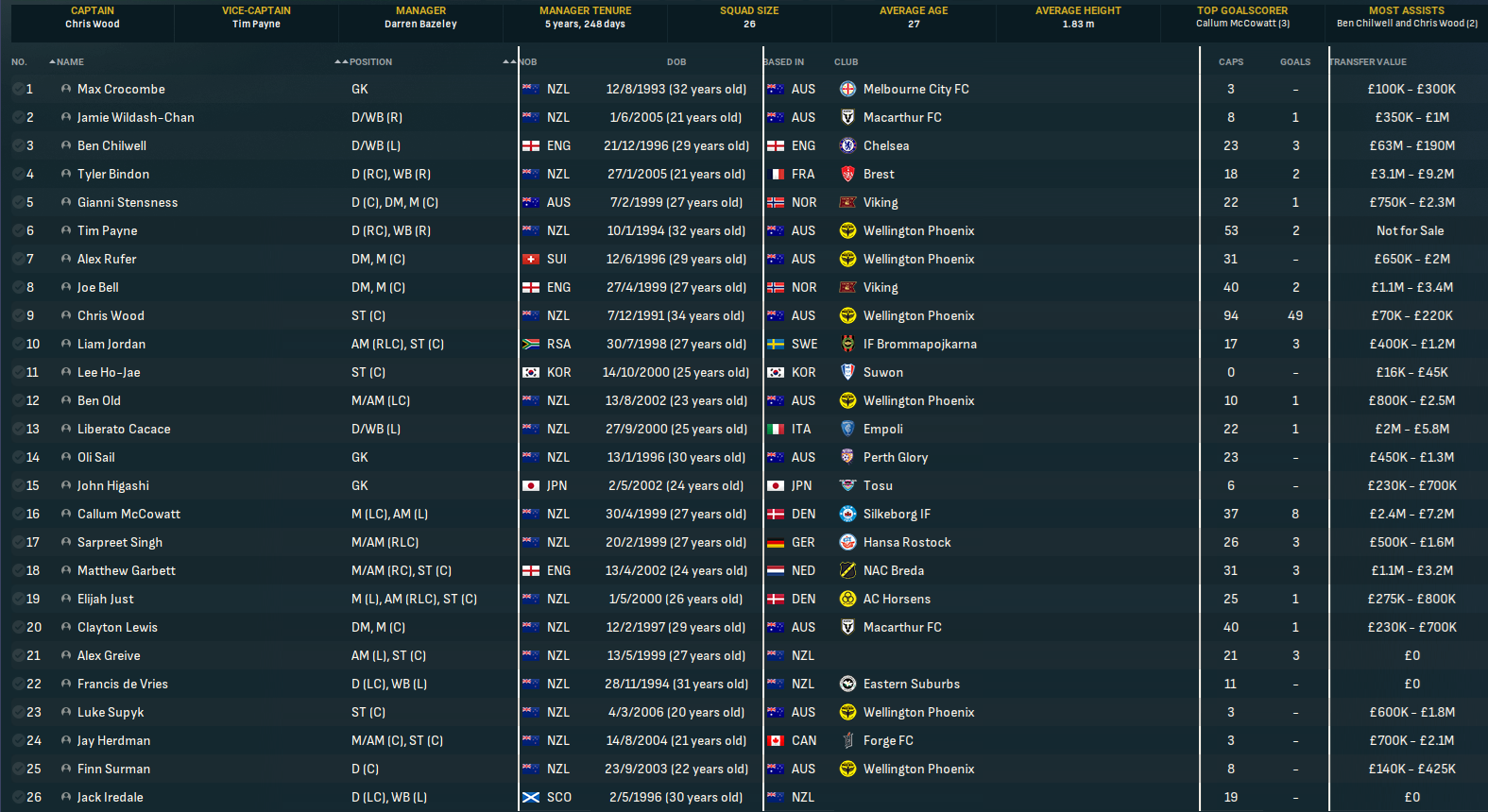
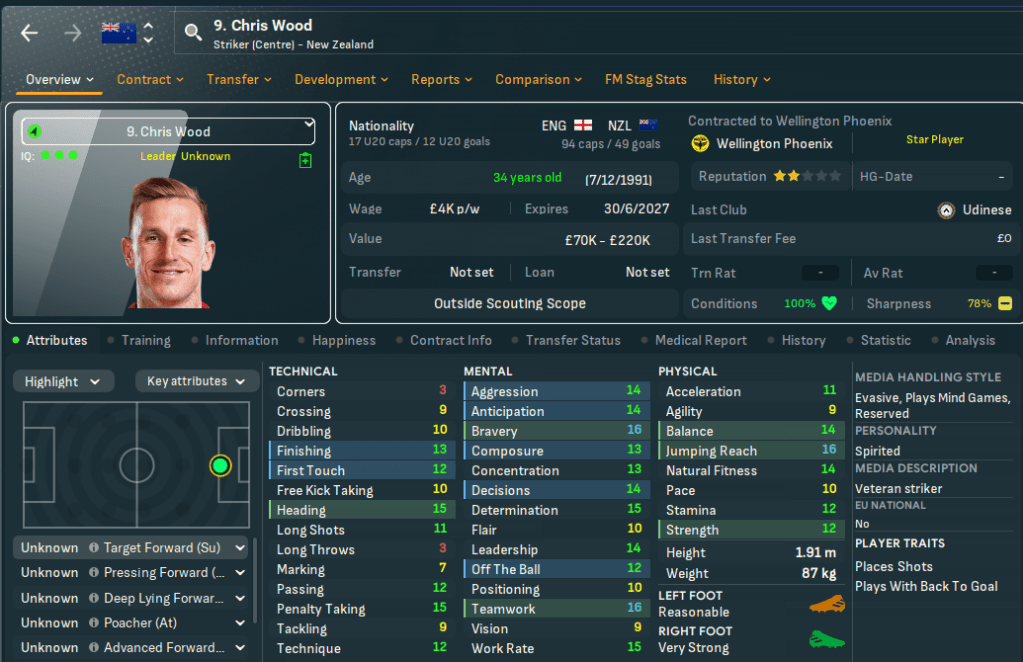
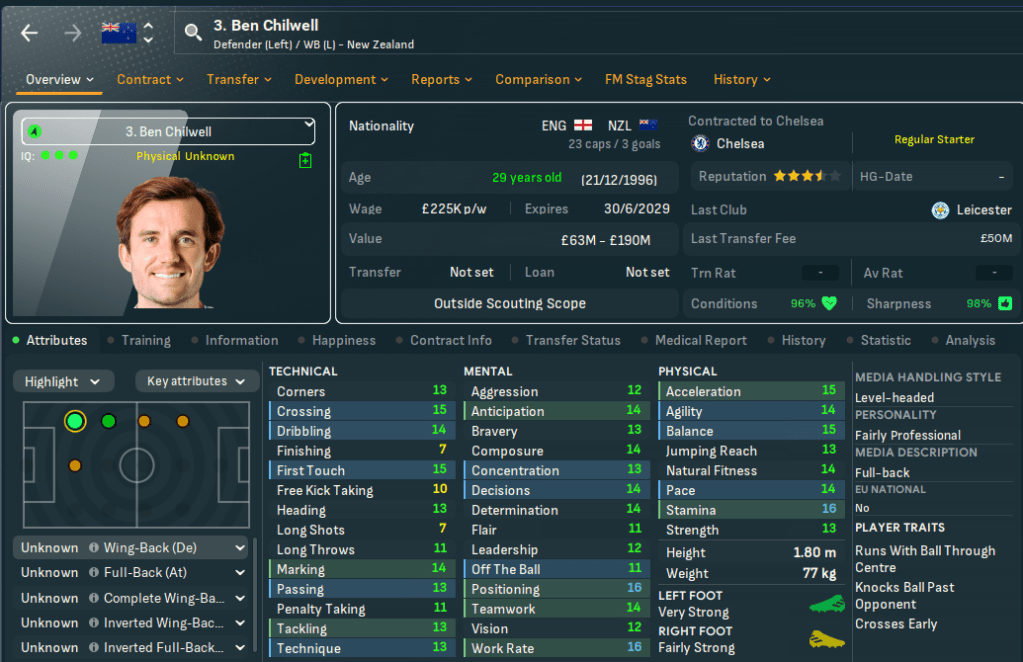
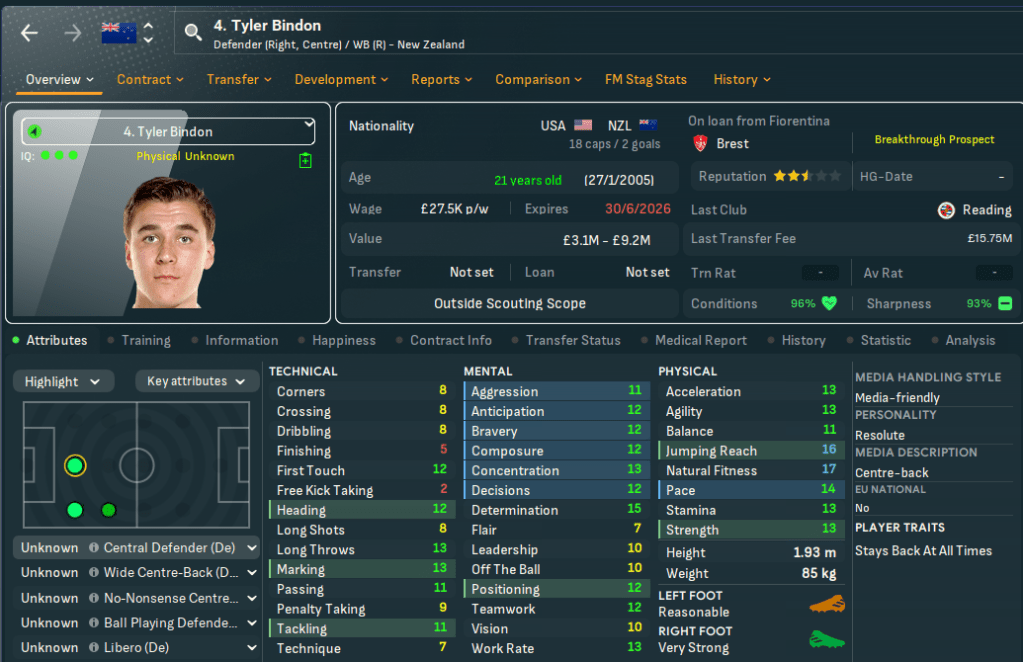
New Zealand were a shoo-in for OFC qualification, but they now face three opponents who each represent a huge step-up in class. Coached by former Watford right-back Darren Bazeley, the All Whites could be in danger of a whitewash.
A lot of responsibility will be on the broad shoulders of Chris Wood, who has scored more international goals than all his team-mates combined. The other marquee player in the squad is Chelsea’s forgotten left-back Ben Chilwell, whose dad was a Kiwi. Not the fruit, obviously. Or the bird.
Though Tyler Bindon has shown plenty of promise at centre-half since his emergence at Reading, he and the rest of the Aotearoa defence could be on a hiding to nothing. There surely isn’t enough quality squad depth for them to survive the group.
ARGENTINA vs UKRAINE
(13 June – Kansas City)
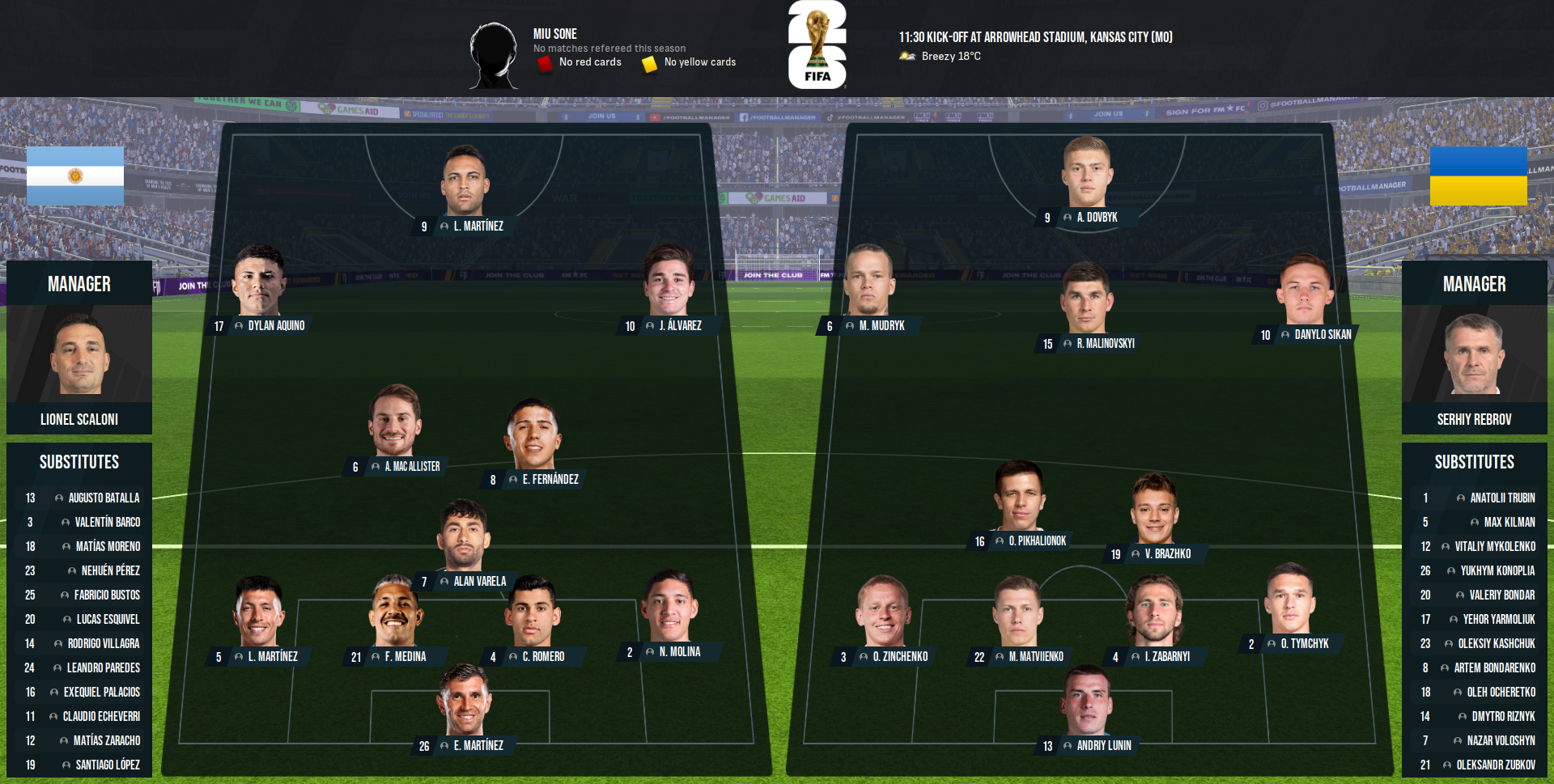
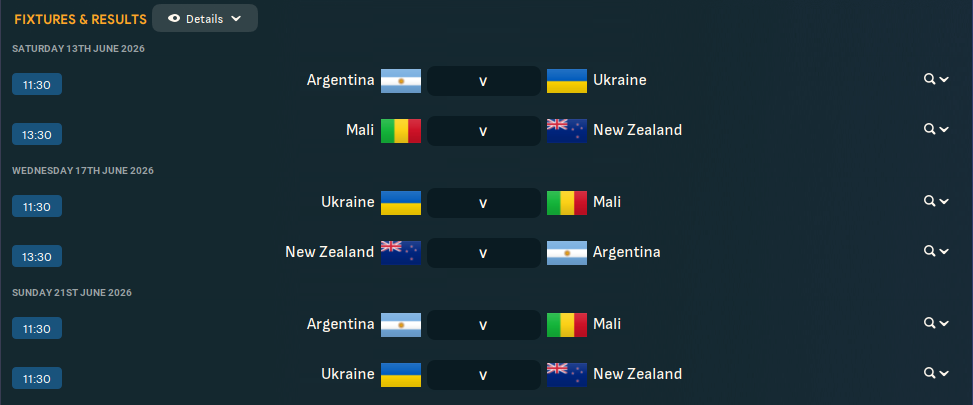
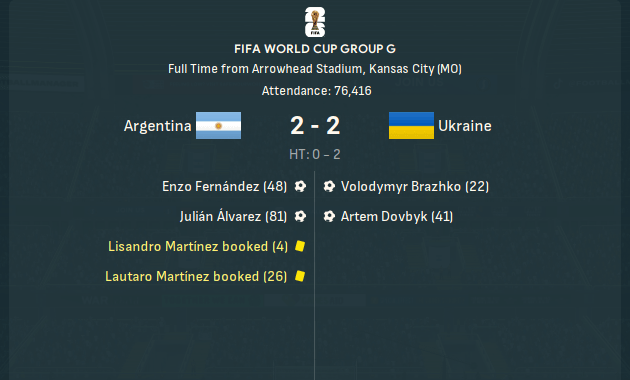
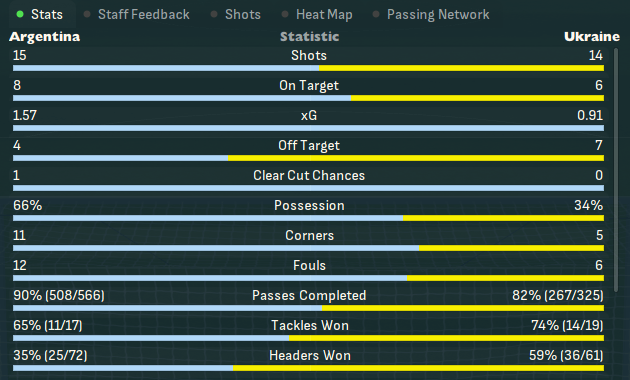
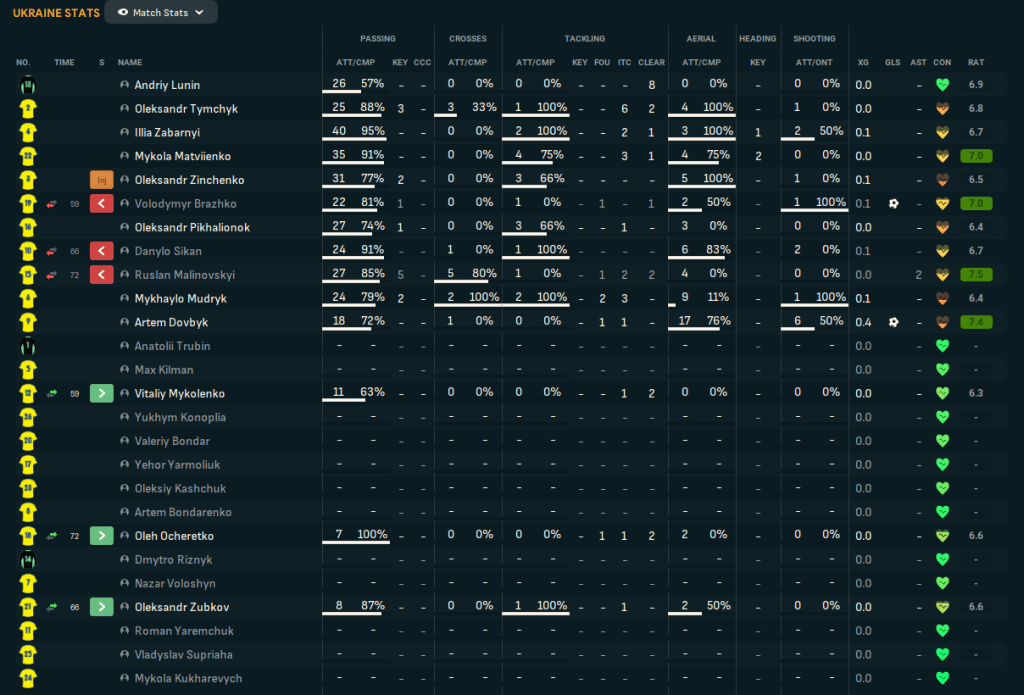
Argentina made a bright start to their title defence, dominating the first 20 minutes against Ukraine… but it was the neutrals’ sweethearts who broke the deadlock! La Albiceleste were indeed vulnerable to set-pieces, as Volodymyr Brazhko showed when he headed home from a Ruslan Malinovskyi corner! 1-0 Ukraine!
And then, in the 41st minute, they did it again! This time, it was Girona frontman Artem Dovbyk who rose highest to double the Ukrainian lead from another Malinovskyi corner… before proudly showing off his sports bra just like Brandi Chastain.
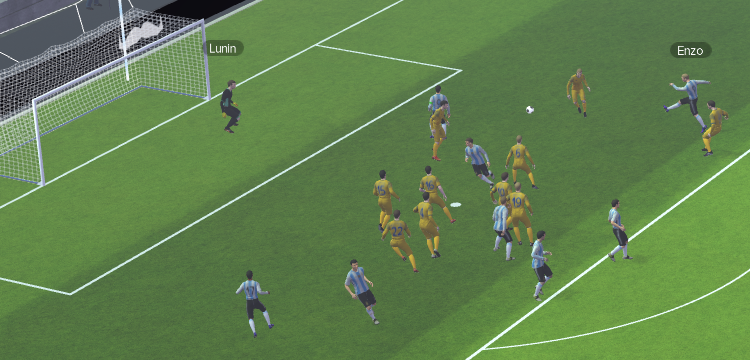
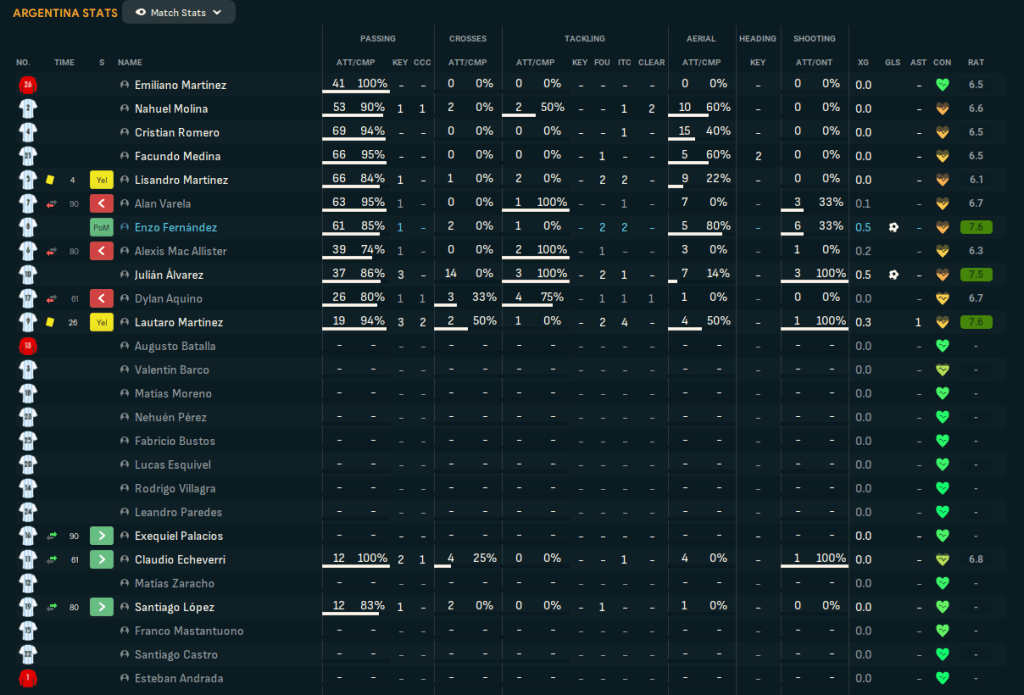
The champs came back fighting in the second half, with Enzo Fernández pulling a goal back from distance early on. Argentina’s recovery resumed nine minutes from full-time, when Lautaro Martínez cut out a poor back-pass from Mykola Matviienko and then laid on the simplest of finishes for Julián Álvarez. Ukraine were gutted not to hold on, but a 2-2 draw was still a tremendous result.
MALI vs NEW ZEALAND
(13 June – Foxboro)
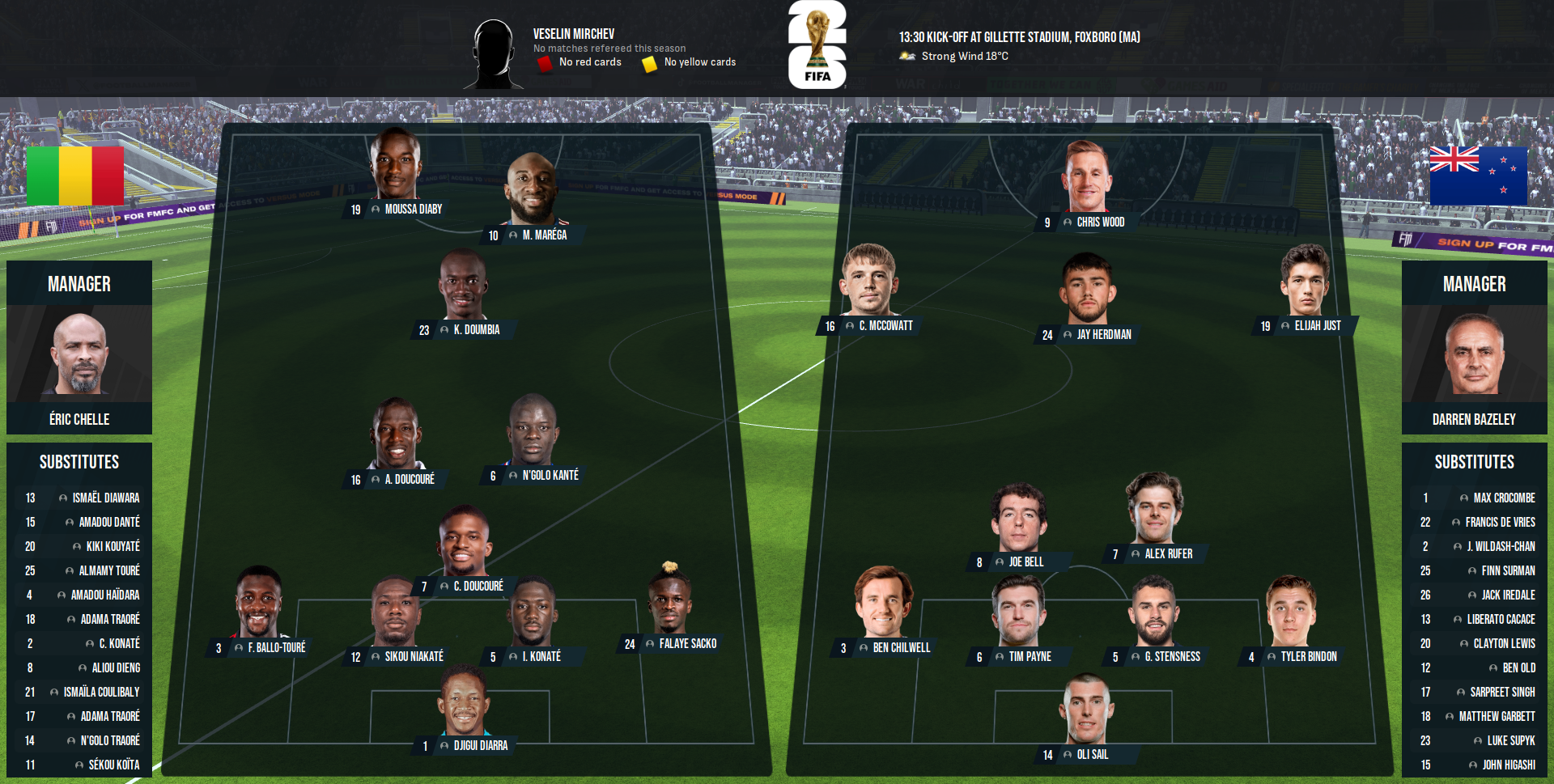
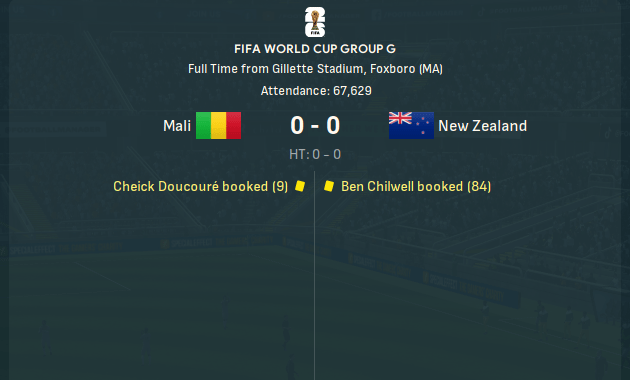
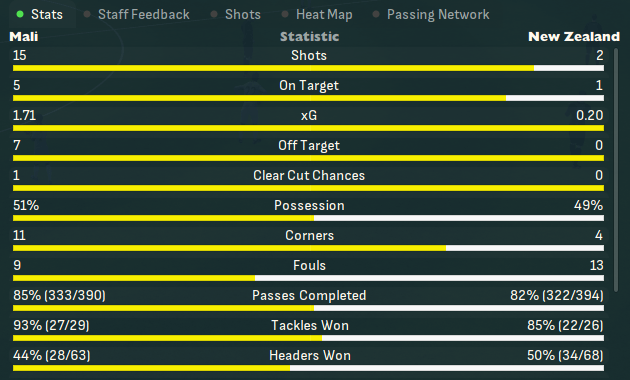
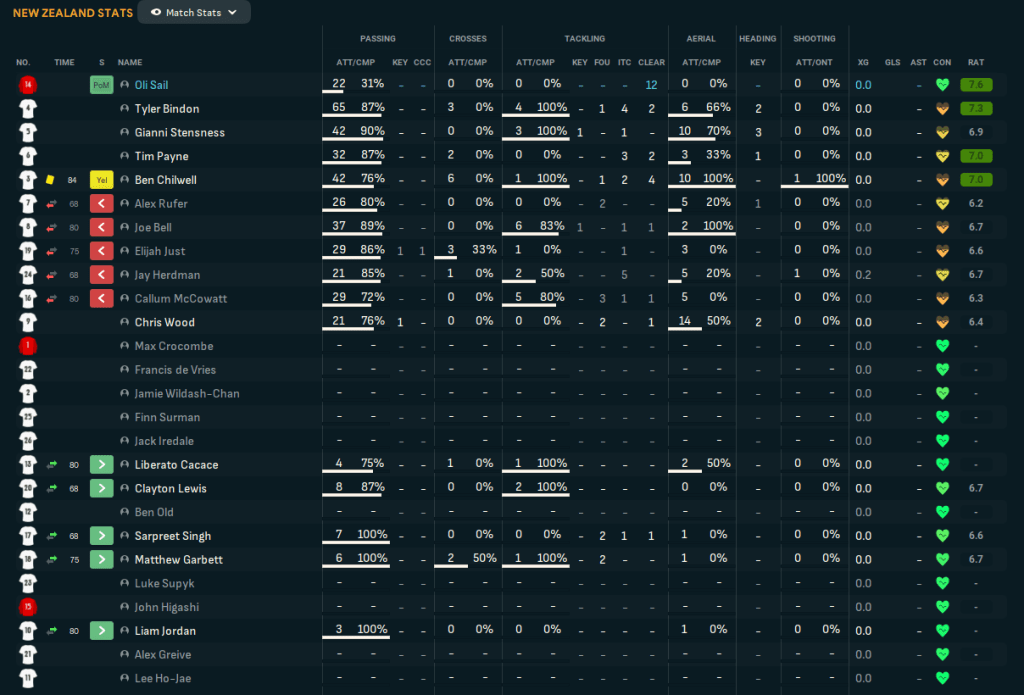
There wasn’t quite as much talent on display in Massachusetts. Neither team seriously threatened the other until right on the stroke of half-time, when New Zealand left-back Ben Chilwell’s long-range effort was pushed behind by Mali keeper Djigui Diarra. Surely things had to improve after the break?
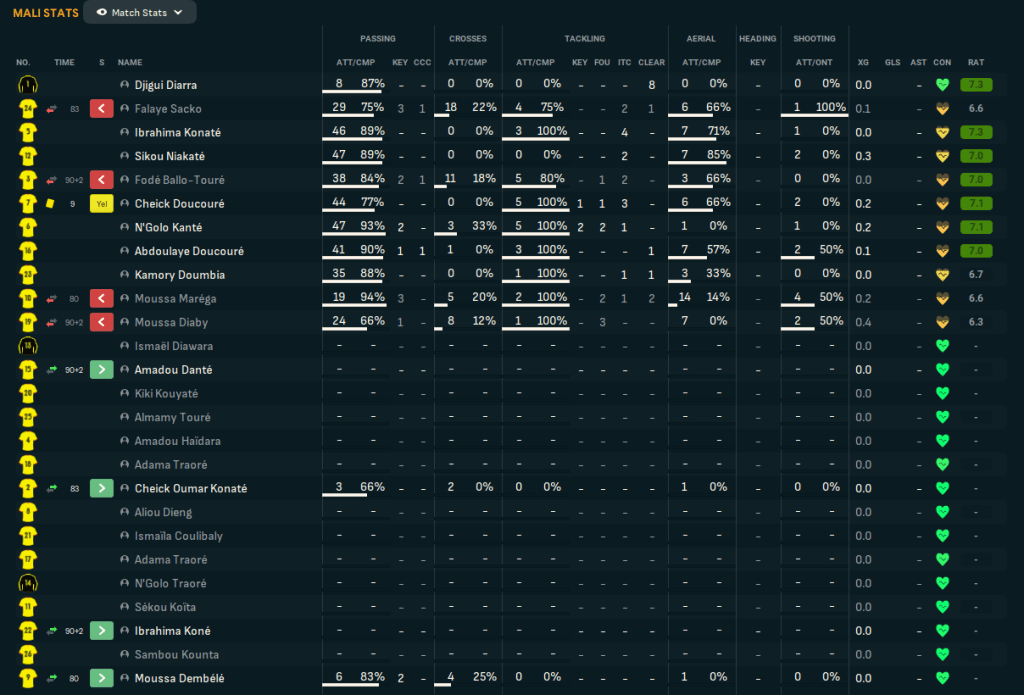
Come the second half, Mali had emerged as clearly the better team. Their midfield diamond enjoyed plenty of possession, Falaye Sacko’s set-pieces caused the Kiwis problems, and veteran striker Moussa Maréga even rattled the bar in the 77th minute.
Unfortunately, they couldn’t break down a stubborn New Zealand defence. Oli Sail also pulled off some tremendous saves to hold the Eagles to a no-score draw.
UKRAINE vs MALI
(17 June – Kansas City)
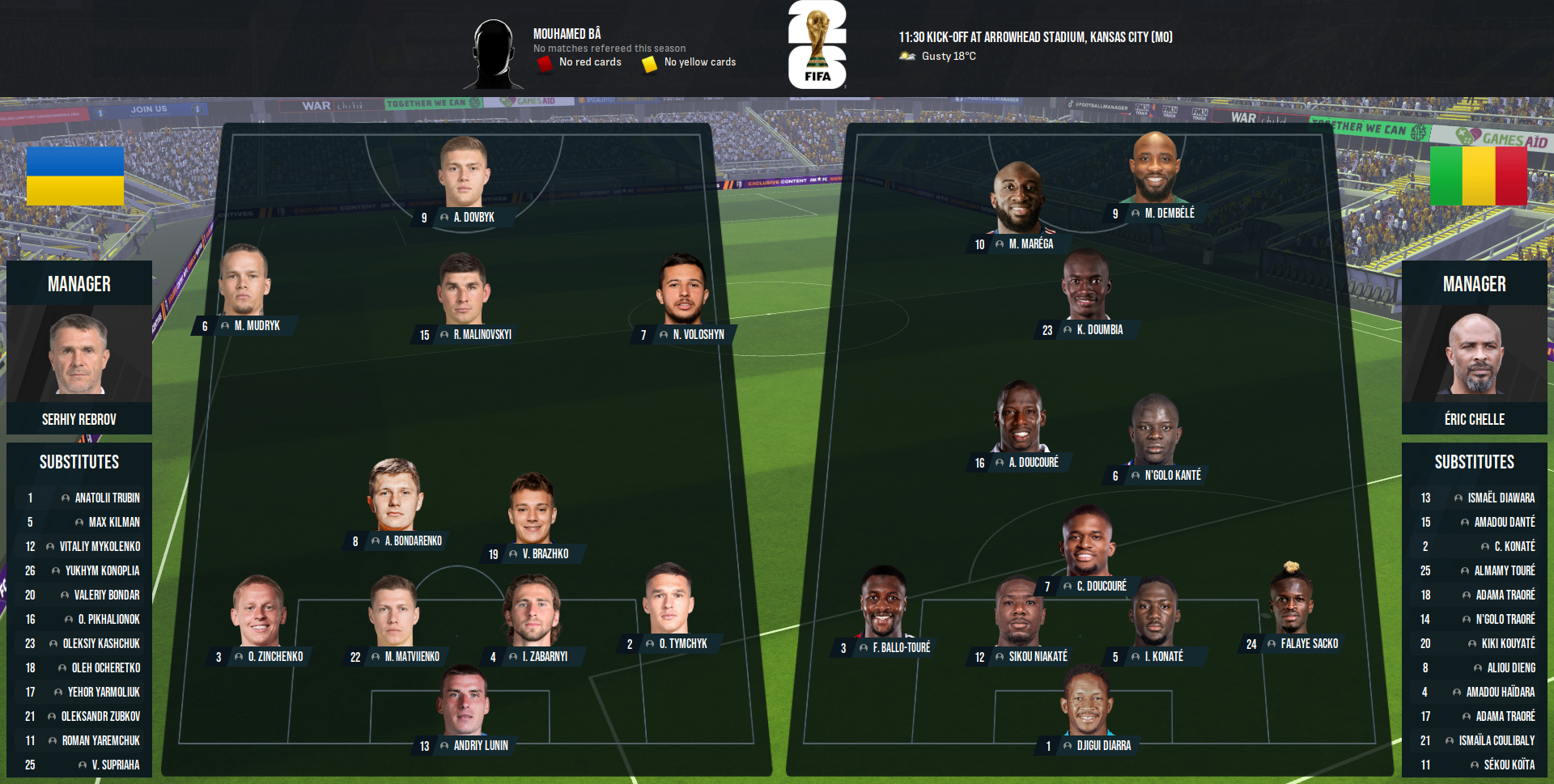
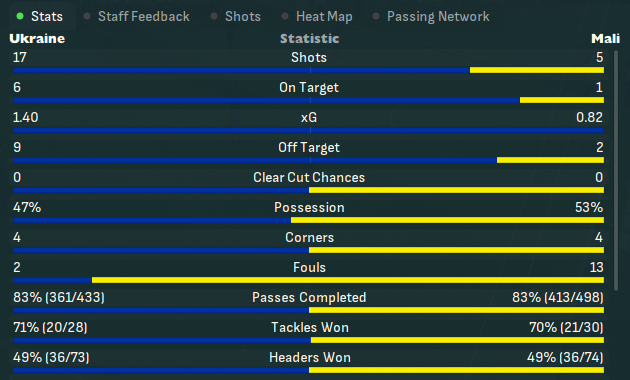
This was another close contest. Ukraine were on top for the first 15 minutes before Mali surged forward, with attacking midfielder Kamoury Doumbia hitting the bar. The action continued to switch back and forth, but with neither team controlling the ball well, the deadlock remained intact at the break.
Then, in the 48th minute, Mali delivered…
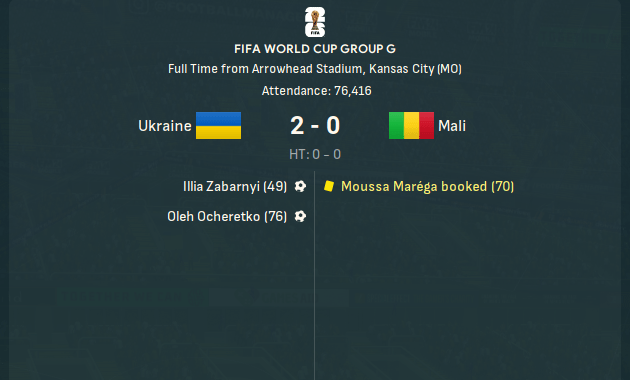
…Malinovskyi, that is. His corner was headed home at the far post by Illia Zabarnyi, and Ukraine had finally broken through a tough Eagles defence.
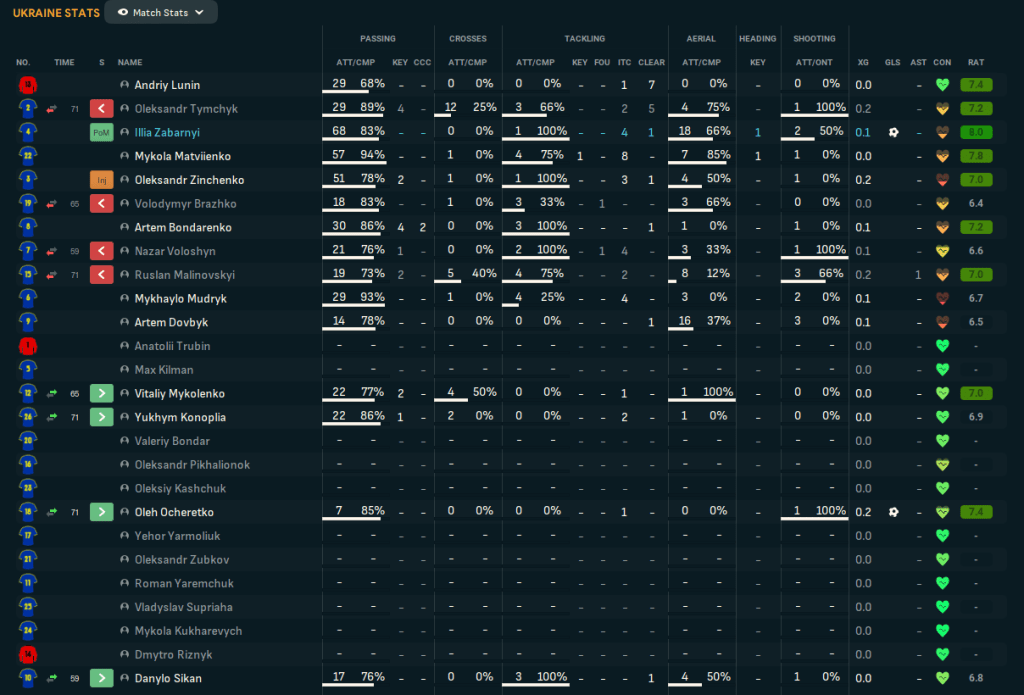
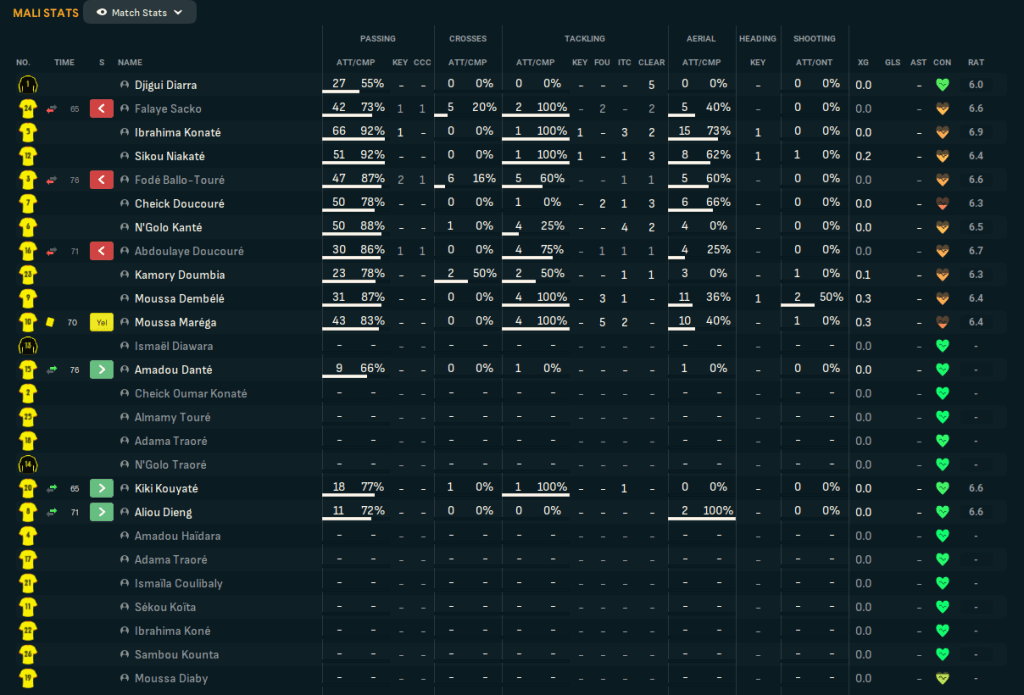
The Zhovto-Blakytni then forced Mali into a grave error in the 76th minute. Substitute midfielder Oleh Ocheretko put massive pressure on Ibrahima Konaté and intercepted a limp pass from Diarra, which he stroked into the net to complete a 2-0 win. The West Africans remained goalless and would surely be heading home soon.
NEW ZEALAND vs ARGENTINA
(17 June – Foxboro)
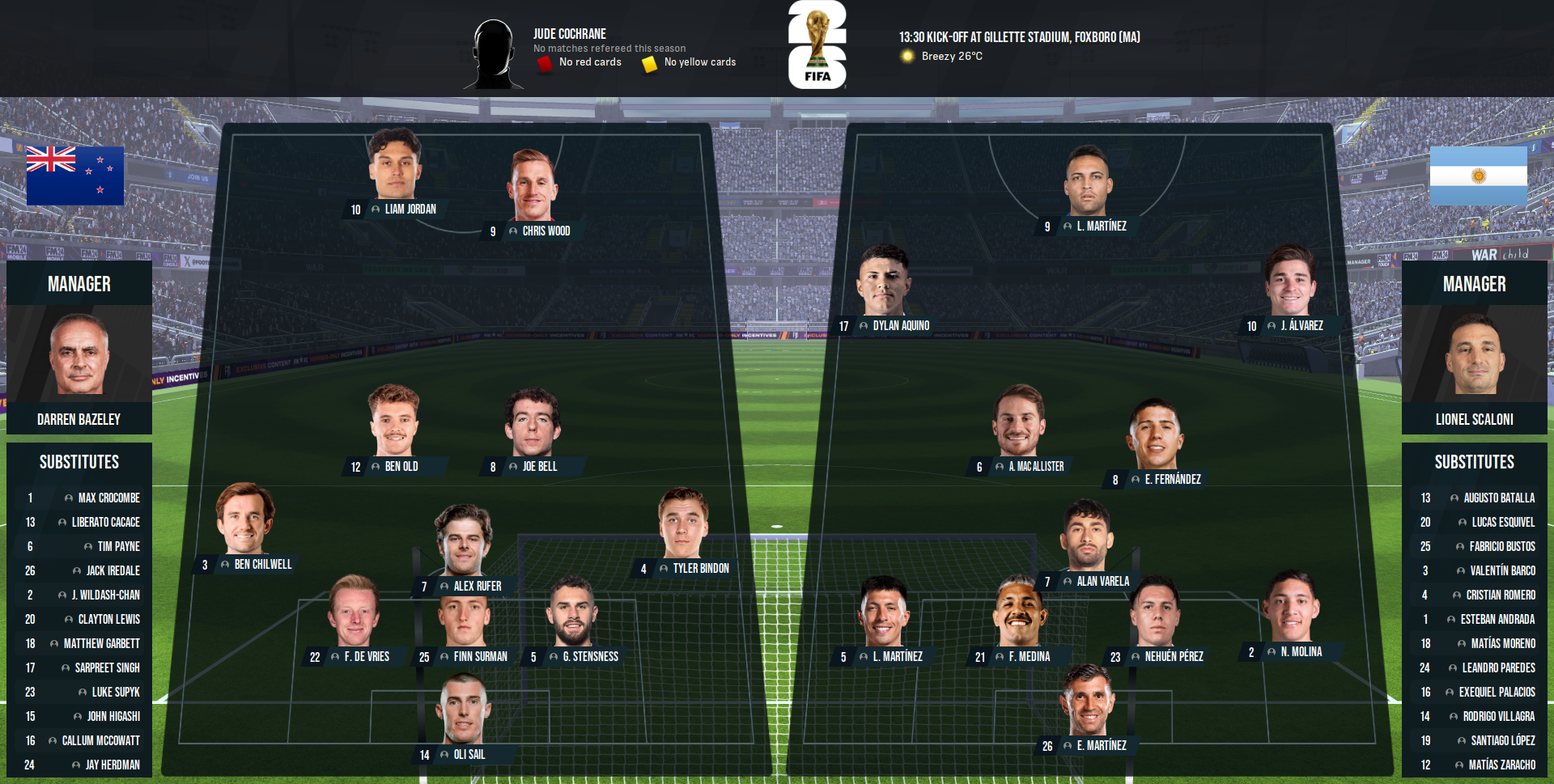
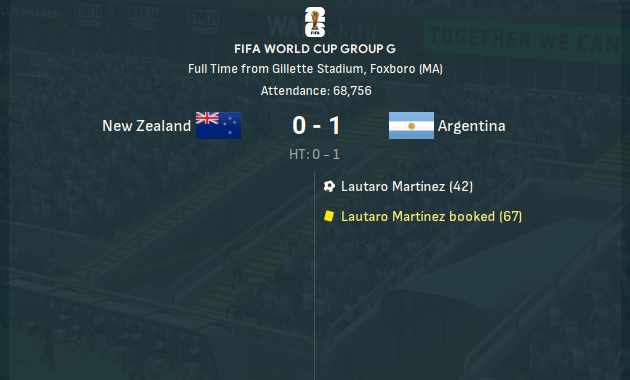
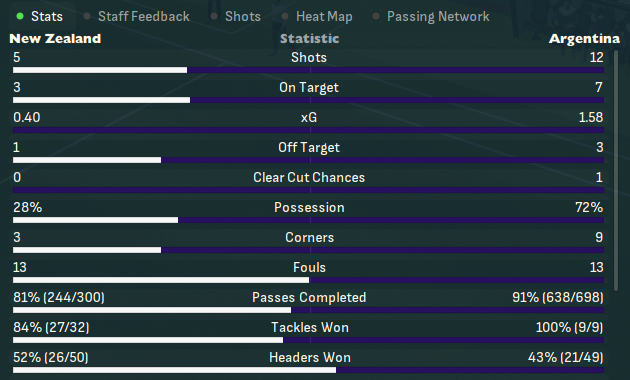
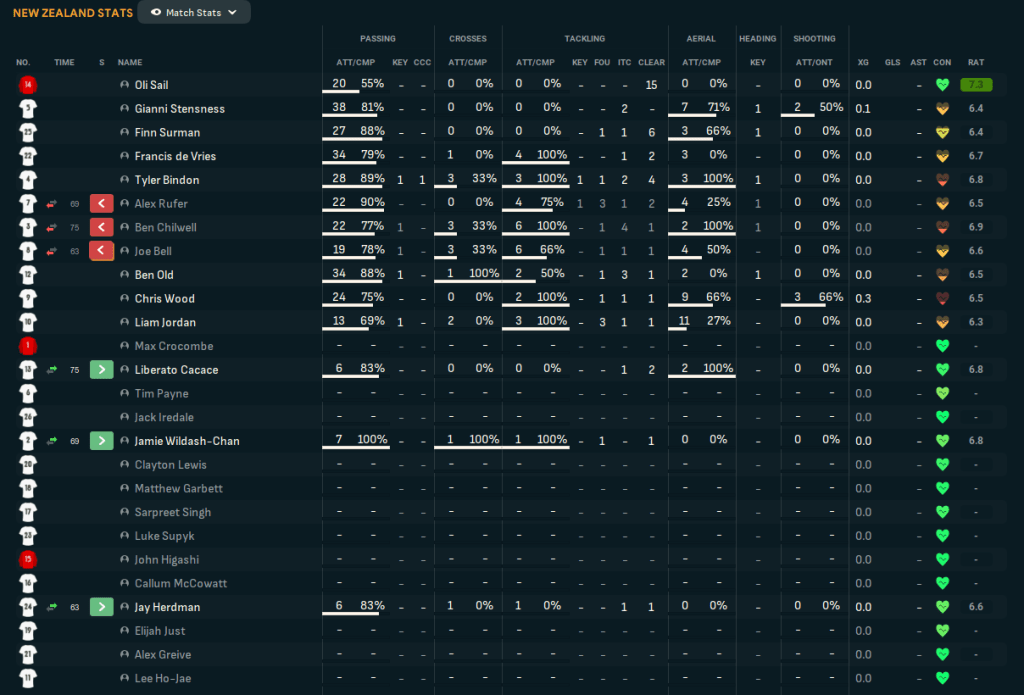
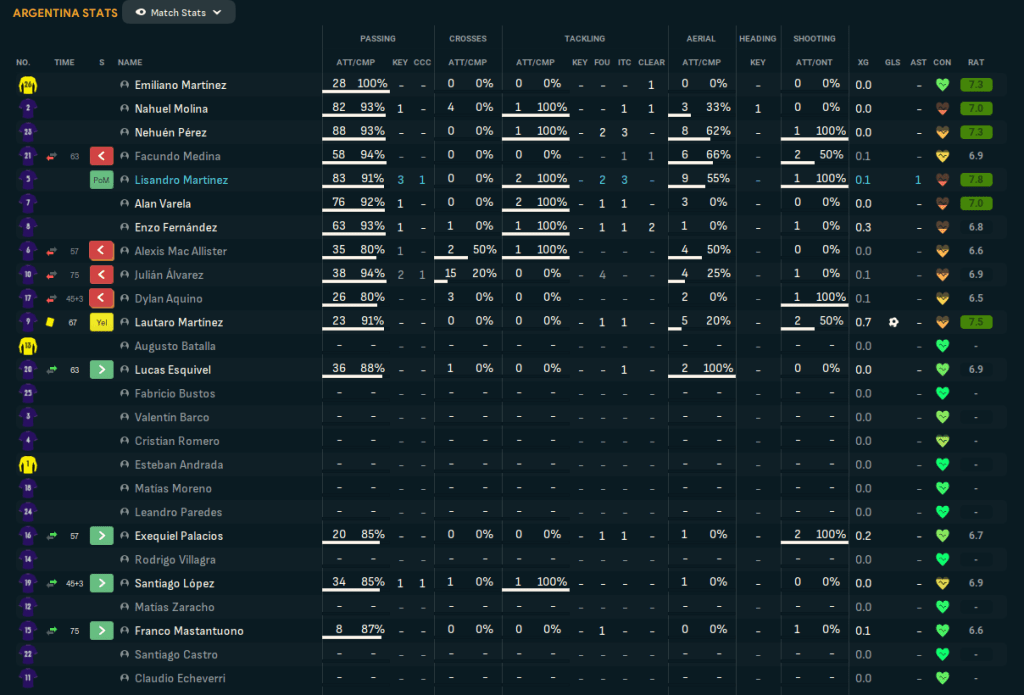
New Zealand were out to cause a shock in New England, where Chris Wood gave Argentina goalkeeper Emiliano Martínez an early scare. Indeed, it took the Albiceleste 42 minutes to get up and running. It was Emi’s two namesakes who did the honours, as Lisandro’s through-ball was beautifully finished by Lautaro.
Mac Allister came off with a knock early in the second half as Argentina continued to make heavy weather of what should’ve been an emphatic win. New Zealand kept the final deficit down to 1-0 thanks to more goalkeeping heroics from Sail, who stopped a couple of blinding efforts from the luckless Exequiel Palacios.
ARGENTINA vs MALI
(21 June – Kansas City)
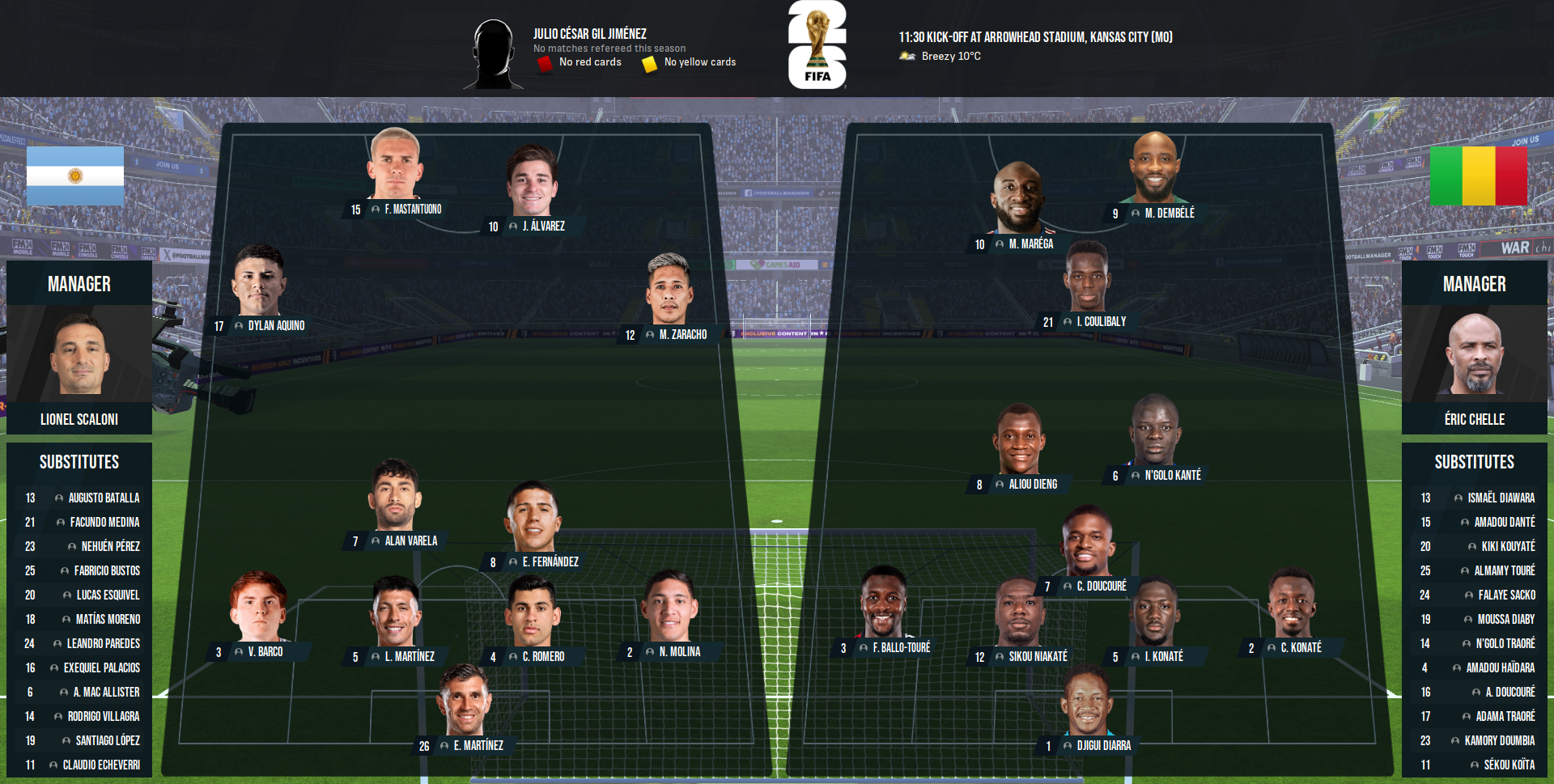
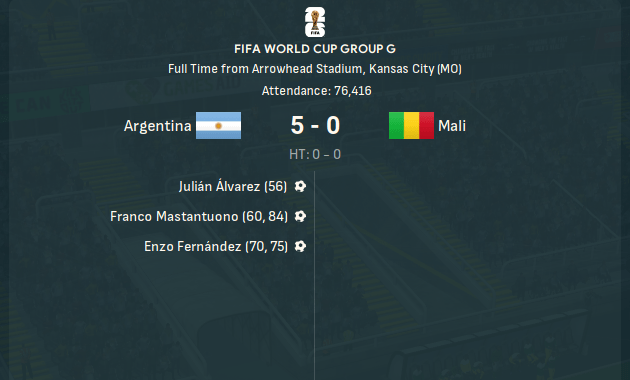
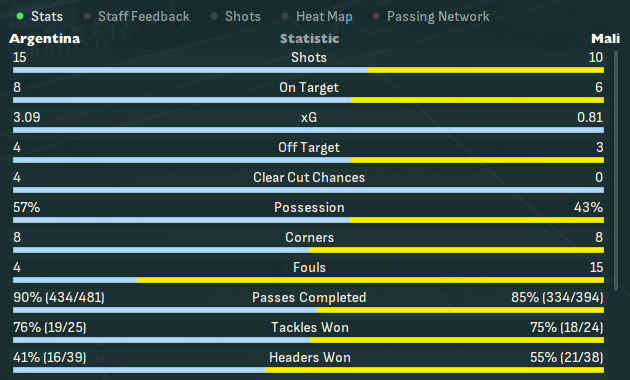
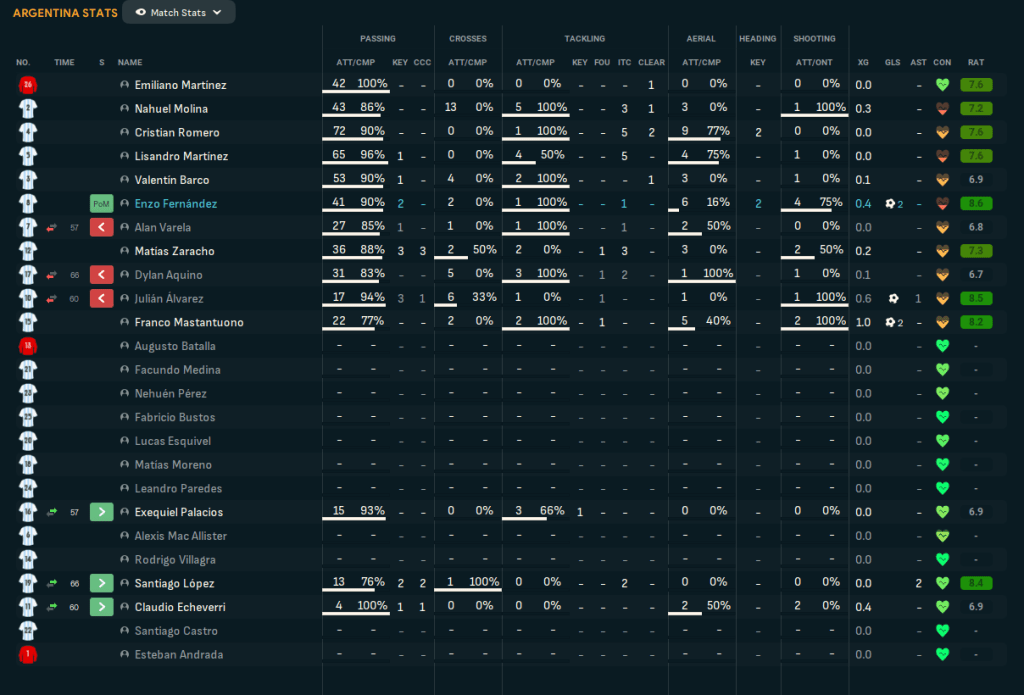
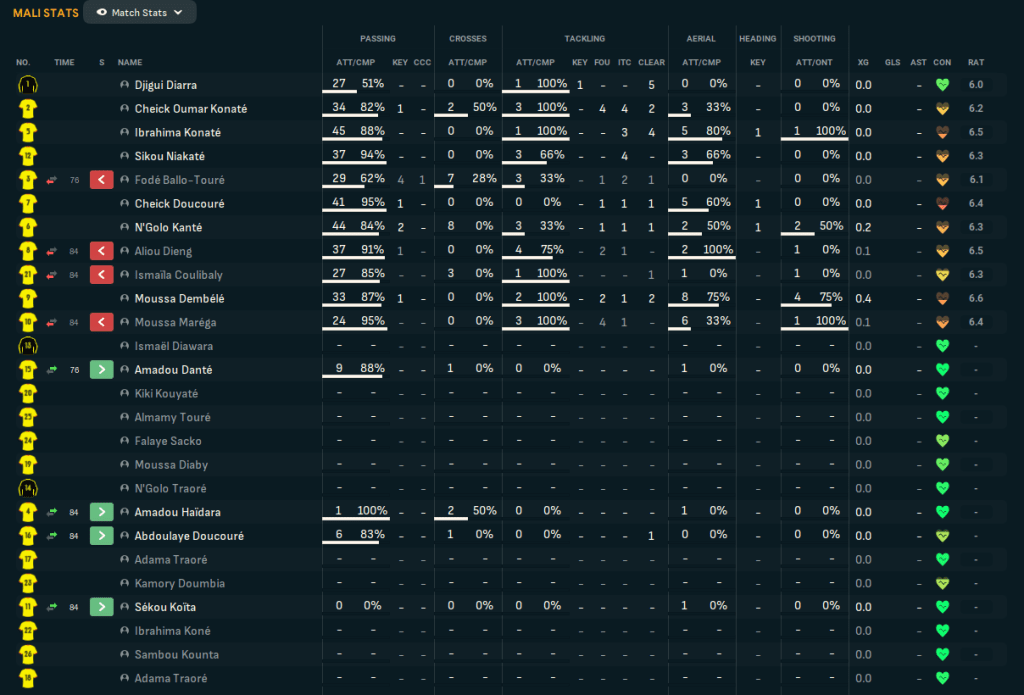
Argentina’s unconvincing form continued in their final group game, where their aggressive 4-2-4 was suffocated by Mali’s midfield diamond. Emiliano Martínez was kept very busy – not least by Moussa Dembélé, who had three shots saved in a bewilderingly one-sided first half that somehow ended goalless!
Mali, on the other hand, did not have a world-class keeper. There was a reason Djigui Diarra played in the Tanzanian Premier League rather than the English one. In the 56th minute, Diarra knocked Nahuel Molina’s tame shot out to Álvarez, who gave Argentina a lead they hardly deserved.
Four minutes later, Álvarez provided the assist for 18-year-old wonderkid Franco Mastantuono to score his first international goal. Then came another goalkeeping howler from Diarra, allowing Enzo Fernández to drill the ball into the gaping net from just outside the box.
One more goal apiece from Fernández and Mastantuono later, and Mali’s second-half misery was complete. They were on their way home after a 5-0 defeat, while Argentina had returned to their ominous best just in time for the knockout rounds.
UKRAINE vs NEW ZEALAND
(21 June – Foxboro)
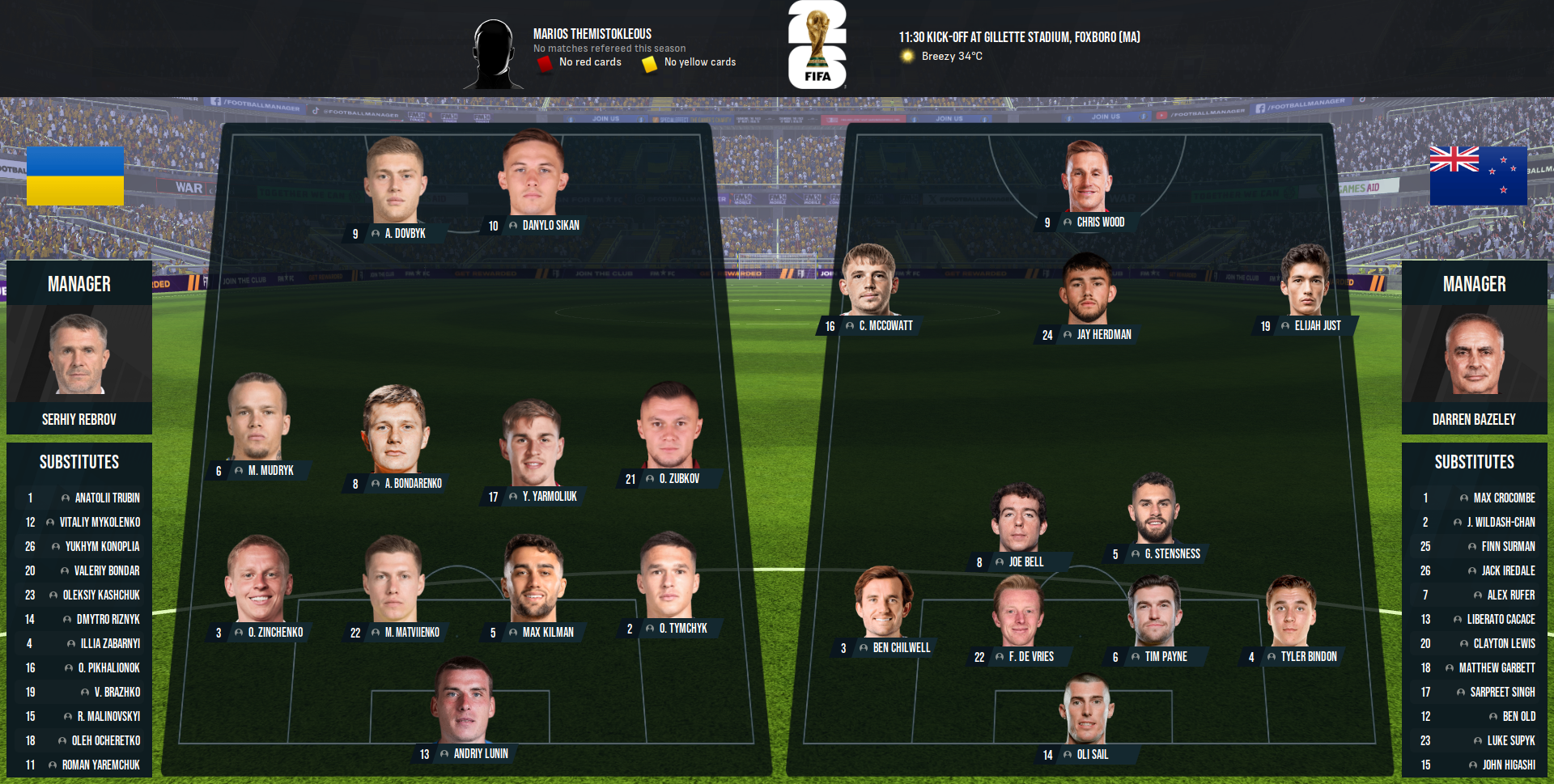
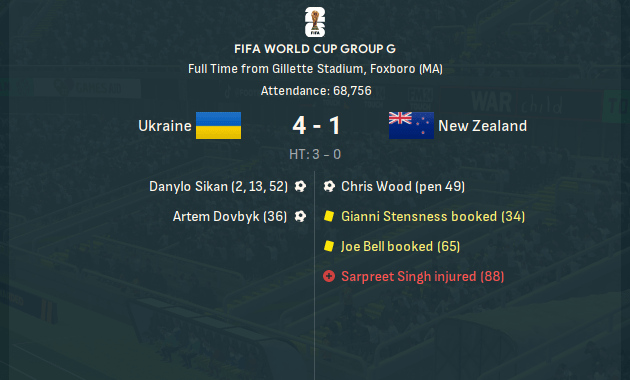
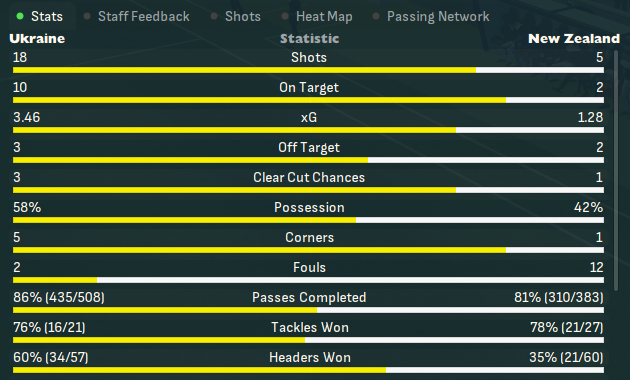
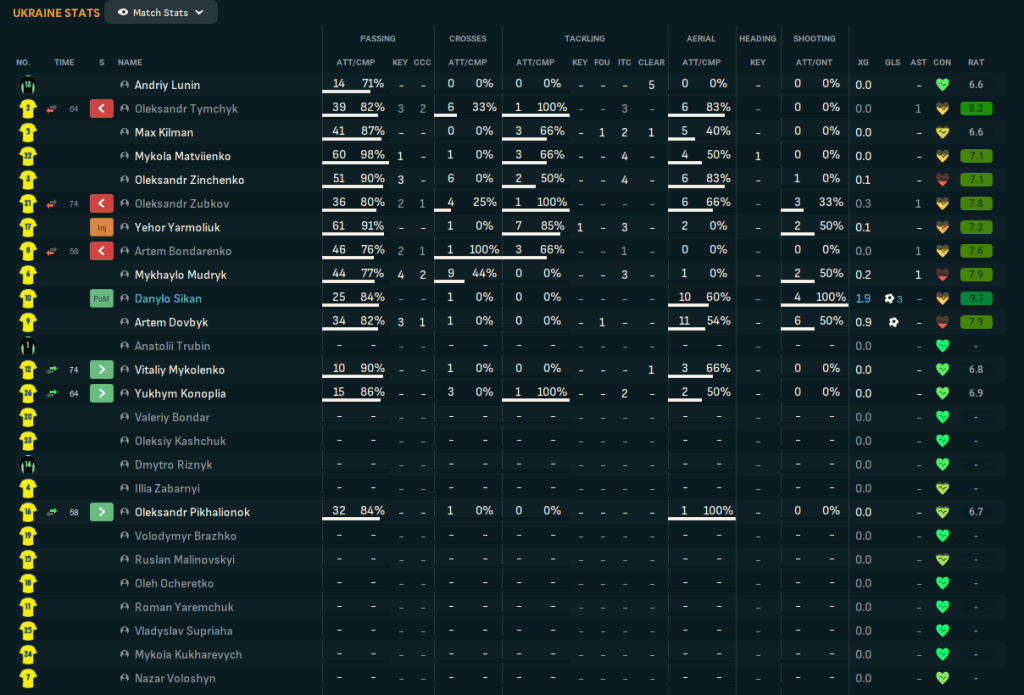
Ukraine flew out of the traps, taking the lead after barely a minute. Right-back Oleksandr Tymchyk decided to torment the New Zealand defence with a mazy dribble through their half before laying on a simple tap-in for Danylo Sikan.
The build-up to Ukraine’s second goal was less extravagant. First-time cross from Artem Bondarenko, bullet header from Sikan, bam – 2-0.
Despite Sail’s best efforts, even New Zealand’s reliable goalkeeper was wilting in the searing American heat. Later in the first half, Sail could only push Dovbyk’s header from Mykhaylo Mudryk’s corner into the net, giving the Zhovto-Blakytni an insurmountable 3-0 advantage at the break. (No, Mudryk isn’t serving any drugs bans in this universe.)
At least the Kiwis would leave the tournament with one goal to their name – Wood clinically converting an early second-half penalty after Max Kilman barged into Jay Herdman. However, Sikan completed his hat-trick almost immediately afterwards, and Ukraine breezed into the knockout stages with a dominant 4-1 win.
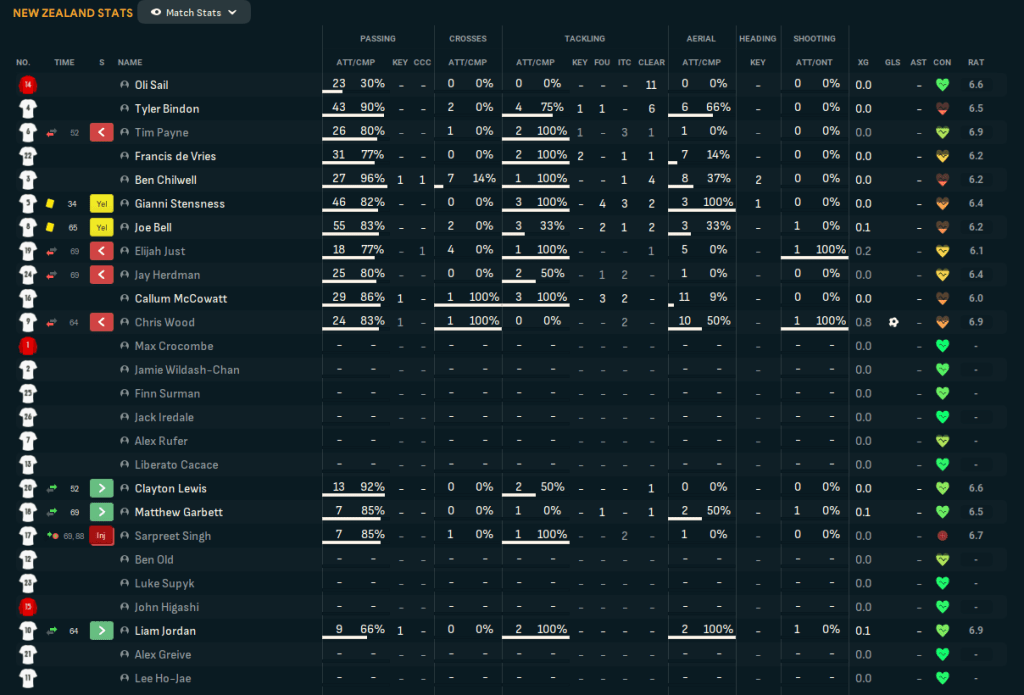
Argentina and Ukraine were clearly the strongest teams in Group G, and the table proved it. New Zealand exited with their pride still intact, but Mali were bitterly disappointed not to even score.

GROUP H
URUGUAY
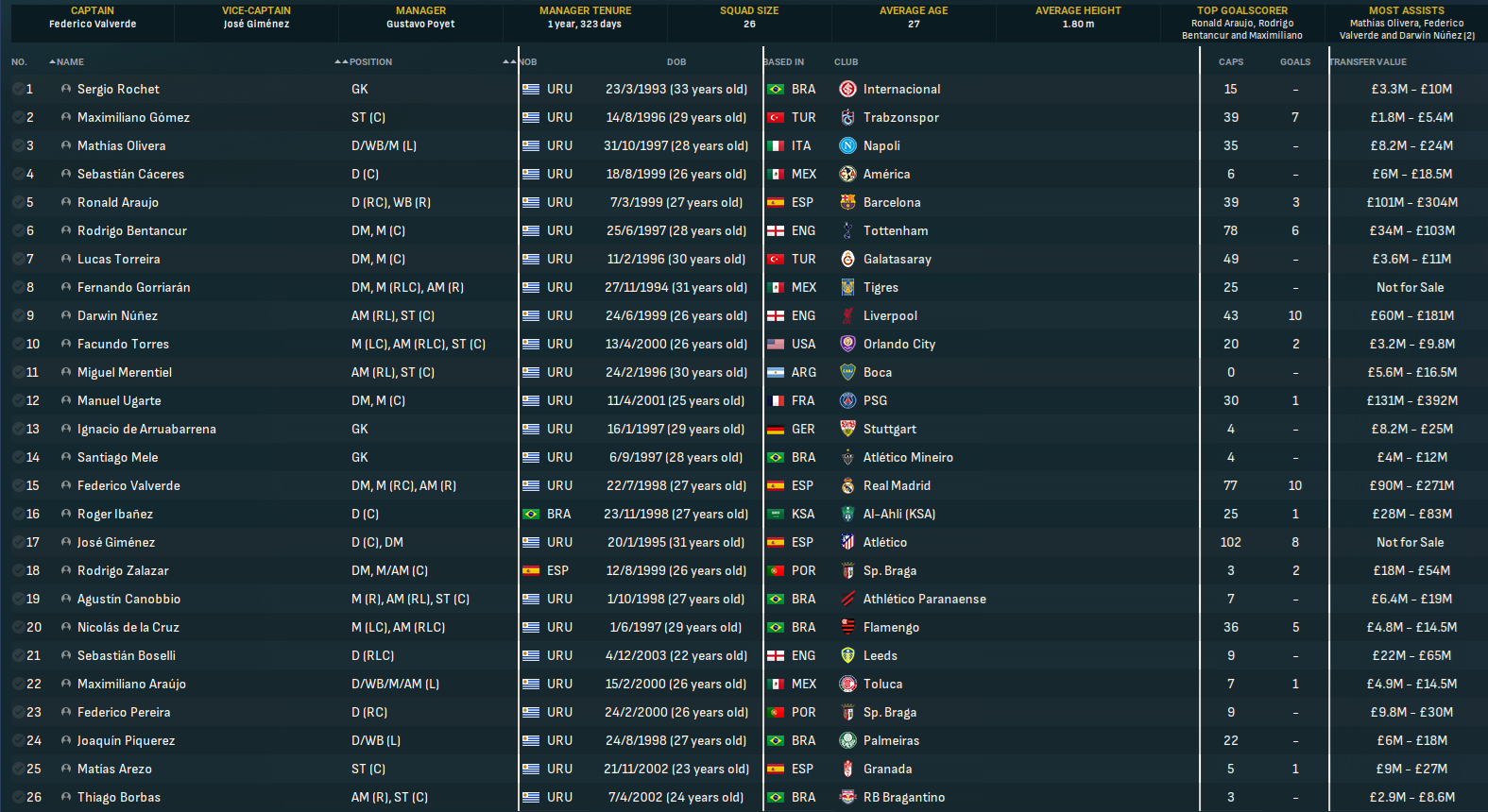
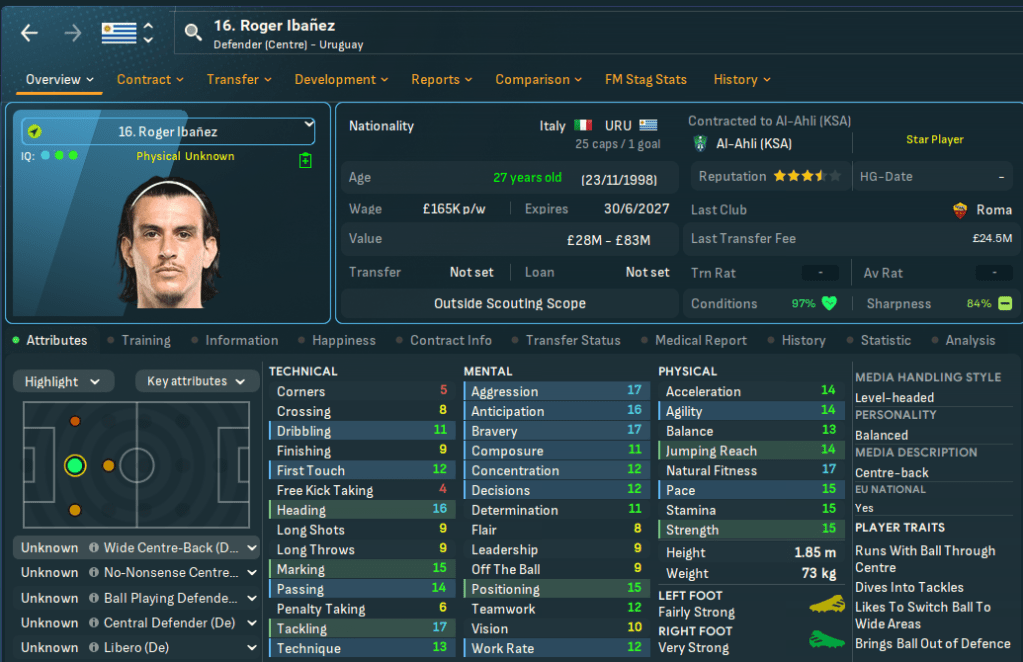
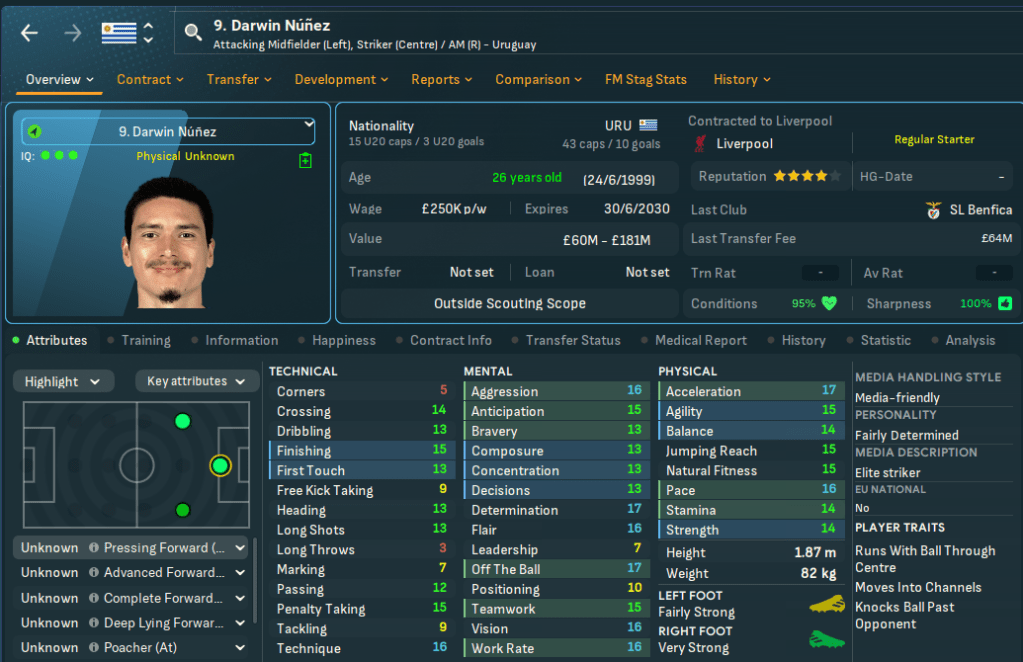
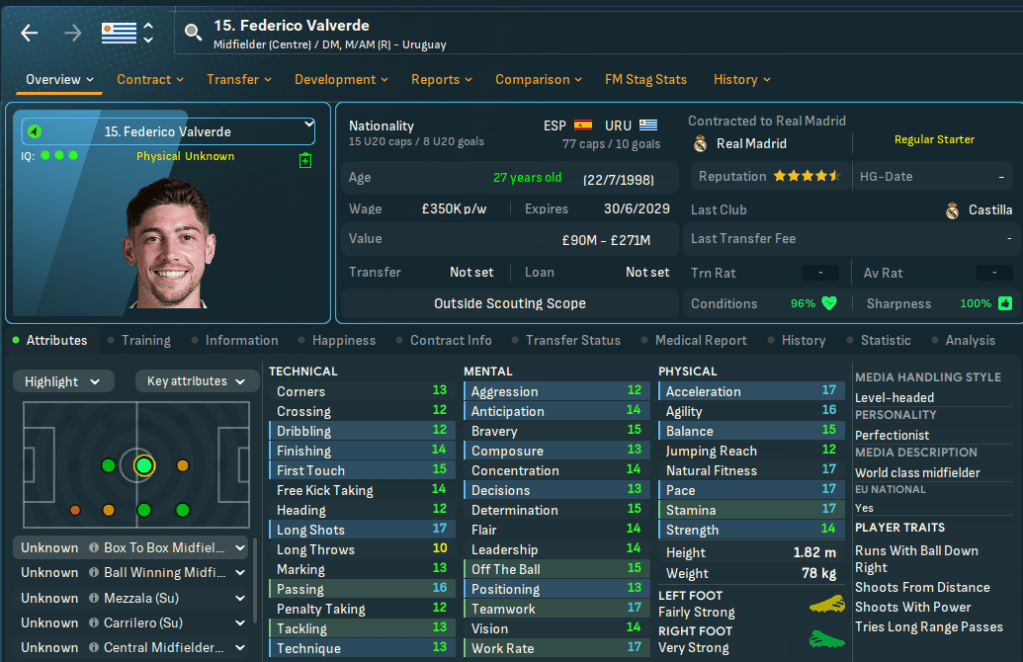
Having impressively topped the CONMEBOL qualifying table, Uruguay are potential dark horses in the World Cup. La Celeste boast an aggressive and tenacious team and have a particularly tight defence, which has been strengthened further by ex-Roma star Roger Ibañez.
Uruguay also have a fair amount of bite up front, even if Luis Suárez has hung up his boots. Darwin Núñez always gets into great shooting positions, and he’s actually scoring pretty regularly for Liverpool in this universe. Midfield captain Federico Valverde can have a huge impact at both ends of the pitch.
Though they have a generally solid squad with few obvious weaknesses, Uruguay’s biggest issues perhaps lie in the dugout. Gustavo Poyet is a noticeable downgrade on Marcelo Bielsa tactically, and recent friendly results suggest he might struggle to outsmart the better European teams.
JAPAN
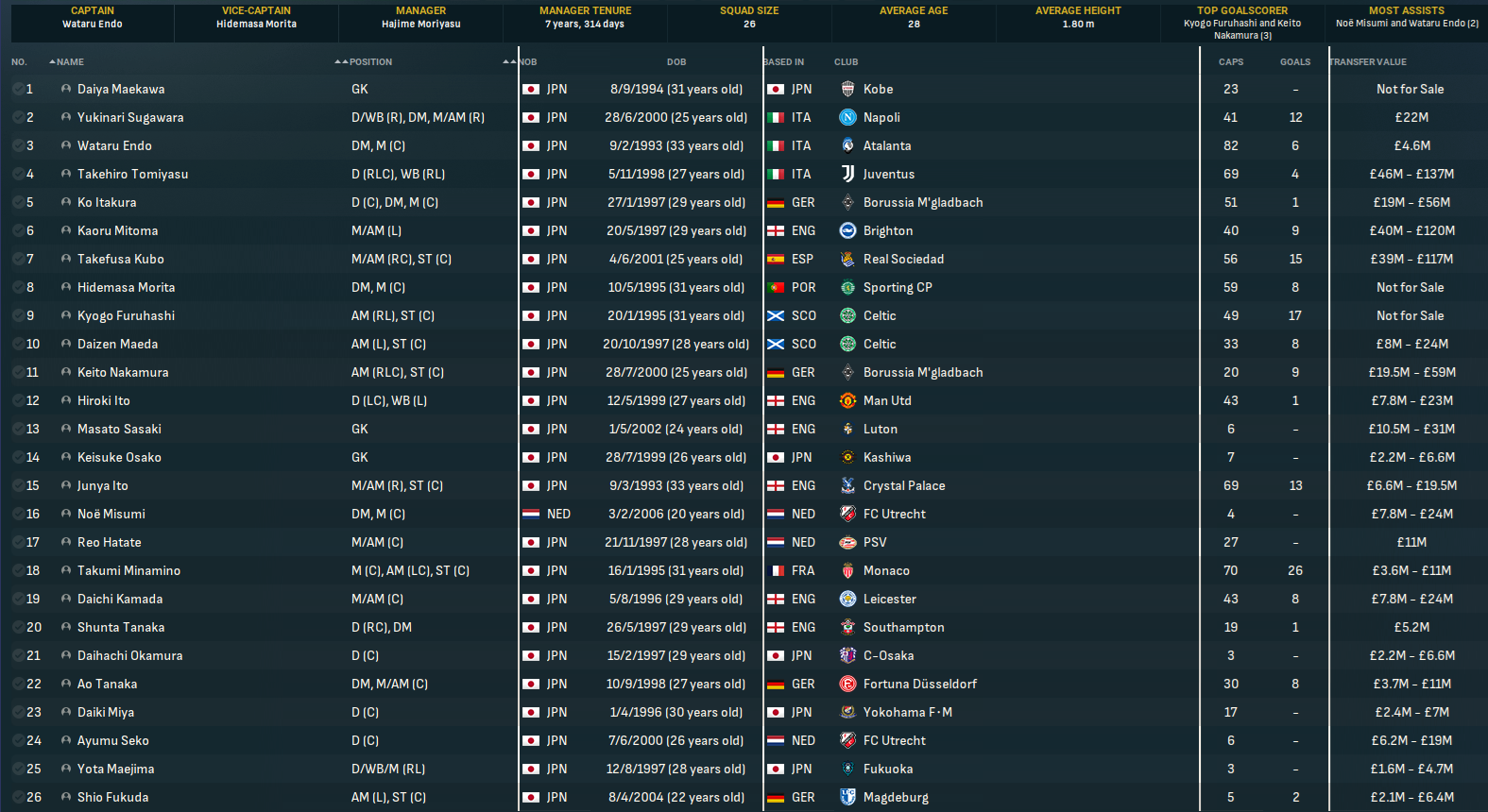
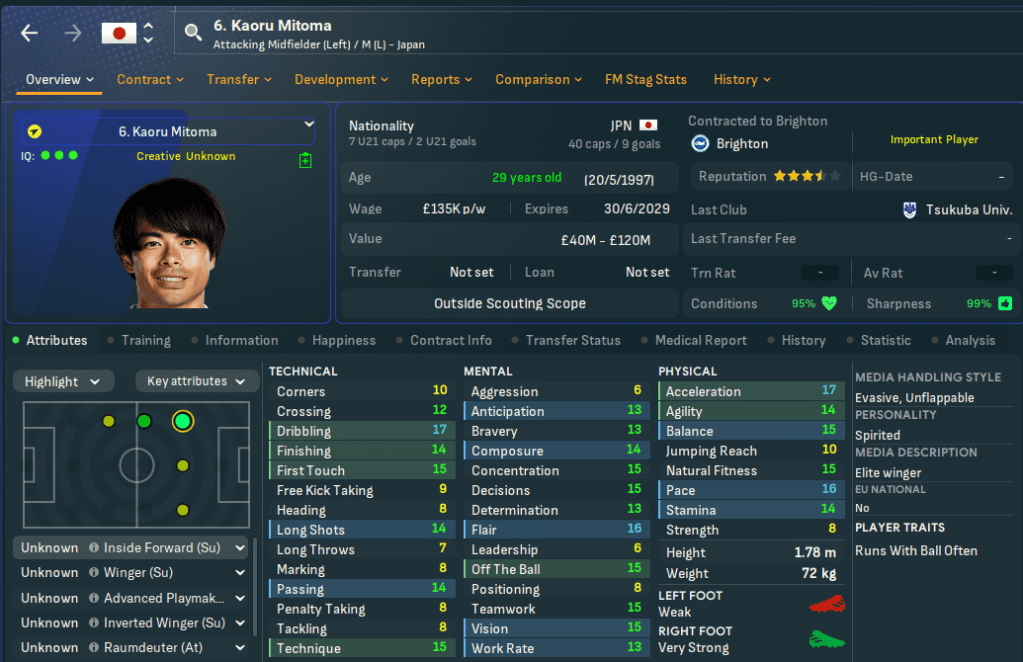
Japan’s 8th consecutive World Cup offers their best hopes yet – in theory, at least. The Samurai Blue have one of the most stable teams in the tournament – and one of the longest-serving managers to boot.
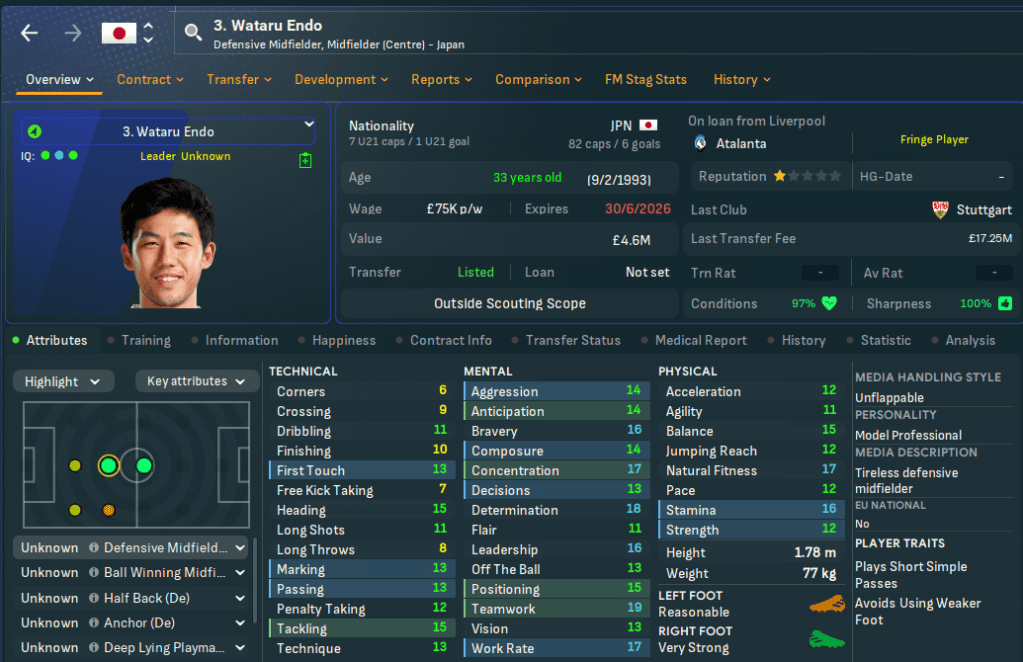
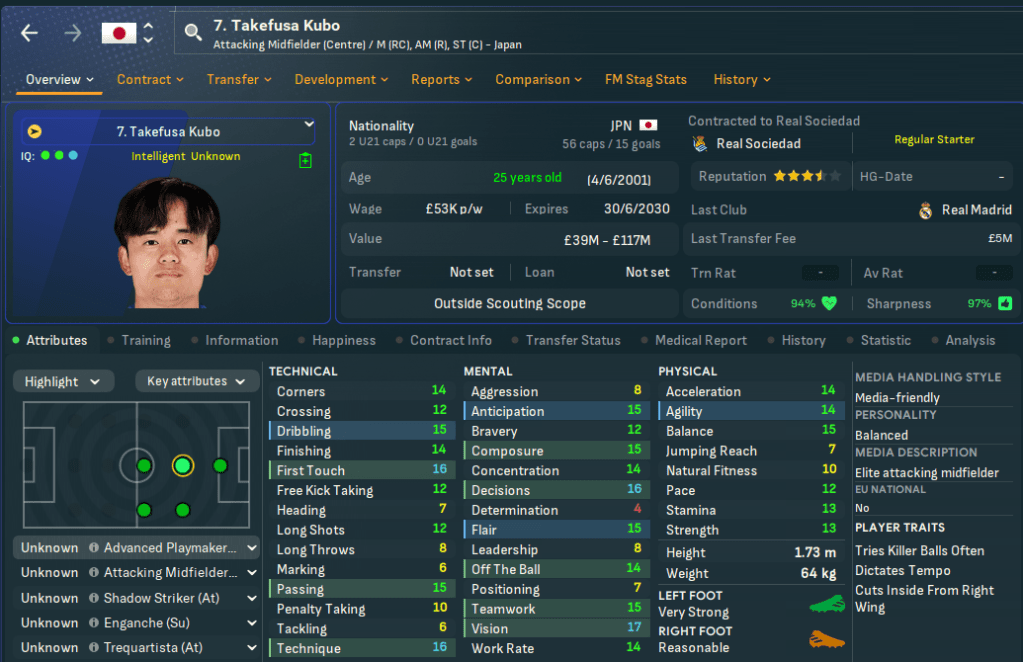
Brighton fans know all about the explosive pace of Kaoru Mitoma, and holding midfielder Wataru Endo typifies this team’s exceptional fitness levels. Japan also possess a potent front two, with Real Sociedad’s leftie superstar Takefusa Kubo playing as the false nine alongside the true number 9 – Celtic’s unstoppable marksman Kyogo Furuhashi.
Despite winning the 2024 Asian Cup while conceding only one goal, Japan’s record against teams from other continents is still pretty patchy. Up against three physically stronger teams in the group phase, they could be outmuscled and become one of the big early casualties.
NORWAY
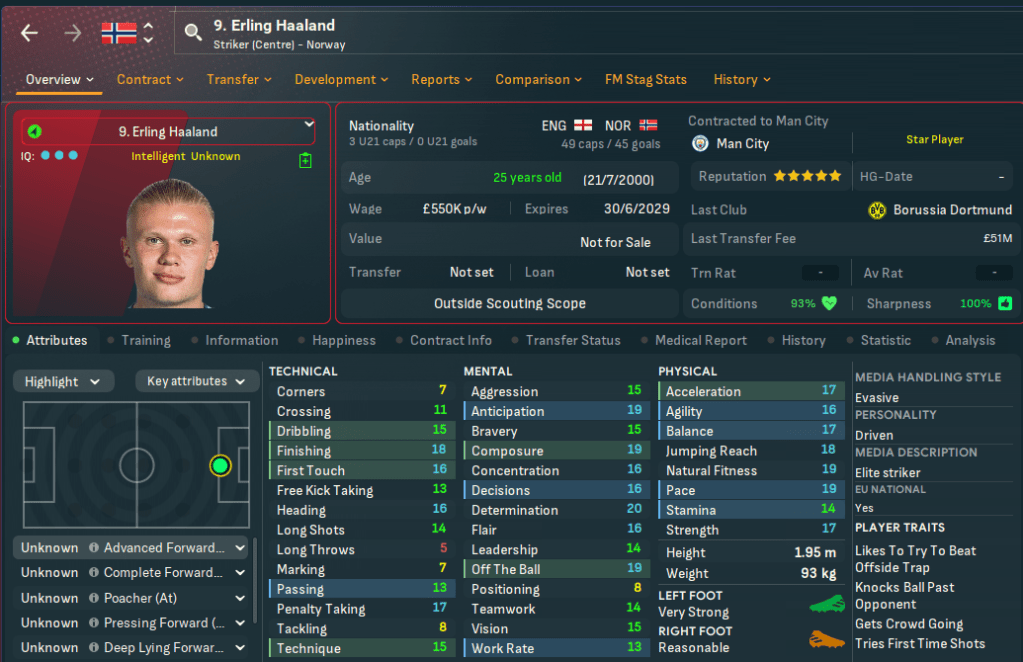
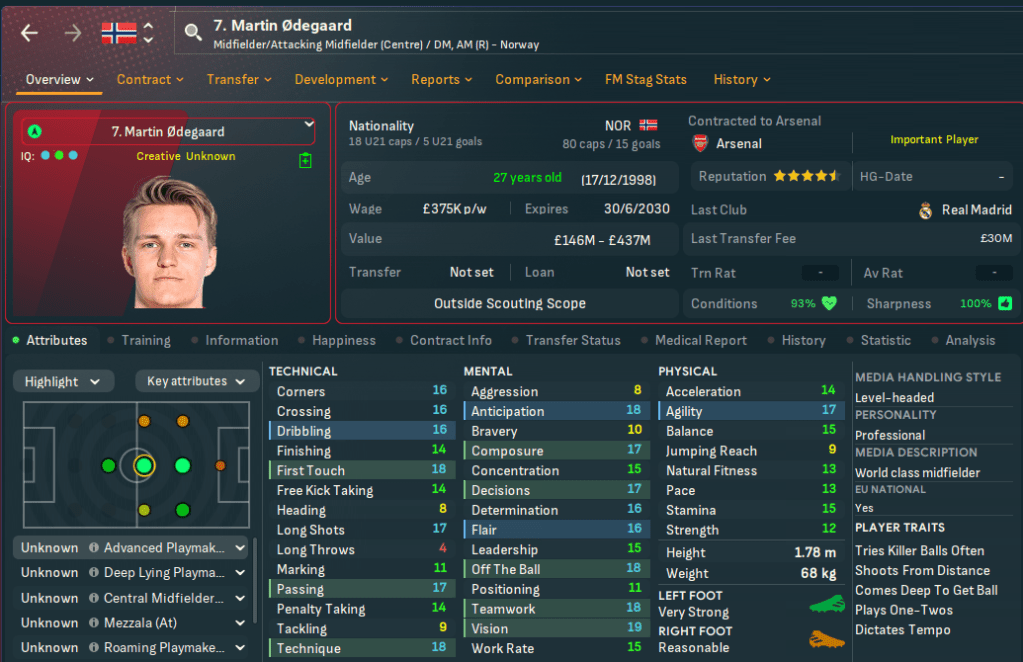
Norway have ended their 28-year World Cup wait, and now they mean business. Obviously, they have the irresistible war machine that is Erling Haaland – a scorer of just the 94 Premier League goals in four seasons at Manchester City (which is somehow less impressive than his real-life stats).
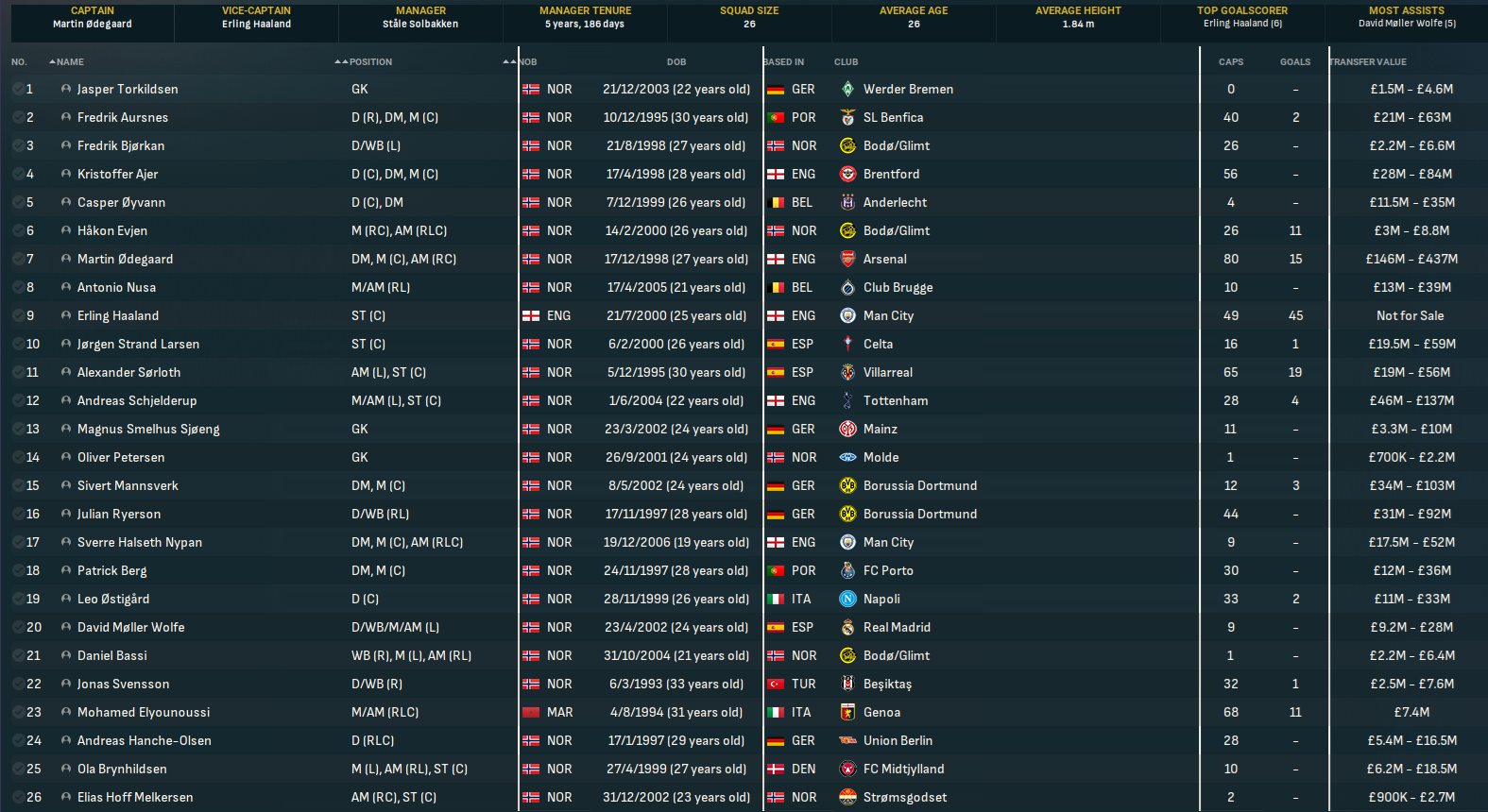
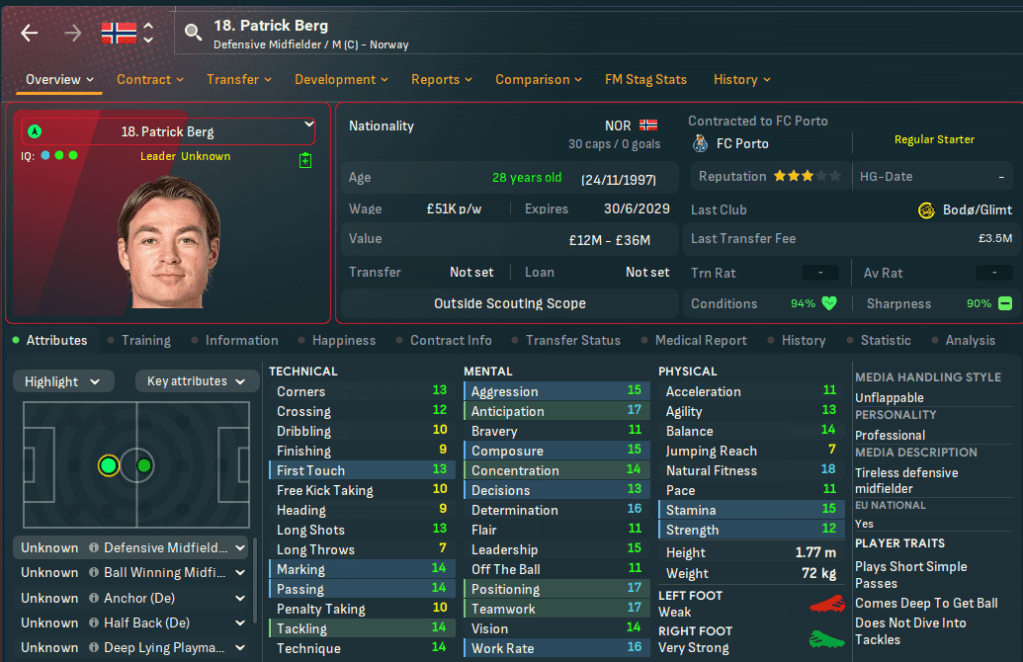
But Ståle Solbakken doesn’t just tell his team to hoof it to Erling. Captain Martin Ødegaard is a world-class advanced playmaker with a magical left foot, and he forms part of a talented midfield which also includes defensive iceman Patrick Berg.
Despite all that, Norway had the worst disciplinary record amongst teams who qualified from Europe. They seem to lose composure whenever they go down a man, so keeping all 11 on the pitch is imperative if they’re to reach a first World Cup Quarter Final.
ANGOLA
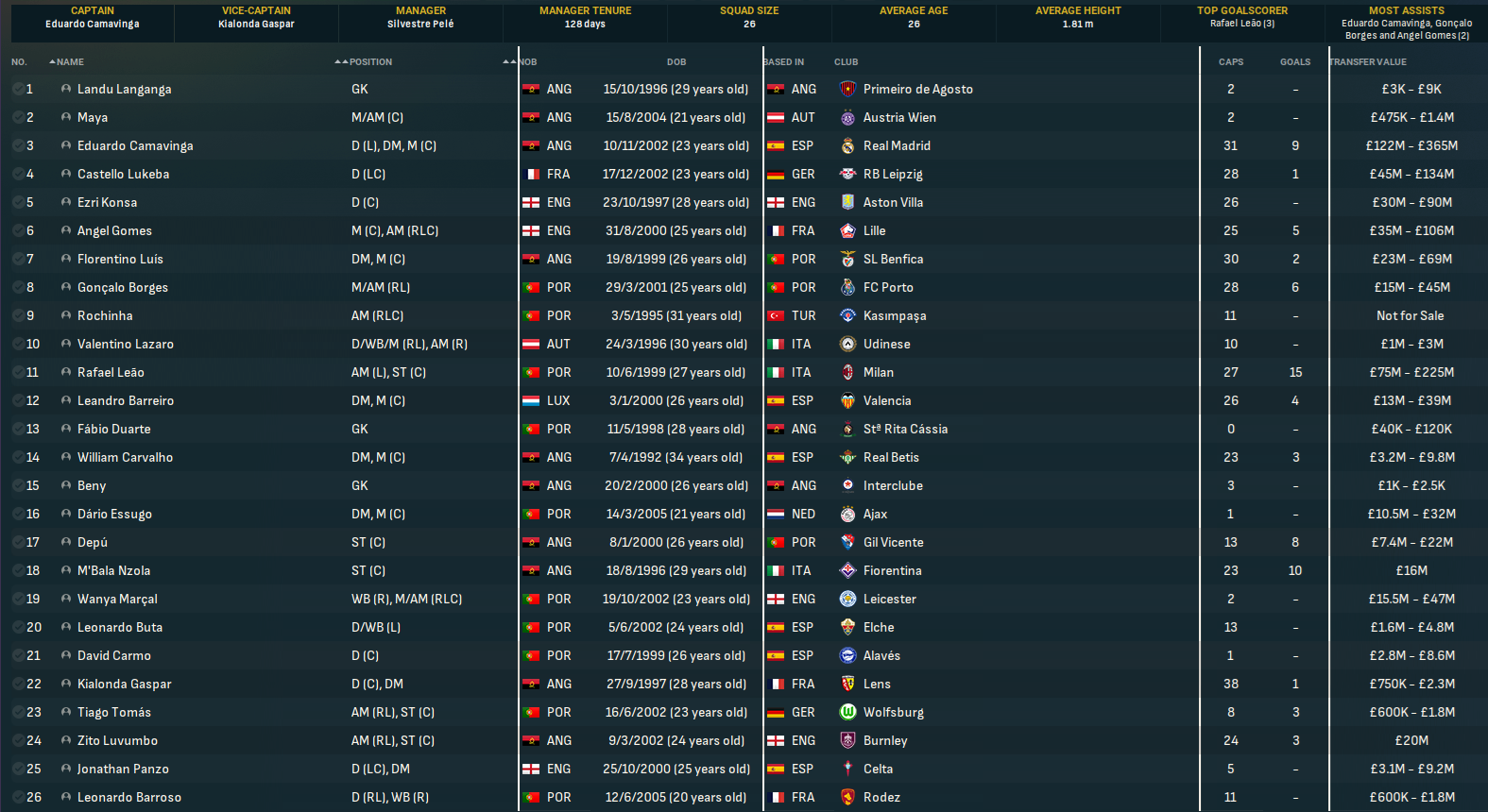
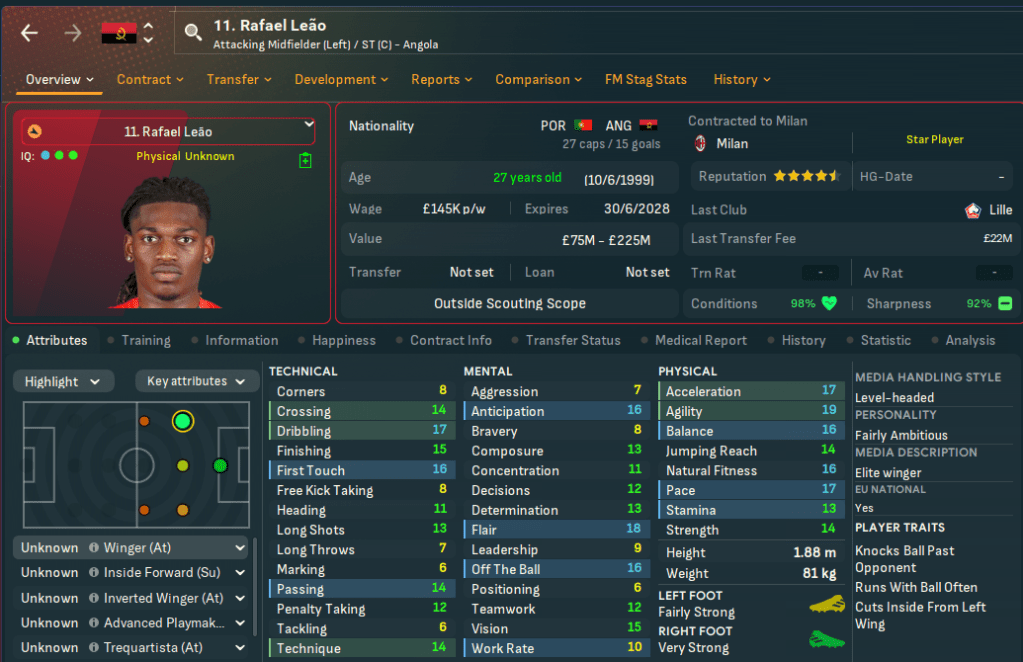
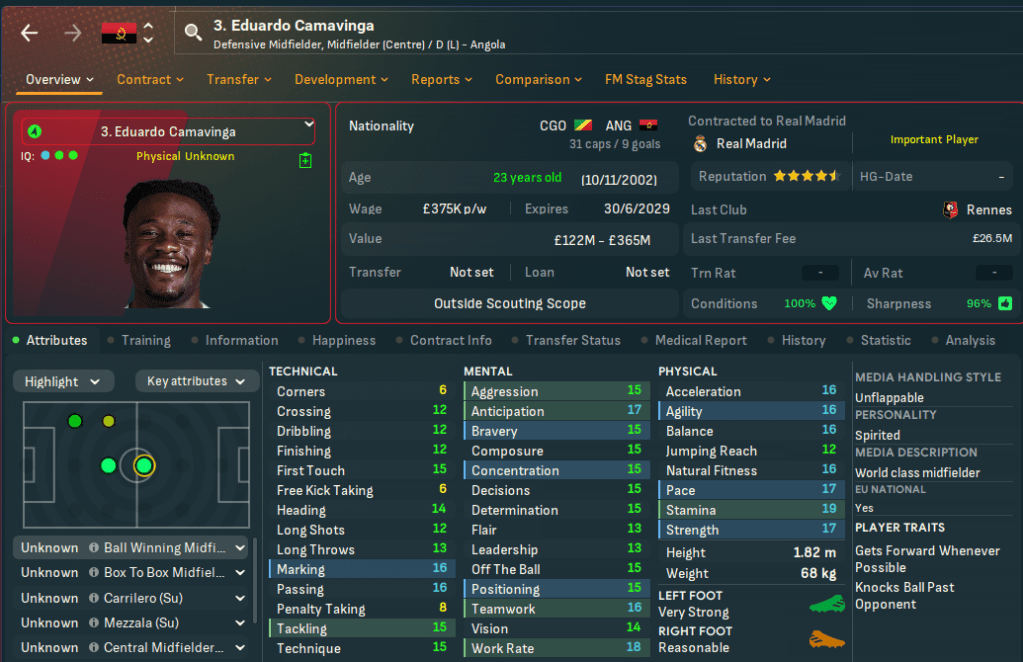
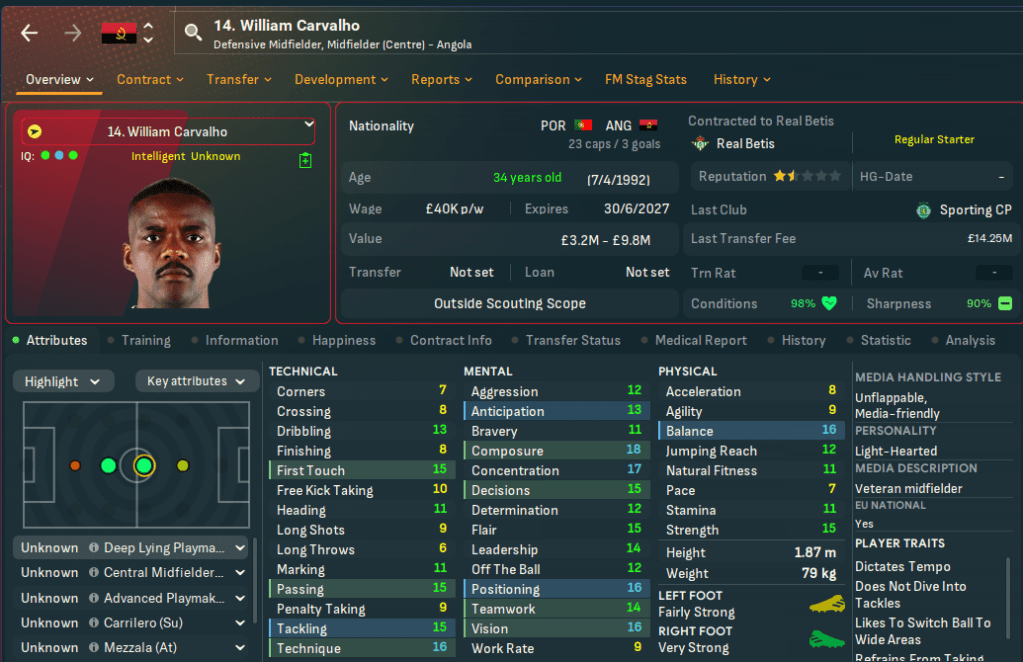
Angola were ranked 113th in the world before the qualifiers, but their new-look team is so much better than that. After poaching several top-quality players from Western European nations, including Milan’s rapid winger Rafael Leão, they have booked just their second World Cup appearance.
The Palancas Negras are particularly impressive in midfield, where 23-year-old captain Eduardo Camavinga teams up with 34-year-old playmaker William Carvalho, and in front of energetic anchor man Florentino Luís. Their centre-backs Castello Lukeba and Ezri Konsa look pretty good as well…
…but when Angola are bad, they can be truly shocking. A 4-0 qualifying loss in Cape Verde and a miserable AFCON earlier this year shows that their defence can easily fall apart under pressure. They also lack a natural finisher at centre-forward, hence they are not among the serious ‘dark horses’.
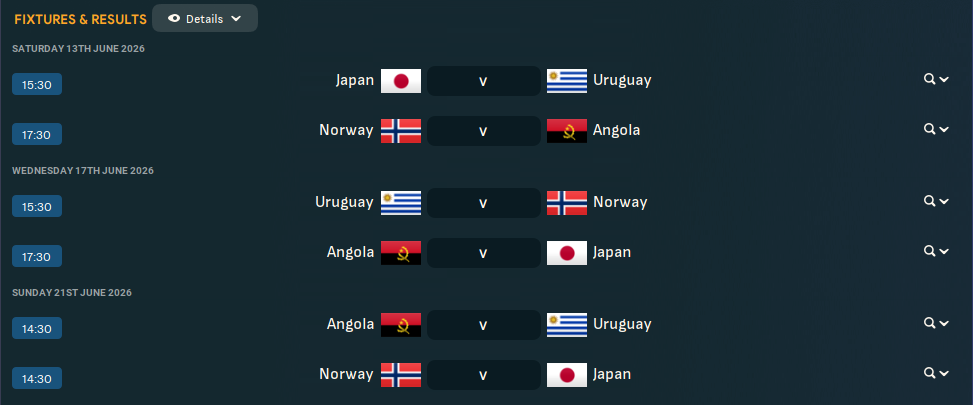
JAPAN vs URUGUAY
(13 June – Monterrey)
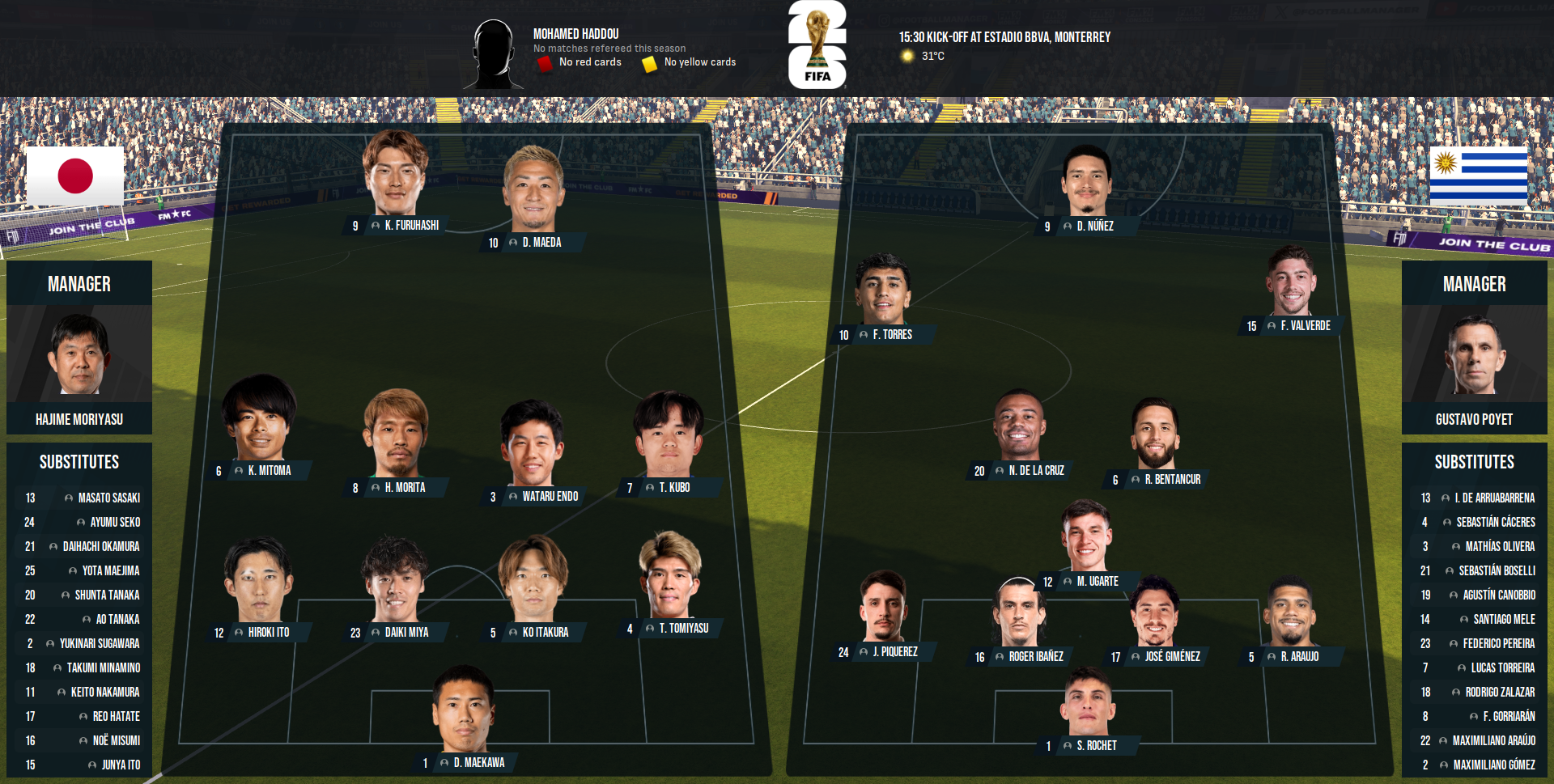
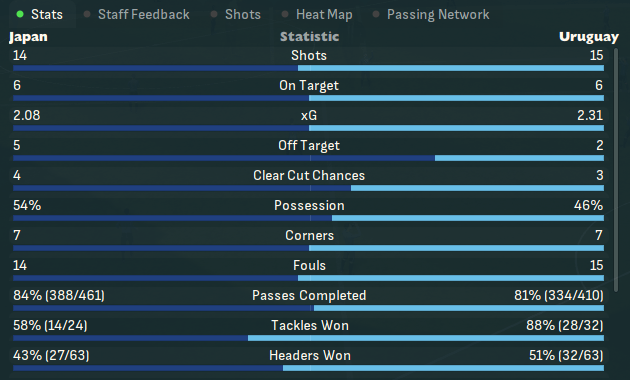
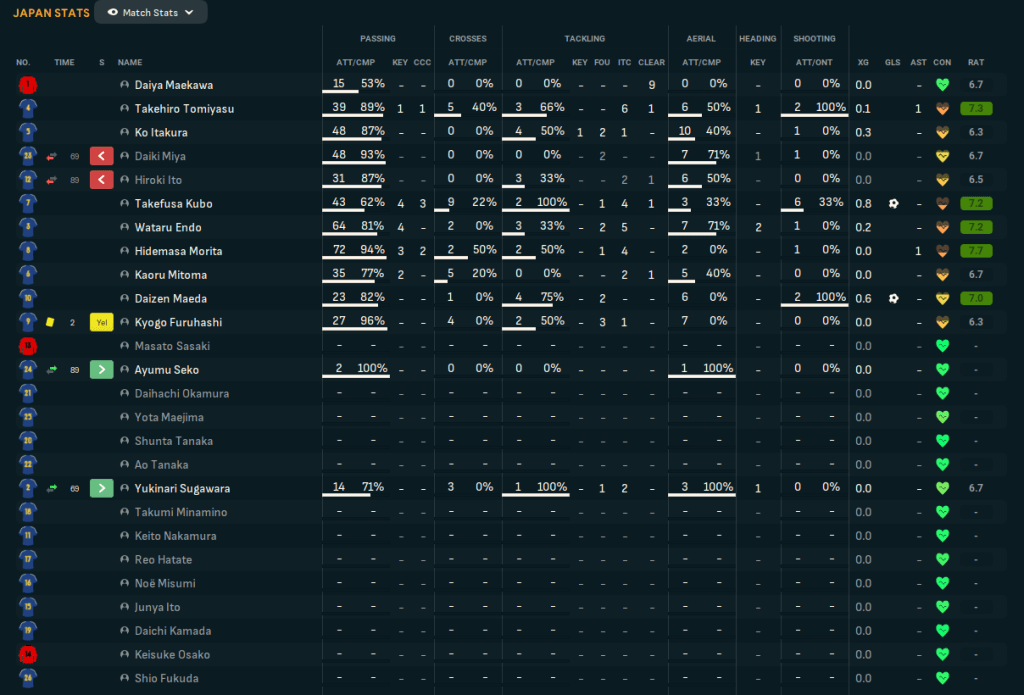
This rhapsody in blue began with Japan (in their darker-toned shirts) playing the right notes, but not necessarily in the right order. A well-worked passing move in the 6th minute ended with Daizen Maeda finding the net, only for Takefusa Kubo to be flagged offside.
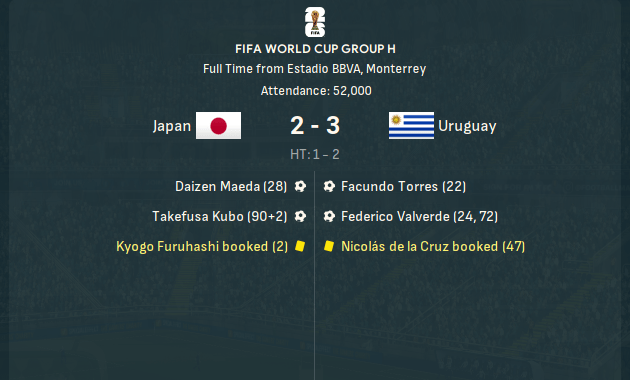
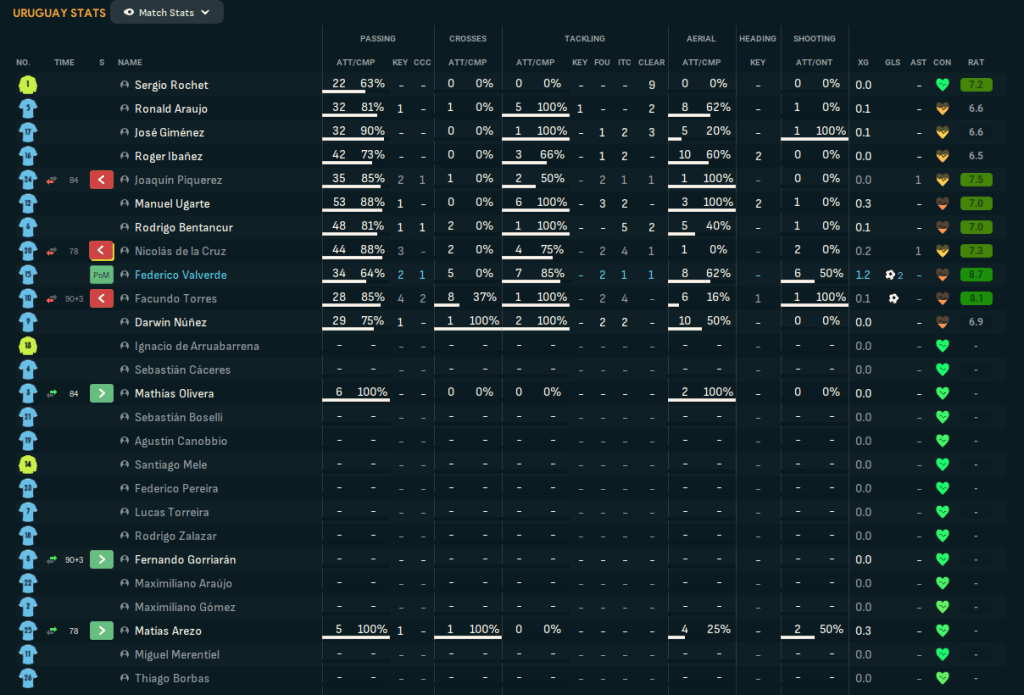
After Uruguay’s let-off, the cyan-clad Celeste broke through with two quickfire goals midway through the first half. A sweet left-footer from Facundo Torres was swiftly followed up when captain Federico Valverde found space in a crowded Japanese box to stab in Joaquín Piquerez’s square pass. Not long after that double, though, Maeda gave Japan a lifeline with another cool finish… and that one DID count.
A thrilling first half almost ended with another goal, when Darwin Núñez raced away to score from Valverde’s through-ball… until VAR ruled him offside and kept Uruguay’s lead down to 2-1. After surviving a wave of Japanese attacks, Valverde eventually doubled La Celeste’s lead with his second goal – rounding off a wonderful midfield display.
Japan appeared beaten, but they were not bowed. Kubo nabbed one goal back in stoppage time before the post denied him a dramatic equaliser, and so a thrilling contest ended with Uruguay prevailing 3-2!
NORWAY vs ANGOLA
(13 June – Philadelphia)
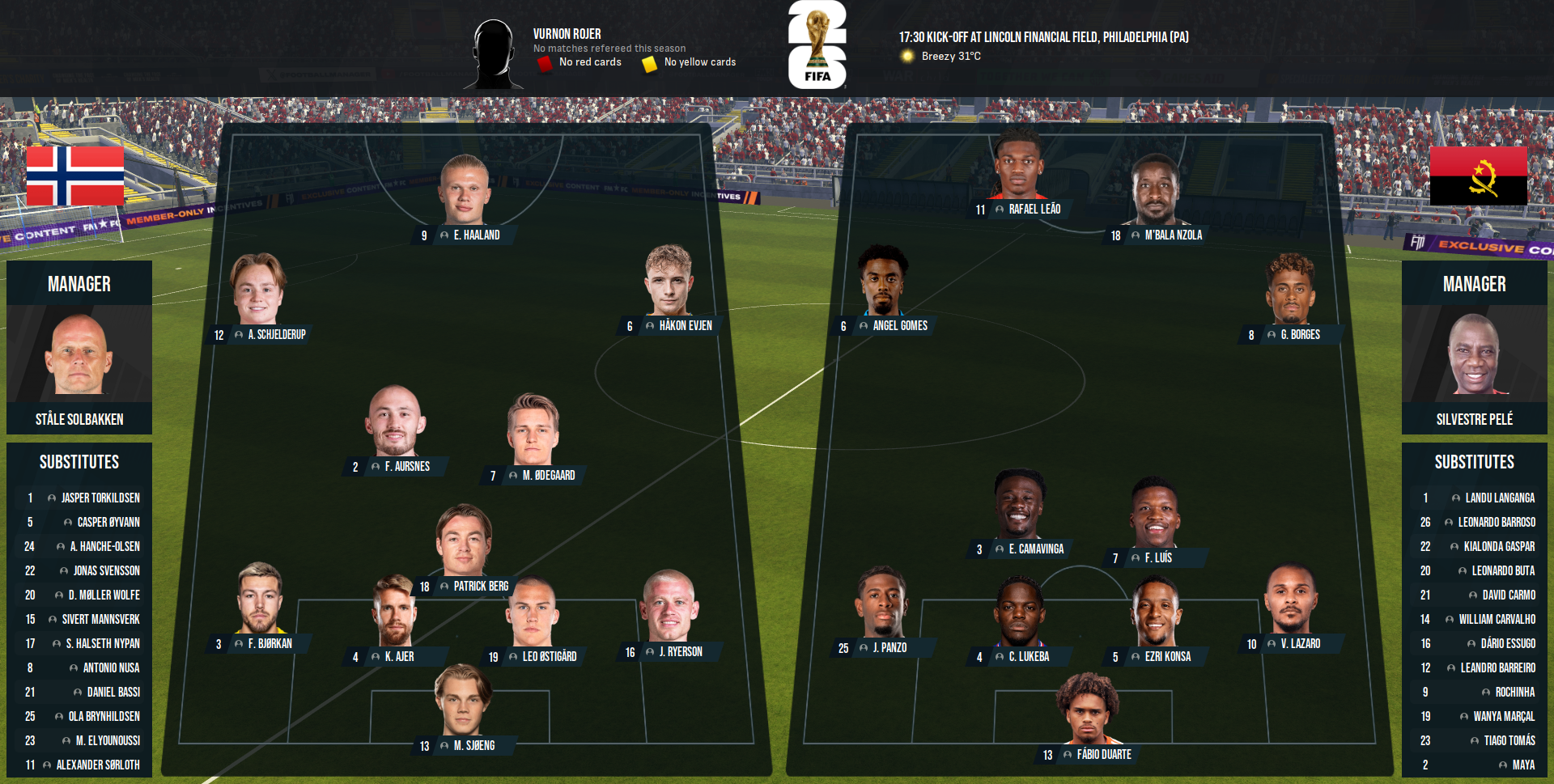
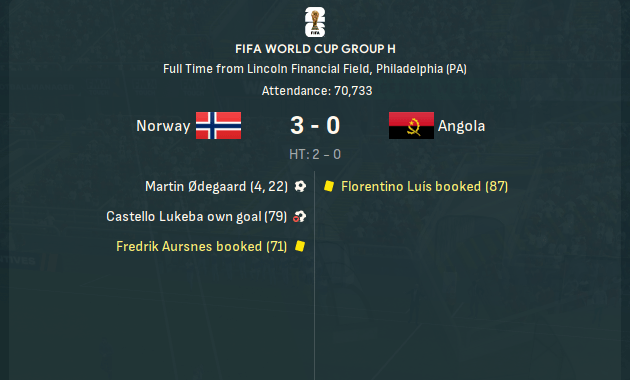
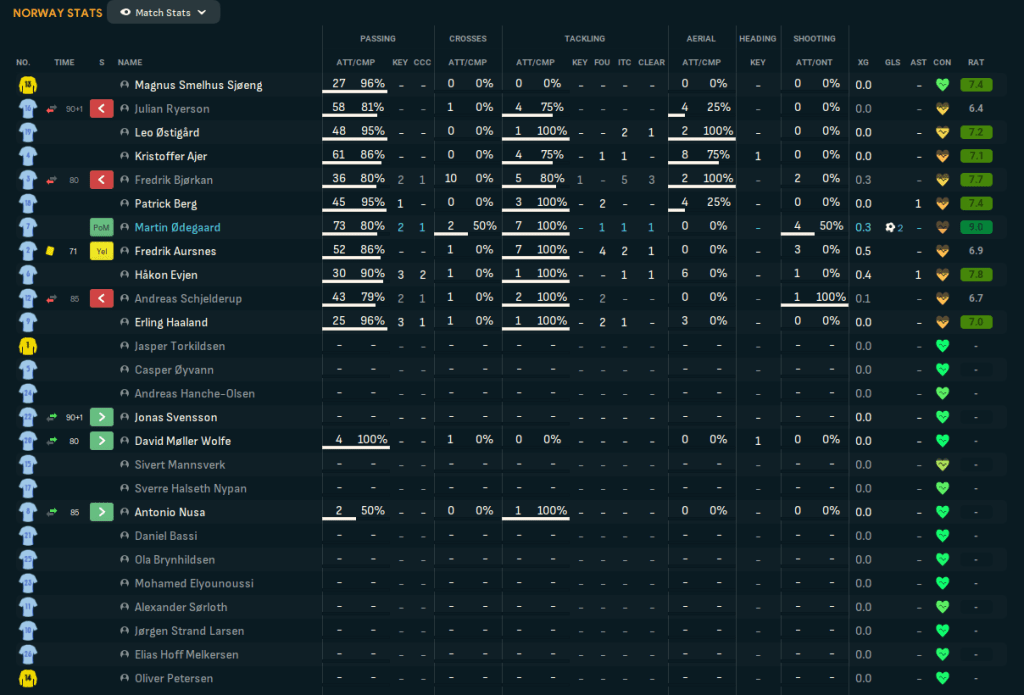
Norway were back on the World Cup stage with a bang, as captain Martin Ødegaard superbly drilled them into the lead after only four minutes! Arsenal’s ice-cool playmaker then doubled his tally on 21 minutes – converting Håkon Evjen’s brilliant through-ball.
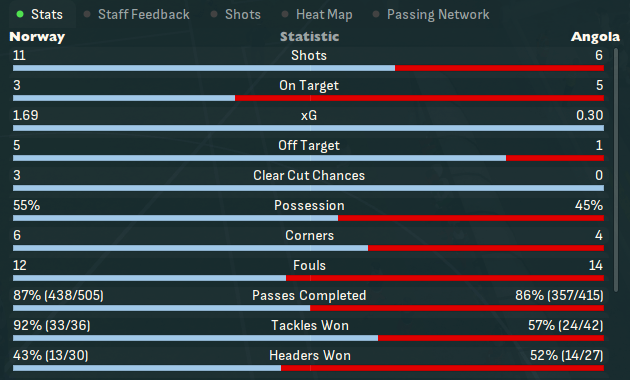
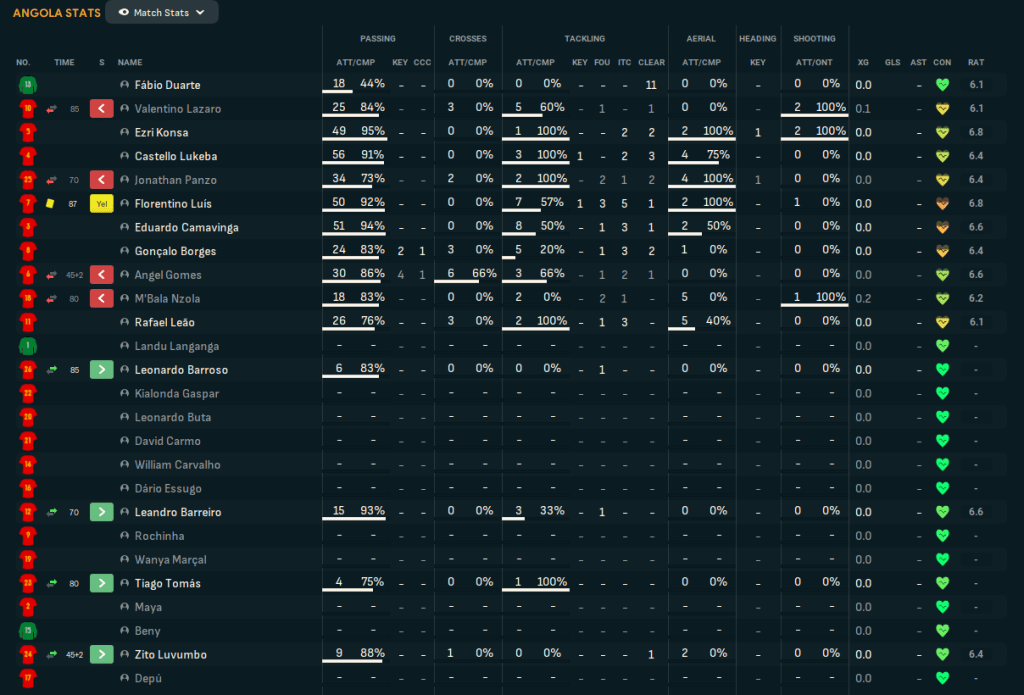
There was more Angolan misery on the half-hour when Rafael Leão had a goal disallowed by the video assistant. Though the Palancas Negras had more of the ball in the first half, Norway were more efficient with it.
Norway were in complete control come the second half, and Evjen rounded off a resounding 3-0 win when his low shot deflected in off the hapless Angolan centre-back Castello Lukeba. They didn’t even need any goals from Erling Haaland!
URUGUAY vs NORWAY
(17 June – Monterrey)
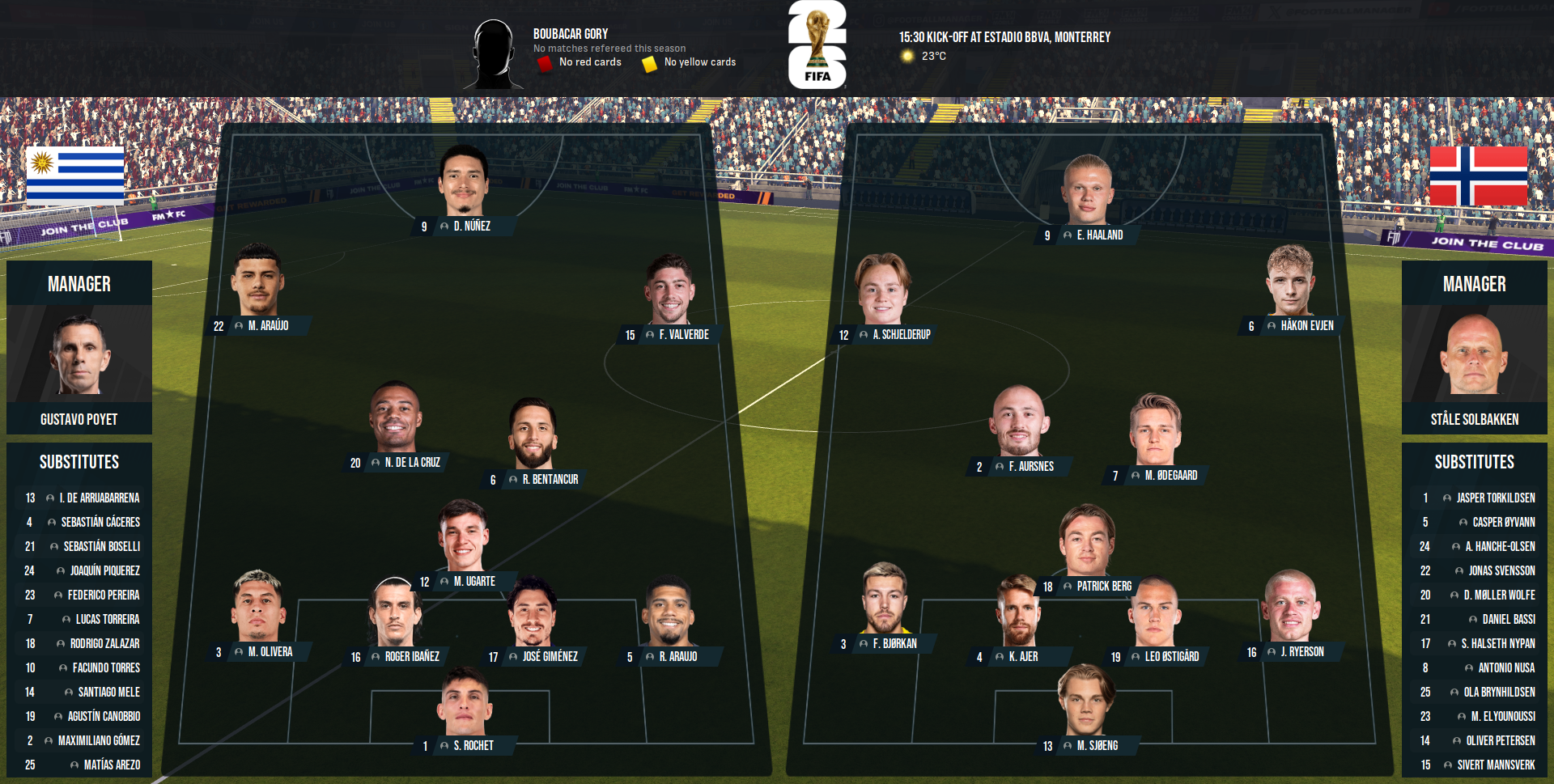
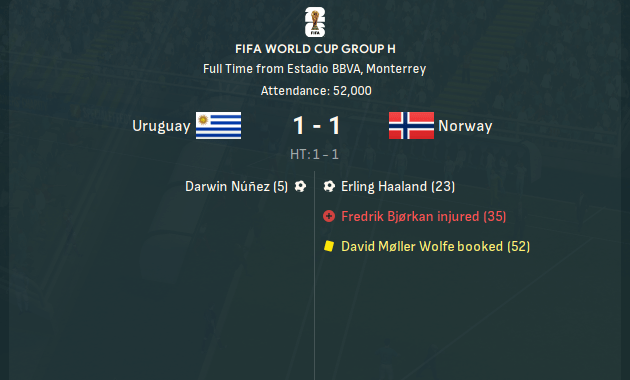
After their winning starts, both Uruguay and Norway were keen to swiftly book their places in the knockout rounds. It was the Uruguayans who made the better start when Núñez superbly finished from left-back Mathías Olivera’s killer pass in the fifth minute.
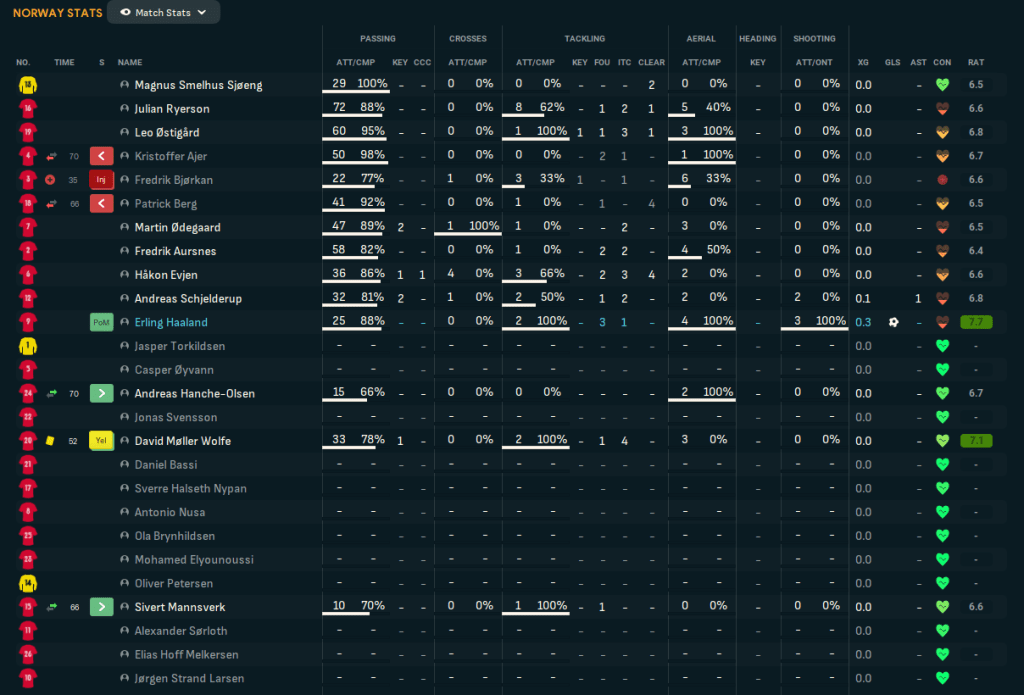
But, of course, Erling Haaland is inevitable. The Norwegian cyborg hit back on 23 minutes, scoring a breathtaking volley from Andreas Schjelderup’s cross. Haaland then had a second goal disallowed by VAR towards the end of a first half in which one of his team-mates – left-back Fredrik Bjørkan – was sadly forced off injured with a twisted ankle.
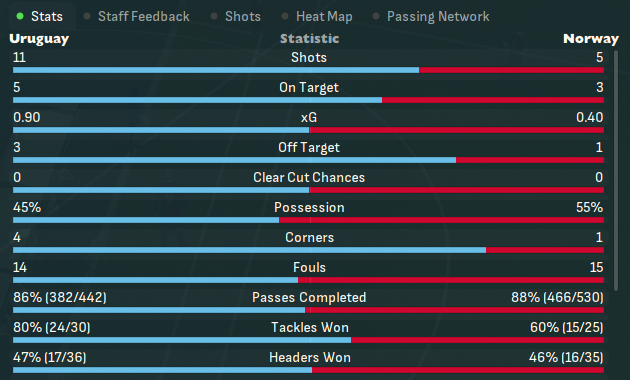
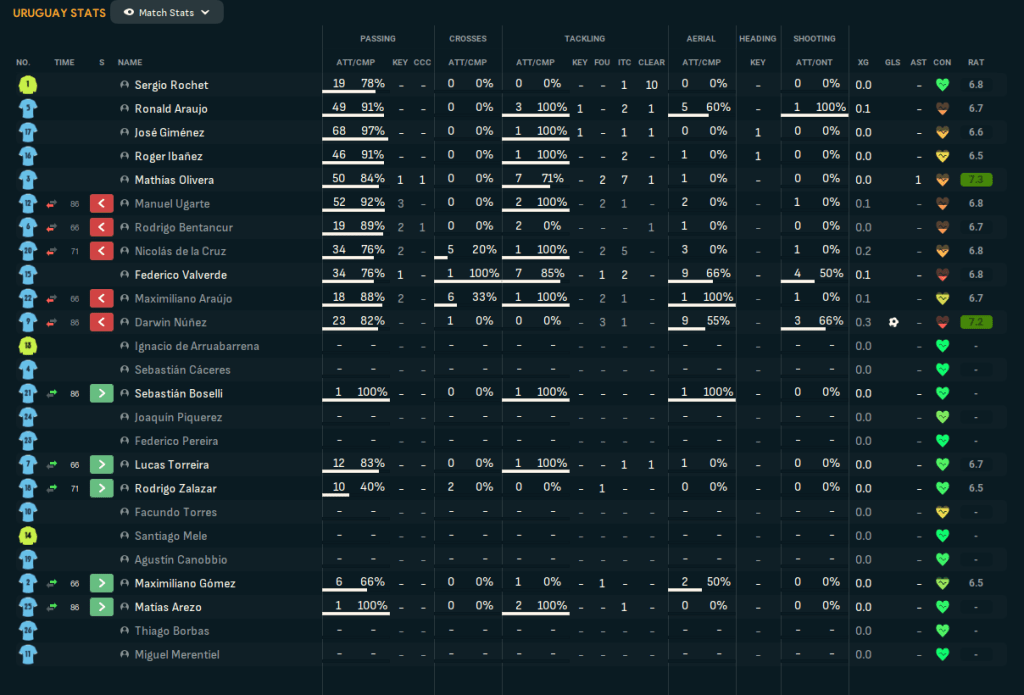
The second half wasn’t as close or as entertaining as the first. It was a frustrating experience for Uruguay, who couldn’t convert their impressive attacking plays into anything meaningful. In the end, both teams had to settle for a 1-1 draw, which left the battle for Group H supremacy wide open.
ANGOLA vs JAPAN
(17 June – Philadelphia)
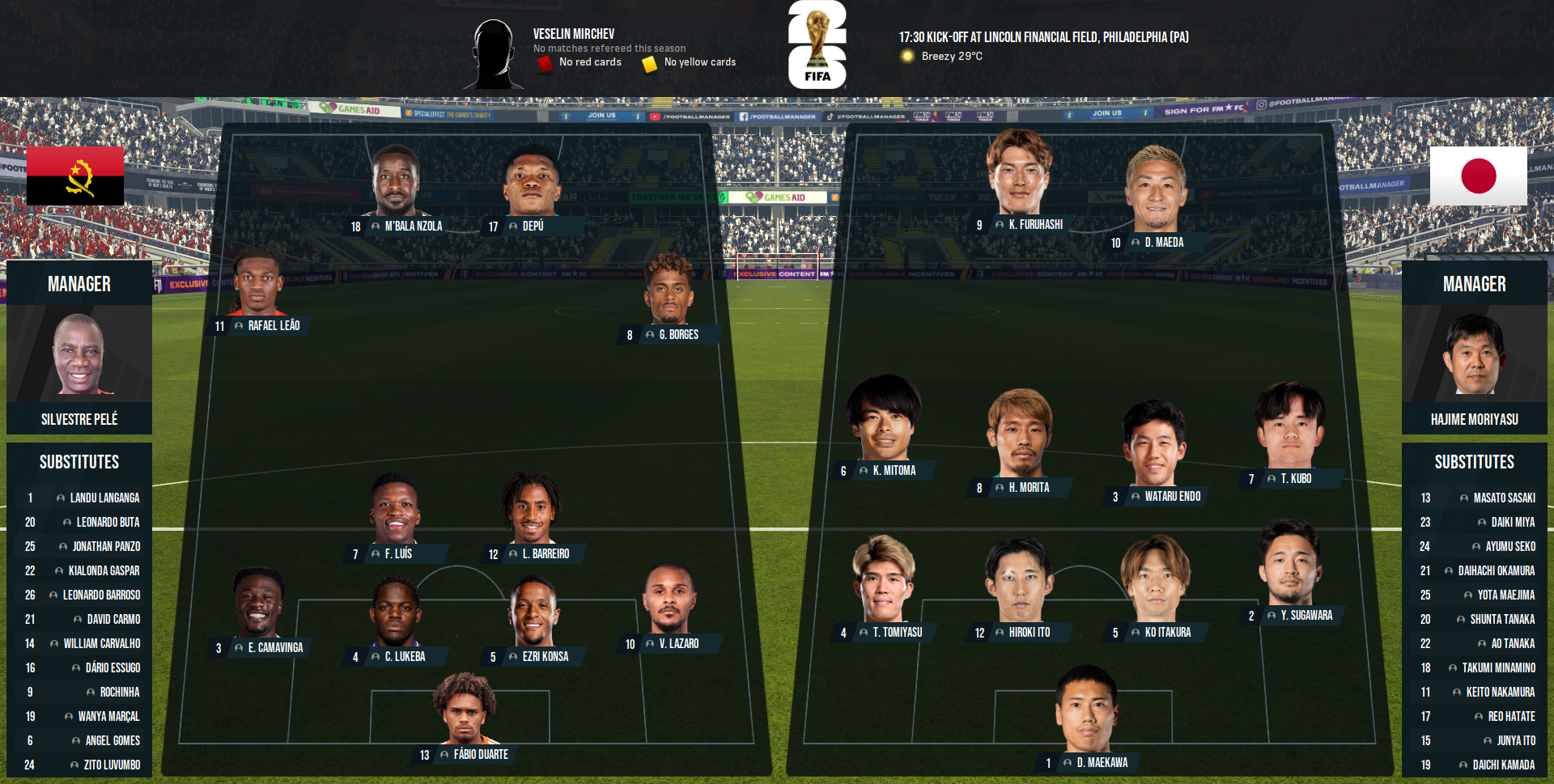
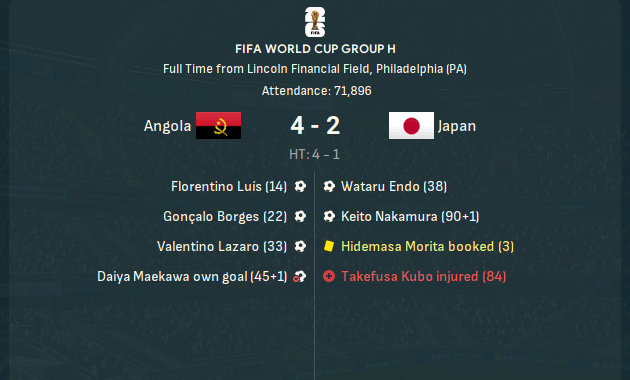
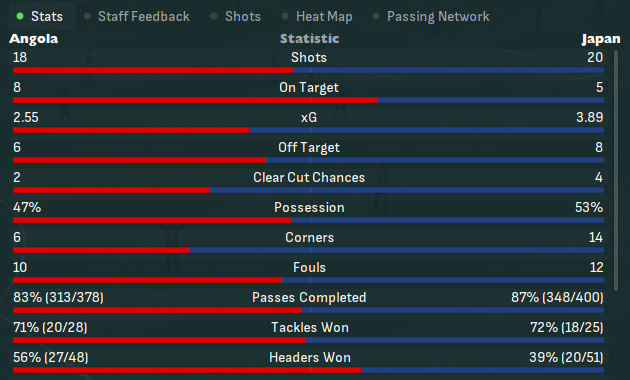
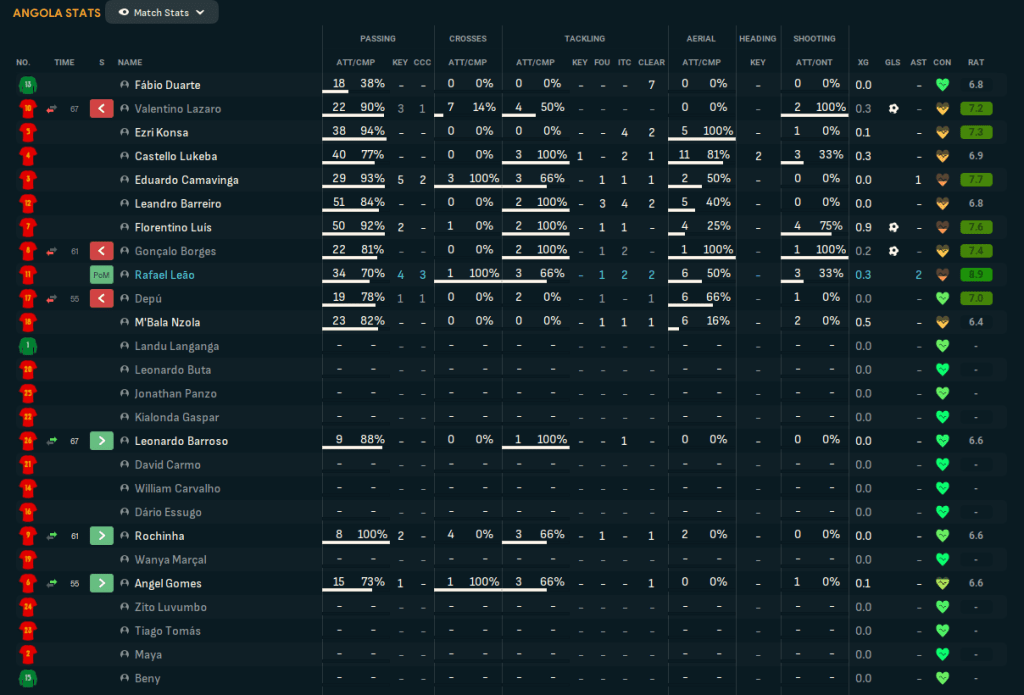
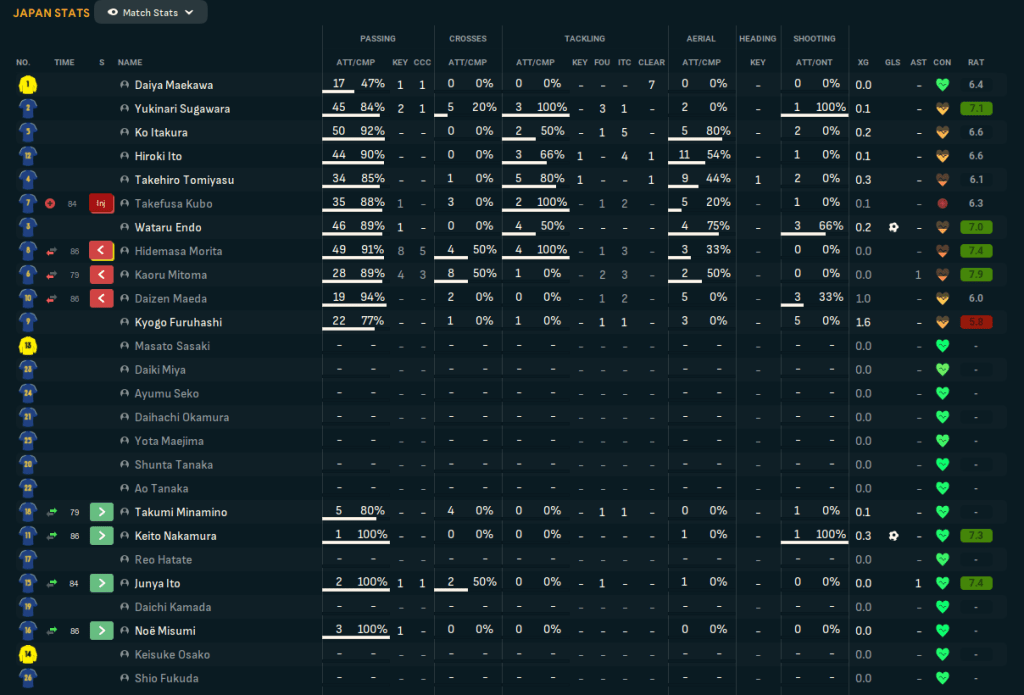
After such an underwhelming start, Angola roared to life in the 14th minute. The Palancas Negras stunned Japan with their very first attack, which Florentino Luís superbly finished off. Florentino wasn’t far off scoring from their second attack either, shortly after Japanese full-back Takehiro Tomiyasu had hit the crossbar at the other end.
By the 22nd minute, it was 2-0. Japanese keeper Daiya Maekawa lamely flapped at Eduardo Camavinga’s cross, and Gonçalo Borges ruthlessly punished him with a brilliant first-time strike. Valentino Lazaro made it 3-0 just after the half-hour, and the Samurai Blue were being put to the sword.
Though Wataru Endo quickly pulled a goal back, Maekara’s day went from bad to worse just before the break, when he could only help a Leão shot into his own net. Japan now needed an almighty effort to come back from a 4-1 deficit. Kyogo Furuhashi heading this howler over the bar six minutes into the second half probably didn’t help.
Japan grabbed another consolation when Junya Ito (who replaced the injured Kubo) set up fellow substitute Keito Nakamura in stoppage time, but that came far too late. A 4-2 defeat left their qualification hopes in tatters, while Angola were right back in the hunt.
NORWAY vs JAPAN
(21 June – Monterrey)
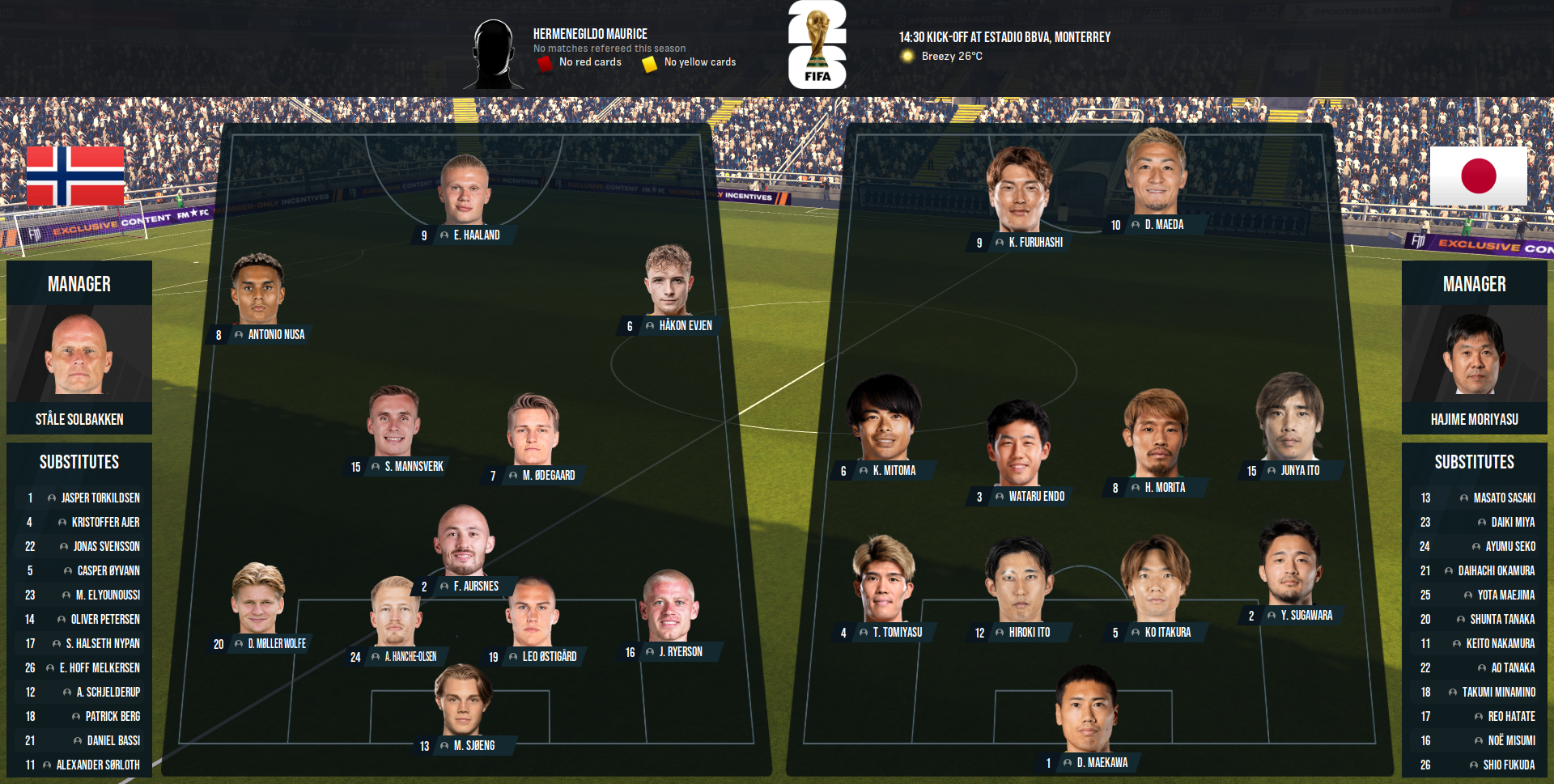
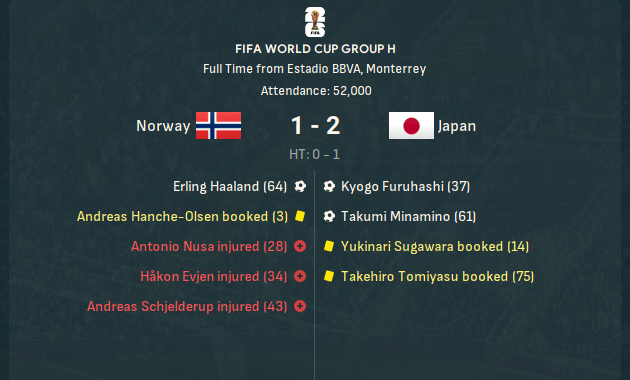
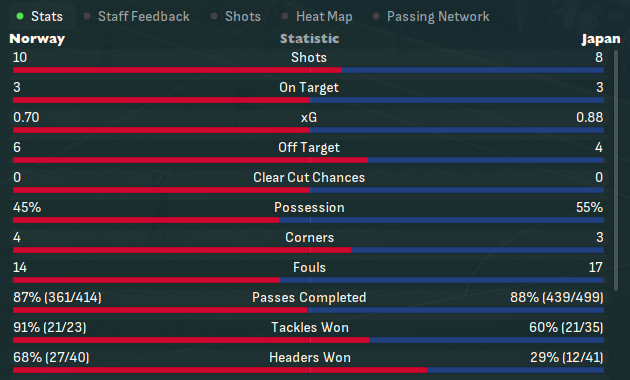
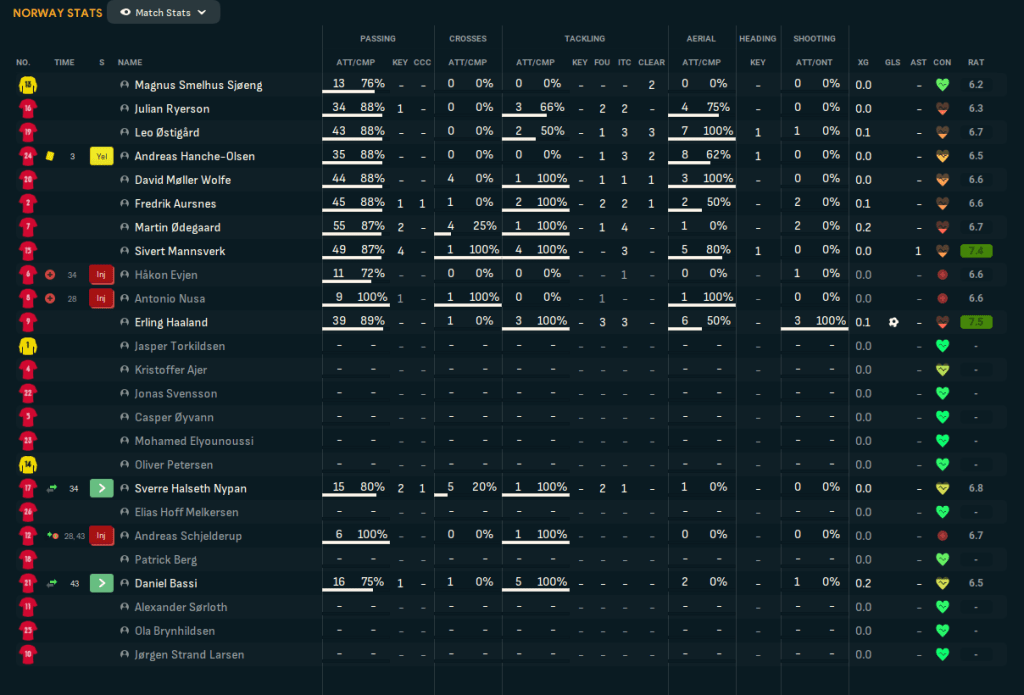
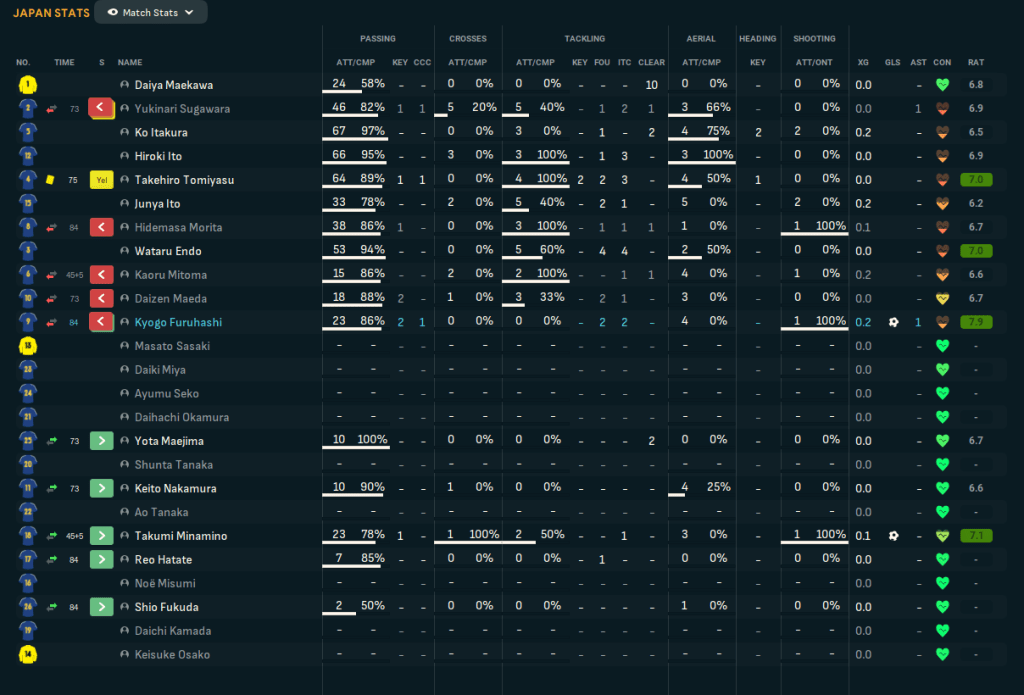
Japan’s must-win final group match was going exactly to plan at half-time. Norway had already lost their two wingers Antonio Nusa and Evjen to injuries when Haaland had a lobotomy late in the first half. Shortly after Kaoru Mitoma hit the post, it was Haaland whose sloppy pass gave the Samurai Blue another scoring chance, which Furuhashi gladly took!
And then it got worse for Norway. Schjelderup – who replaced Nusa in the 28th minute – ALSO got injured. So not only were Ståle Solbakken’s team trailing 1-0 at the break, but they’d also been forced to use up all their substitution windows!
The Nordic nightmare continued into the second half, with Takumi Minamino’s ice-cool finish seemingly putting the Samurai Blue in control. But then some chaotic goalkeeping from Maekawa allowed Haaland to pull a goal back, setting up a very nervy climax before Japan held on for a 2-1 win… just.
ANGOLA vs URUGUAY
(21 June – Philadelphia)
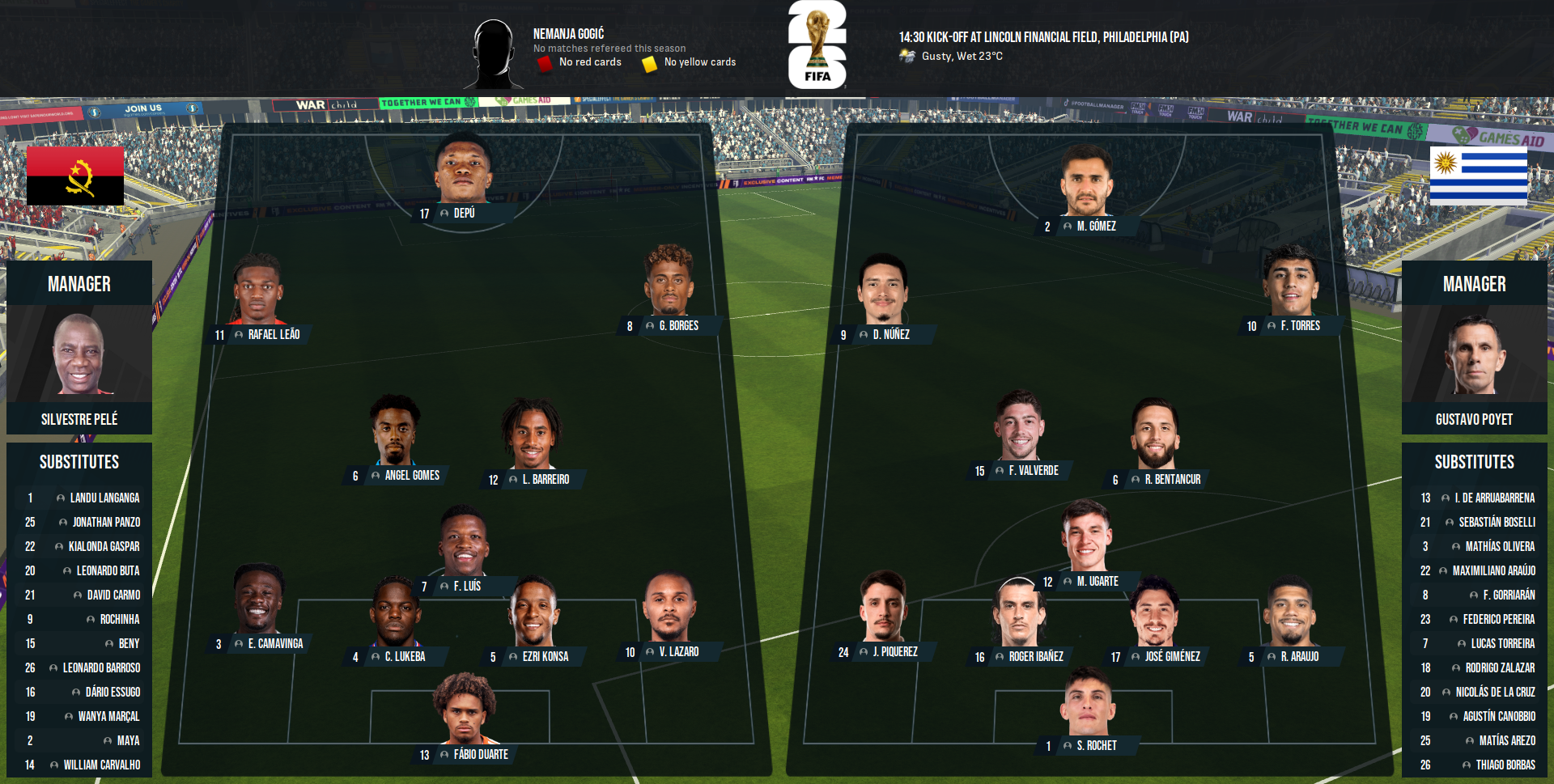
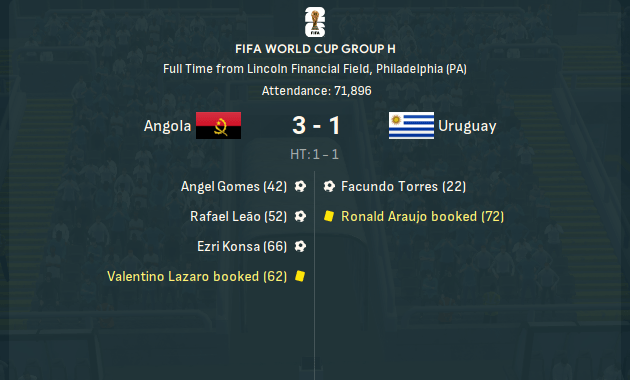
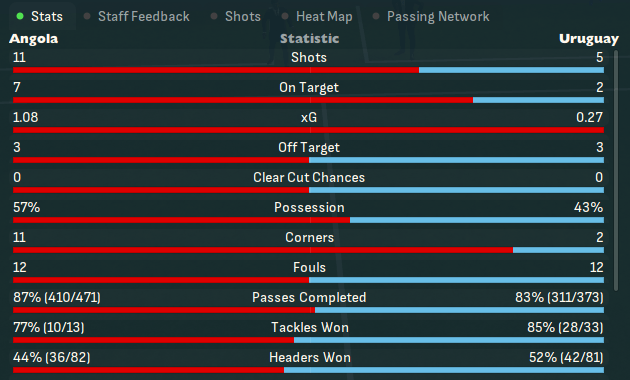
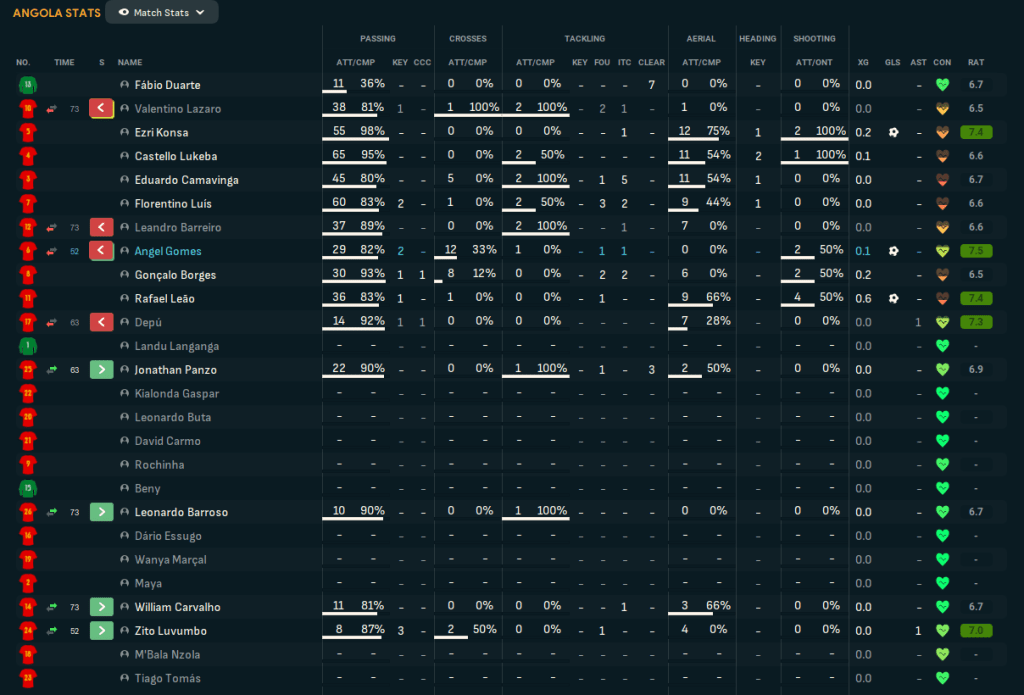
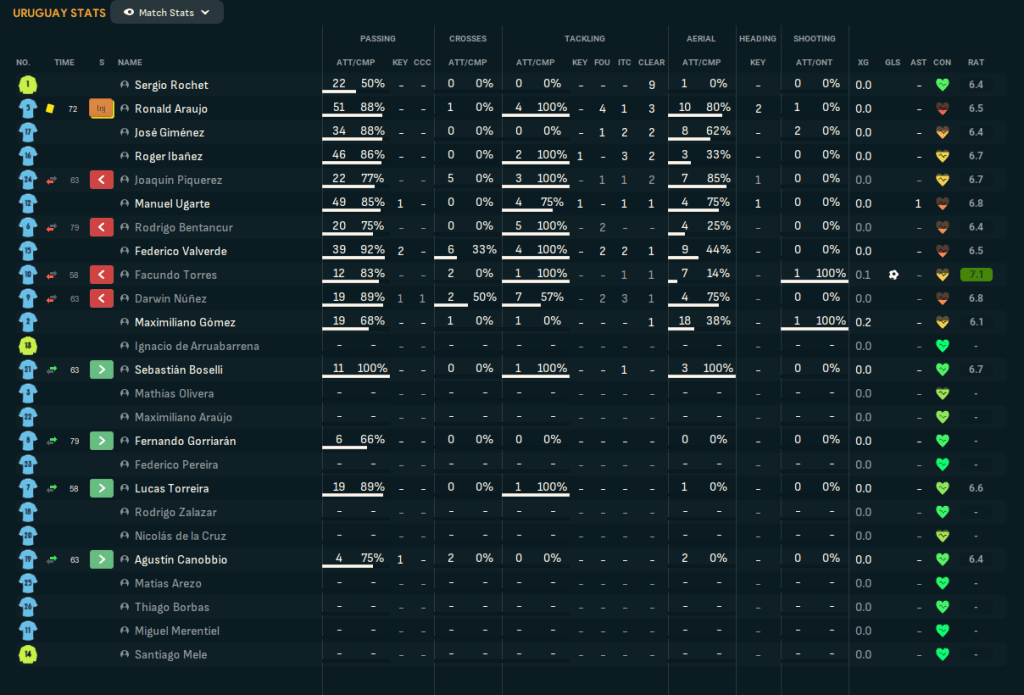
Heading into their final match of the group phase, Angola were in a curious situation whereby they could yet finish top OR bottom. Midway through the first half, the trapdoor looked more likely. Angel Gomes had a comedic fall as he tried in vain to stop Torres from brilliantly swerving Uruguay into the lead.
Then, three minutes from half-time, Angel rose again. Gomes bent a free-kick like another former Manchester United winger, beating Sergio Rochet and levelling the scores!
Angola grew even stronger after the break. Depú sliced the ball through Uruguay’s defence for Leão to strike, and then Ezri Konsa headed home from a corner to clinch a 3-1 win! The Palancas Negras had qualified for the knockout rounds…
…as Group H winners! An incredible comeback, especially after losing their opening match 3-0! Despite their final-day win, Japan would be the only team from Group H not to progress any further.

Mali, New Zealand and Japan are all going home… but is football coming home? England will kick off their Group I campaign in the next chapter, which also includes Italy, DR Congo and the Republic of Ireland in a deathly Group J!

