

Last month, SEGA officially released their newest multi-platform football management game. Sadly, it’s not a rebuilt, reskinned Football Manager 26 that anyone born before the year 2000 might actually enjoy. Though this new game is officially “powered by Football Manager”, it isn’t even close to the FM experience.
Having tried the new game out over the past few weeks, I’m now ready to give my thoughts. Is it a fresh take on the genre – even an FM killer? Or is it “the worst football manager game of all-time”, as some have said?
Here is my honest review of SEGA Football Club Champions.
BACKGROUND
SEGA have owned Sports Interactive since 2004, but they have been in the football video game market for longer than you might think.
Go back about a decade… to February 1996, when SEGA launched Pro Soccer Club o Tsukurō! (often shortened to SakaTsuku) in their native Japan. This was around the same time that the J.League was just getting started, with foreign imports such as Dunga, Dragan Stojković and Salvatore ‘Toto’ Schillaci elevating the standard of Japanese football to a new level.
SakaTsuku was relatively popular in Japan, but it didn’t enter the western market until 2006, when Let’s Make A Soccer Team! was released on PlayStation 2. This was a largely story-driven game where you first had to save your football club from being bought out by an asset-stripping multi-millionaire businessmen, and then lead them to greater glories. I’m not sure what sales figures were like, but the reviews were pretty mediocre at best.
After that brief foray overseas, SakaTsuku remained a strictly Japanese title for the next two decades… until the summer of 2025. That was when we first heard about SEGA Football Club Champions “powered by Football Manager”. With Football Manager 25 now binned, some FMers thought this meant their beloved franchise was being turned into a soulless mobile game – whereas, in fact, it was just an international relaunch of SakaTsuku.
FCC was officially released on 22 January this year, as a free-to-play game on Steam, mobile and console (with in-app purchases, of course). After the first month, English-language reviews were “mostly negative”… but I would not immediately write this game off.
There are some important thematic differences between video games made in the western world (i.e. North America and Europe) and those made in Japan. Western games generally favour gritty realism, glossy presentation and action… while Japanese games lean towards story-driven fantasy, character development and symbolism. There are obviously some exceptions to the rules, but that’s just a general summary.
This is not an endorsement or a criticism of either approach. FCC is clearly meant to be enjoyed as a very different experience to Football Manager, so I will not even begin to compare the two games. In this review, I will be judging FCC solely on its own merits.
STARTING OUT
Once you download and launch the game for the first time, you will be taken into a tutorial. A legendary manager with an equally legendary ego will take you under his wing as he teaches you the gameplay basics, such as setting up tactics, negotiating new signings and training players. It takes around 20 minutes, which is a bit long in all honesty… but once that’s out of the way, you’re pretty much good to go.
Then the real fun begins, with several modes to choose from. Dream Team is the game’s equivalent of EA Sports FC‘s Ultimate Team, where you can pit your wits against other managers. Tours allows you to play matches against clubs in various regions to complete missions and earn rewards. For this review, I’m going to focus on the main single-player experience – Career Mode.
FCC makes good use of FM’s database and FIFPro’s licence by including thousands of players from clubs across the world. But while all these players have their real names and likenesses, only the J.League and South Korea’s K-League have all their clubs fully-licenced. That means that instead of managing Millwall, I will be taking charge of AS Bermondsey, as they face off against the likes of Greenwich, Hertfordshire and Lexham.
In some leagues, you also have an option to create your own custom club. You can set its name, kits, and the region and city it’s based in – though you only have a limited choice of badges to choose from and can’t create your own.
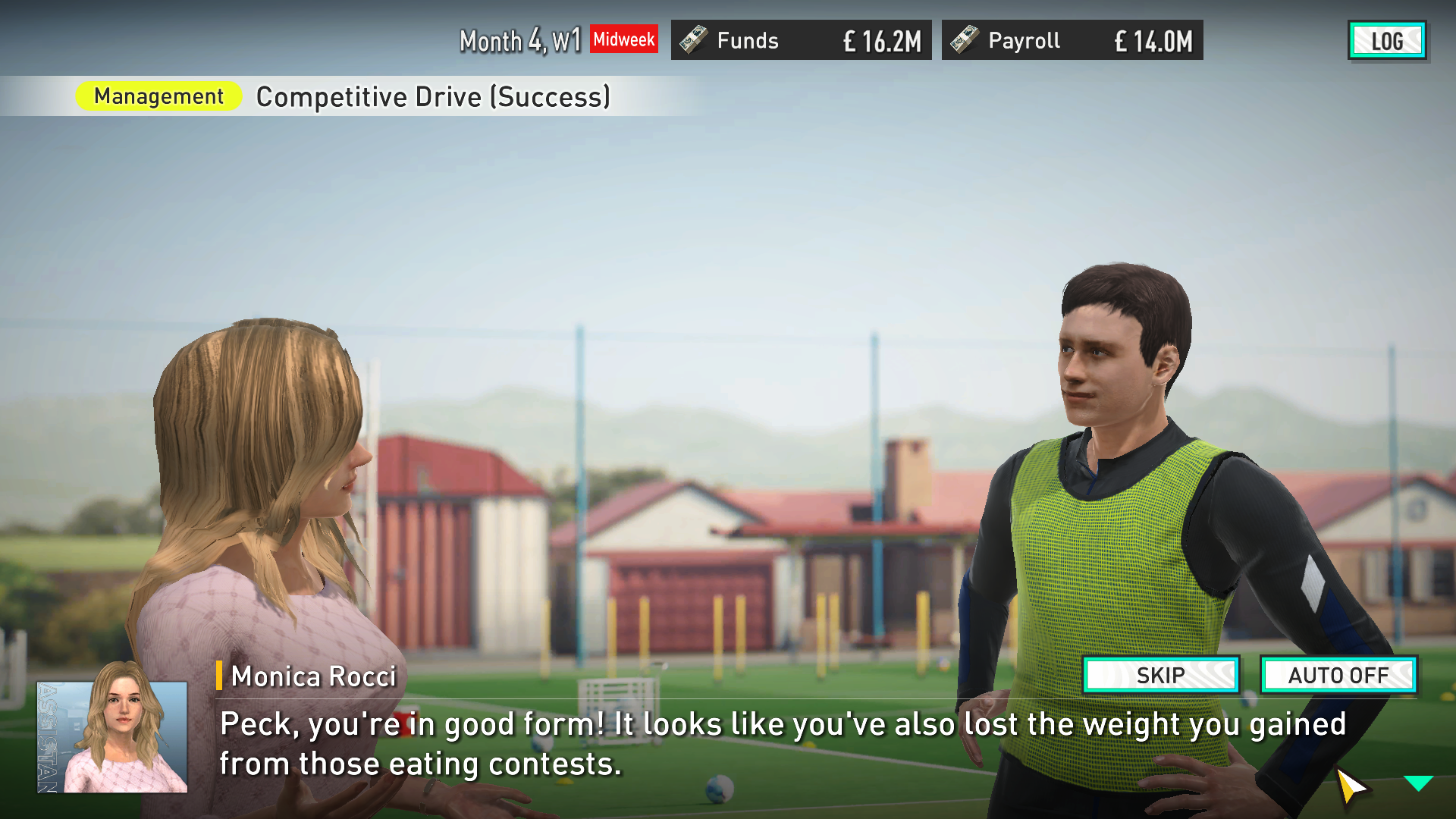
One of your first big decisions as manager will be to appoint an assistant, who will lead your interactions with players and give you general advice. Naturally, most of the applicants are young women who appear to have stumbled out of college or a modelling agency. This use of fan service isn’t unique to Japanese games, of course, but they really like eye candy over there.
Speaking of eye candy, a lot of people have compared FCC to Umamusume: Pretty Derby. (That’s the racing game with the horse girls; it has nothing to do with John Eustace.) If you have ever played Umamusume – full disclosure: I have not – then you probably have a good idea of what to expect from this.
WHAT I LIKED
Just to reiterate – FCC is not designed to be a hyper-realistic simulation of professional football. Indeed, this game includes some role-playing and fantasy elements that make the experience feel rather cool and fresh.
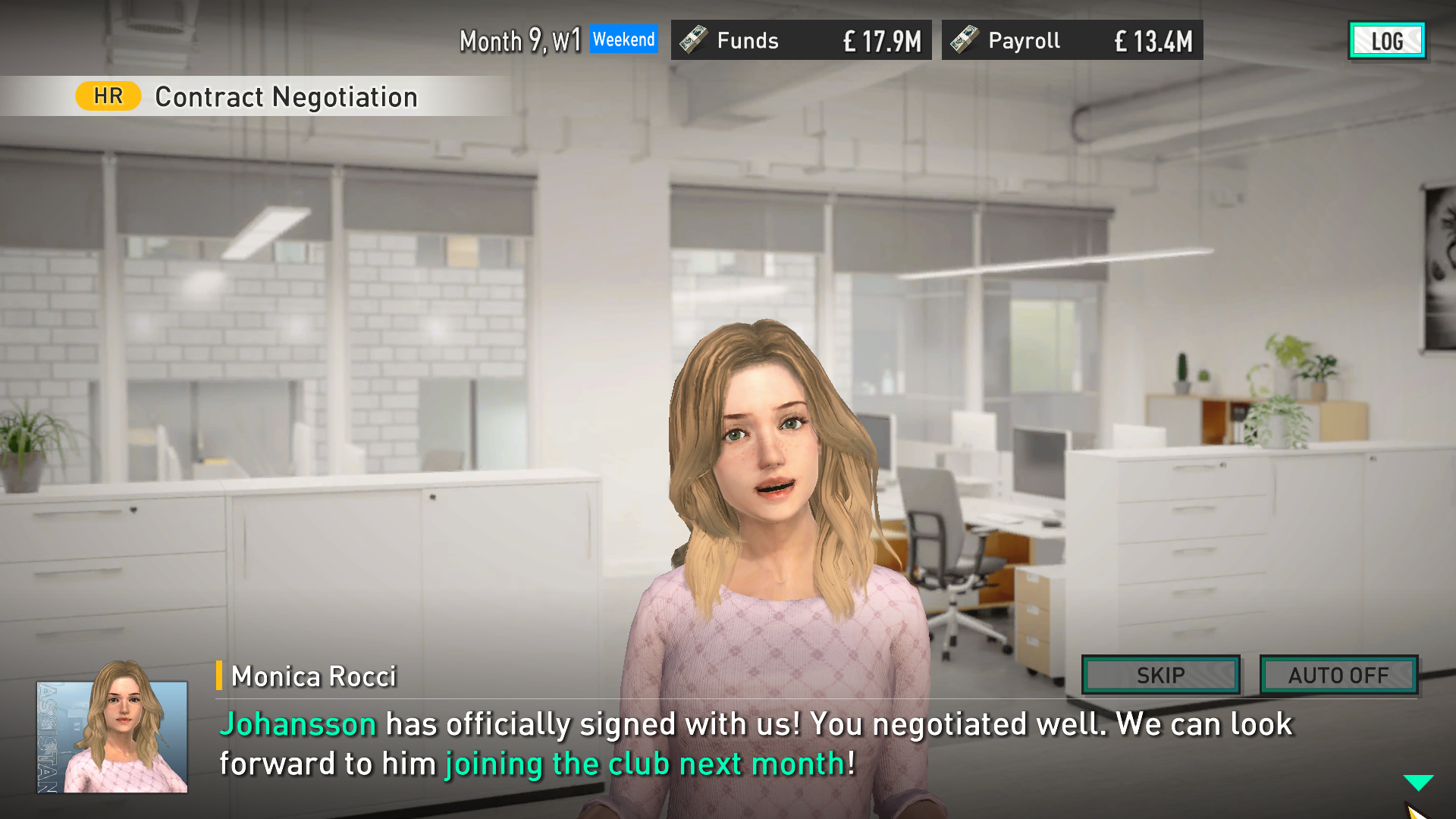
Signing players is done through playing a three-question mini-game. If you give a player a high-enough squad status and answer another question correctly, you will be able to negotiate his wage demands to a more reasonable level. If he accepts your demands, he will join your squad at the start of the next month.
Also breaking up the monotony of playing and progressing between matches, you will get storylines that can either help your players improve quicker or boost your team for a limited time. There are short and wholesome storylines like your players getting addicted to trading cards, or slightly longer affairs like your new star signing considering a move to a bigger club.
The interactions with your players also help bring them to life. Admittedly, some of the English translations aren’t perfect. When one of your players signs for another team, they are said to “retire” from your club, and your assistant will tell them, “It was an honour to fight alongside you.”
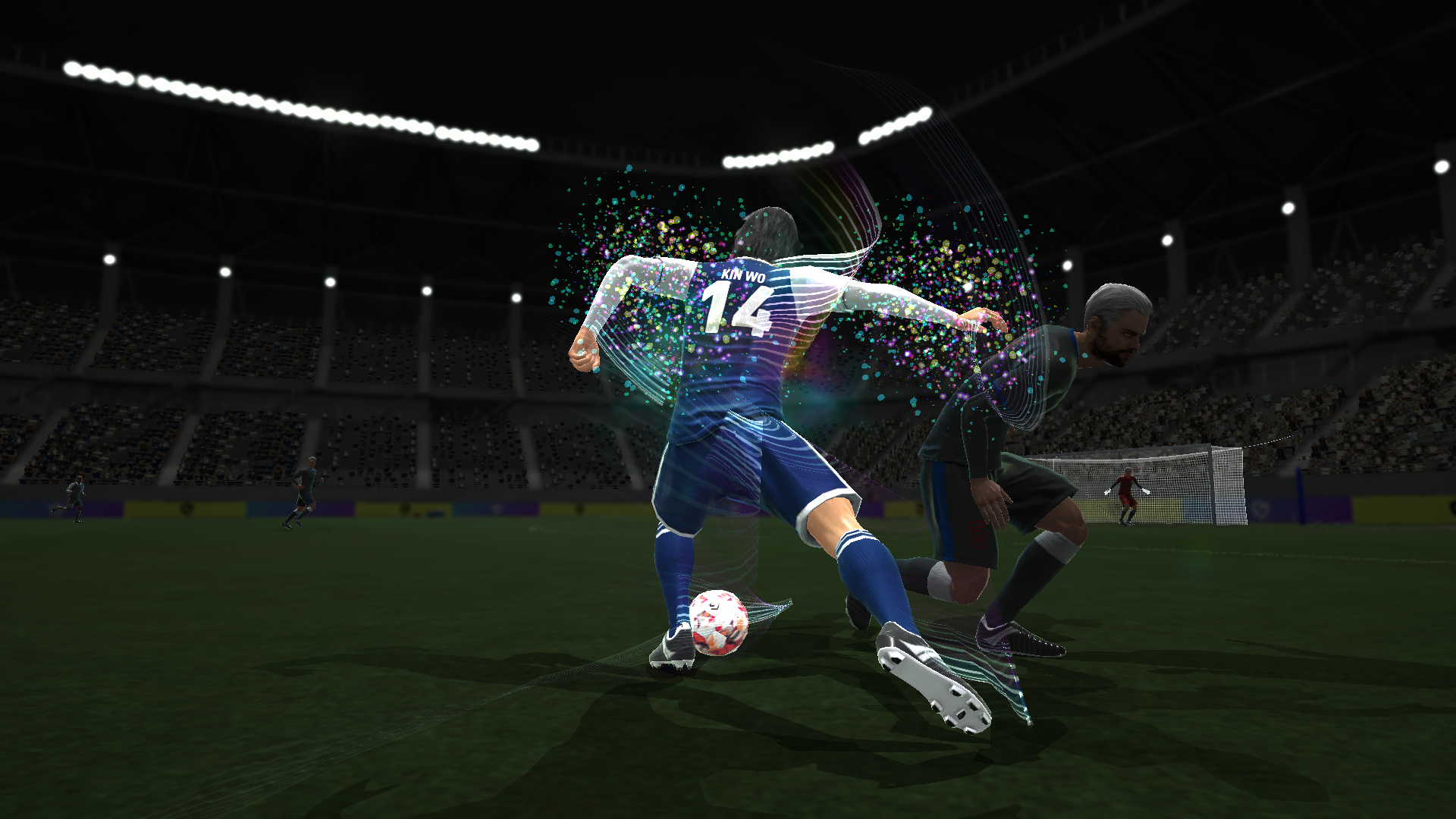
The graphics engine looks pretty good as well. It’s not EA levels of graphical quality, and some of the movements are a bit iffy, but it looks visually pleasing. The short slomo cut-scenes that play out when a top player pulls off a skill move are so cool to watch, and it’s clear that a lot of effort was put into making them.
Likewise, the user interface can take some getting used to, but navigating through the game soon feels natural. I certainly didn’t need to spend 20 hours trying to work out where everything was, Miles.
WHAT I DIDN’T
FCC’s database is certainly “powered by Football Manager”. Sometimes, it feels like parts of the match engine are as well.
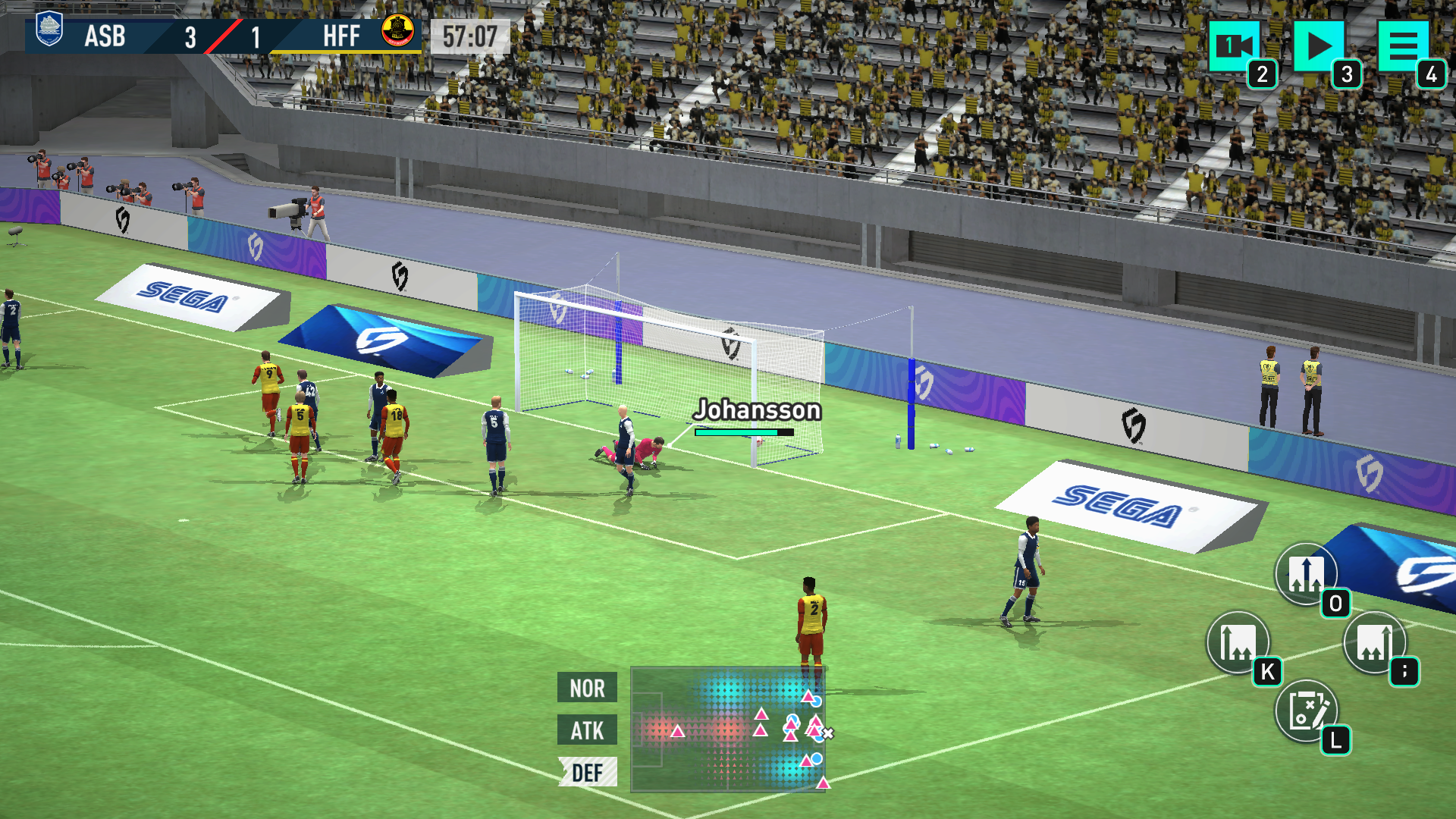
Competent defending on this game is close to non-existent. Far too often, I’ve seen strikers brush past defenders like they’re not even there, or being left completely wide open.
Players also miss obvious passes, head the ball in unnecessary situations, and even teleport across the field whenever it’s convenient. Lastly, free-kicks are routinely given for what look like perfectly reasonable tackles. These are all issues that have blighted recent FMs.
Despite the general incompetence, scorelines somehow stay at a realistic level. Nonetheless, it’s bad enough that I prefer to simulate through most of my matches – and only watch one or two of our bigger games each month.
Then there are the ‘gacha’ elements, which are similar to the ‘legalised gambling’ you get on Ultimate Team. If you want to improve your players faster, you will need to upgrade training cards, which you buy with in-game currency. If you want better players, you collect cards from ‘loot boxes’, which (again) you buy with in-game currency. Alternatively, if you are rich and/or gullible enough, you could just spend real-life money to get them sooner.
From my experience, it is possible to play the game and make decent progress without spending a single penny. Sooner or later, though, you may hit a wall – and FCC will drive you towards paying to win. You’ll even have to fork out if you want to have more than one save slot in Career Mode. I get that freemium games need to make money somehow, but some of this feels a little unnecessary.
My biggest bugbear, though, is with the ‘always online’ element. I’ve had a few random connection issues interrupting my experience, even when doing something as simple as trying to open the menu that exits the game. Don’t trust live services, kids.
WE MUST TALK ABOUT…
Players.
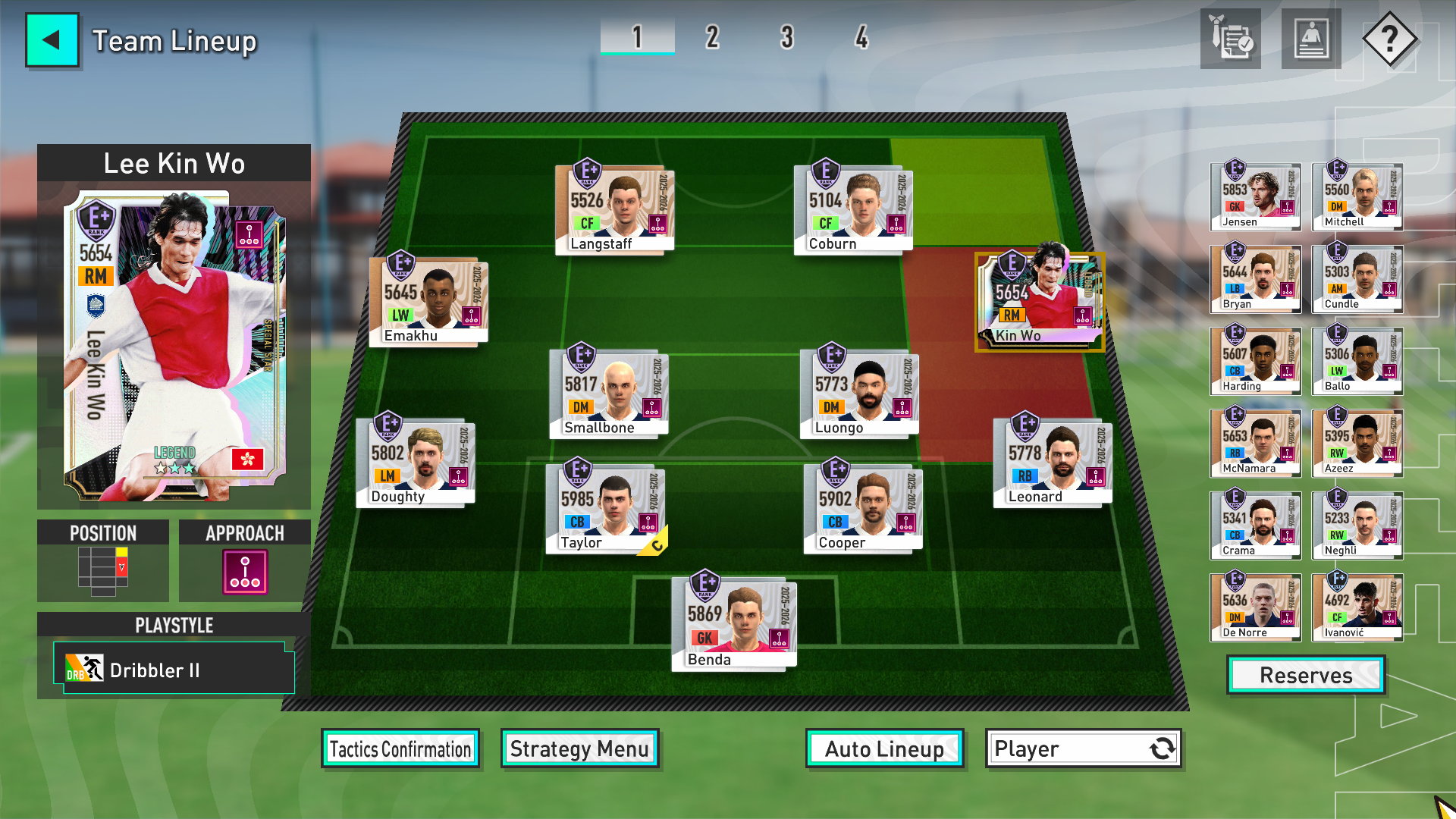
As you progress through FCC, you can buy or otherwise collect player cards. Most of these will be modern-day stars such as Erling Haaland, Cristiano Ronaldo and… er, Kobe Corbaine? But you can also unlock legendary players from years gone by – including Asian icons like Keisuke Honda.
You can add up to two of these players into your Career Mode squad before the start of each season. The best players can greatly improve your squad, but they’ll also be very expensive additions to your payroll. They’ll also start off as young players who will need developing to realise their full potential. Even Ronaldo doesn’t come straight in as the finished article.
In fairness, it does feel gimmicky when you can add Lionel Messi to your Japanese third-division club and dominate the J3 League with ease. If you prefer, you can just ignore these and focus on developing what you already have.
SUMMARY
It would be very easy to dismiss SEGA Football Club Champions as an unrealistic, free-to-play Ultimate Team clone. Personally, I don’t think FCC is that bad a game, and I certainly didn’t enjoy playing it any less than I did FM26. I’ll just say that… it’s an acquired taste.
This is obviously not a serious rival to Football Manager, but that completely misses the point. It’s an arcade fantasy game, not a gritty simulation. If you aren’t bothered about realism, and you just want a football game that you can progress through in short bursts without much hassle, then why not give it a shot?
FULLER FM RATING: 3* – Football League.
So there was my review of SEGA Football Club Champions. Did I mention that it’s “powered by Football Manager”?
I understand that this review might perhaps be more positive than you expected, but I’m happy to hear your own thoughts about this game – whether you love it or hate it. Feel free to drop a comment below, or contact me on Threads or Bluesky.
 Fuller FM
You must be logged in to post a comment.