

Let’s talk about international management in Football Manager.
Club football might be the bread and butter of our sport, but there is nothing quite like the international game. Representing your country is always a high point in a player’s career, and winning the World Cup can lift an elite player to legendary status – like Pelé, Diego Maradona, or Bernard Diomède. For a manager, becoming a World or continental champion can make them a national hero.
Why, then, does international management feel so dull in FM? Managing a national team in the game is so bare-bones and tedious that it’s difficult to stay interested in it for long – and even winning a World Cup feels much more hollow than it should.
Just before the release of FM22, Guido from Strikerless went on “a bit of a rant” about FM’s take on international football, and what he would do to improve it. As we head into another international break, I feel it’s now time to share my thoughts and ideas – using some of Guido’s suggestions, and some others from the wider FM community.
WHY INTERNATIONAL MANAGEMENT SUCKS
International management is a very different beast from club management. On the plus side, there are fewer matches, so you can whizz through seasons faster (even if you have to wait quite a bit longer between matches).
Sadly, there’s so little to do that the experience can get real stale real quickly. You pick the players, tactics and staff, and attend the odd press conference. I suppose you could also manage the Under-21s and other youth teams, but that’s about it.
There is no training, so no chance to work specifically on your players’ fitness or tactics. There is no data hub, comparing your teams’ match stats to other nations. Indeed, hardly any new features that SI has added to club management in recent FMs have made it to the international game.
Even the media sucks. I lost count of how many times Southampton’s manager has said Charlie Austin deserves a call-up. Also, don’t The Guardian have bigger things to speculate on than whether Leyton Orient’s 16-year-old goalkeeper will choose to play for England or Wales?
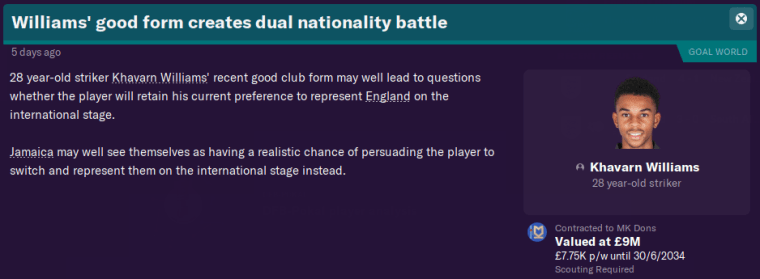
What we’ve been left with is an international management experience that has barely improved in a decade. Indeed, it’s arguably got worse. As much as I love this side of the game, I haven’t had a proper international career on FM since Football Manager 2017, when I led England to glory at the 2022 World Cup in Qa- Morocco.
That’s why I haven’t written that much about the international game here on Fuller FM. I did become England manager again during my FM19 beta save with Fiorentina, but my interest in that waned VERY quickly.
Last summer, I did a couple of Euro 2020 challenges on FM21. Firstly, I managed an England team without any players from ‘Big Six’ clubs, which went okay… until Serge Gnabry and Leroy Sané smashed us up in the last 16. I also tried my luck with a French team full of N’Golo Kanté clones, but the results were so dire (a couple of 0-0s, followed by a 1-0 defeat to Hungary) that it wasn’t worth writing about.

As far as longer-term international careers go, I just don’t have the heart for them now. Lots of improvements need to be made before I give this a go again.
So, how would I go about improving this side of the game? Well, I have a few ideas…
IT’S GOOD TO TALK

For my first idea, I’m going back nearly a decade to show you a feature that WAS in Football Manager, before being taken out of the game. This is from Football Manager 2013, where I managed Norway part-time for a few years, alongside my day job at Dagenham & Redbridge.
On FM13, you could have private chats with your international players, just like you could at your club. You could praise or criticise their last performance, or discuss their recent form. If a player hadn’t been in the squad recently, you could tell them why, whether it was because of their attitude, they weren’t playing enough for their club, or even that they were being phased out for younger players.

That sounds realistic, right? Well… this feature was removed just a few FMs later. Excluding team meetings, the only times you can speak to your players are when you’ve dropped them from your team, or when you’re trying to persuade a multinational player to choose your country over another.
This was especially frustrating on my FM17 England save. Manchester United had signed so many elite forwards that Marcus Rashford was hardly getting a look-in – and even when he did, he was being used as a deep-lying playmaker in central midfield!
It would’ve been nice if I’d been able to talk to Rashford and warn him about his lack of first-team football, so that he would perhaps seek a transfer. Naturally, that won’t work on every player; just look at how Phil Jones’ career has gone.
A NATIONAL VISION
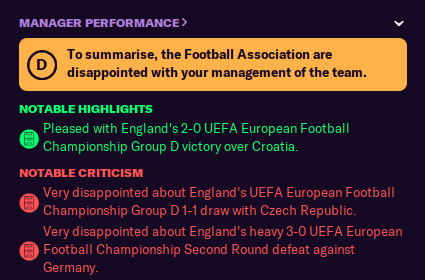
One of the first ideas Guido suggested in his post is for international teams to have their own national vision and long-term plans, just like clubs do. It would make sense if the national football association didn’t judge your performance (and future job prospects) purely on international tournament results, but also on your tactical philosophy and player development.
Some FAs expect their teams to play in a certain manner. The Dutch love to play stylish and fluid Total Football, while the Italians prefer a more pragmatic approach. If you have a defensive-minded system that contrasts with the entertaining attacking philosophy your nation expects, you’ll HAVE to deliver the results to justify it, otherwise you’ll be out of work before you can say “Dunga”.
Likewise, if you’re managing one of the ‘bigger’ nations, you should expect your job to be under pressure if you suffer a particularly humiliating result. Claudio Ranieri lasted just four games as Greece manager in 2014, being sacked after they lost 1-0 at home to the Faroe Islands. (Of course, Don Claudio’s next job went rather better.)
Your FA might want you to bring through more young(er) players, as you transition from one generation to the next. Roberto Martínez is doing just that with Belgium, whose ageing ‘Golden Generation’ is being complemented with fresh talents like Charles De Ketelaere, Jérémy Doku and Alexis Saelemaekers.
To be clear, I’m not asking for your manager to have a greater say on improving national facilities, youth coaching or the like. While some national team managers do have some input, it’s usually FA directors or executives who take responsibility for improving those areas.
SQUAD DYNAMICS
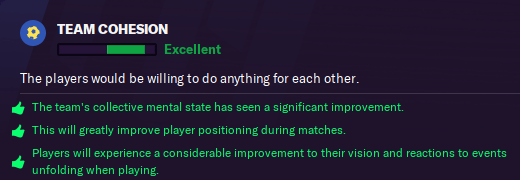
Team dynamics has been one of the best additions to Football Manager in recent years. At club level, a harmonious squad can often be much better than the sum of its parts, while a fractious team can easily break part.
At international level, though, it’s almost irrelevant as far as FM is concerned. Picking several players from the same club, or having loads of contrasting personalities in the squad, doesn’t seem to have much impact on your team’s tactical knowledge or dynamics, if any at all. This side of the game could be so much more realistic.
There are many stories of bitter club rivalries spilling over into national teams, and things inevitably going to pot when sworn enemies off the pitch have to represent their country together on it. Look at John Terry and Rio Ferdinand, or Lothar Matthäus and Stefan Effenberg in the 1990s… or the Netherlands at nearly every tournament since the 1970s.
The Terry-Ferdinand feud brings up another point about having just enough influential players in the national squad. If you have too many club captains, their colliding egos could divide the team into cliques. Too few leaders, and you could be left rudderless – like the Dutch Euro 2020 team sans Virgil van Dijk.
If a high-profile player is always getting picked even if their form has gone down the pan, their rivals (either in terms of club or position) might not be too pleased. And if a younger, newer addition to the squad has a personality that clashes with more established team members, they might struggle to fit in.
TRAINING
Adding training sessions to international management is an idea that’s been mooted for YEARS.
In truth, training with your country won’t have nearly the same impact on player development as training at your club. International breaks usually only last for one-and-a-half weeks – or around 4-6 weeks for a major tournament. That’s just not enough time to improve players’ skills.
On the other hand, international managers CAN use training to work on tactics, set-pieces and team cohesion. A little penalty practice before a knockout game can’t hurt, right?
I’d also like the option to rest players from training for a day, if you need them to be as fresh as possible for a must-win game. Right now, players tire so quickly on national duty that your best bets for going deep into a tournament are to use low-tempo tactics or heavily rotate your starting XI between matches. (Incidentally, the same thing happens with the new-look Club World Cup, but by all accounts, it’s even worse.)
CAN’T GET THE STAFF

Another aspect of international management that’s been completely neglected on FM is the backroom staff. National managers may come and go every few years, but other staff members – assistants, coaches, physios – will stay in their jobs until they retire.
In other words, Steve Holland will always be England’s assistant manager throughout an FM22 save, whether the top dog is Gareth Southgate, Sean Dyche, Max Allegri, or Molly-Mae from “Love Island”. Holland will keep on working at St George’s Park until you’re well into the mid-2030s.
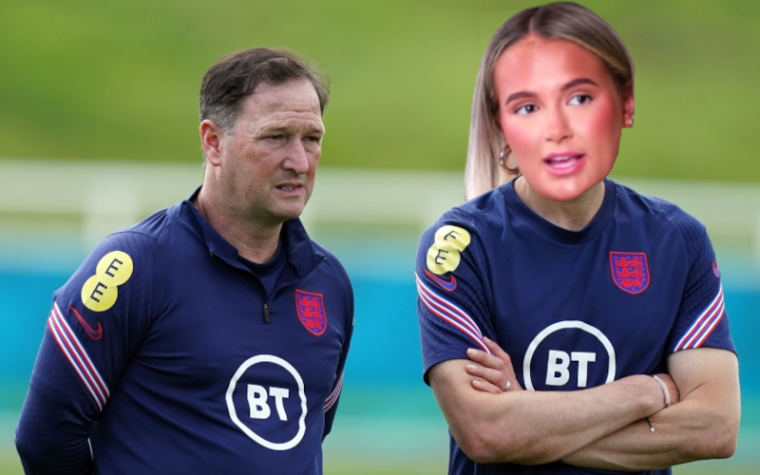
And once national team staff retire, that’s it. They don’t get replaced, except the managers. After about 20-30 years, unless the user has managed a nation and hired their own staff, all the national team coaching set-ups will be almost completely empty.
It would be much more realistic if managers brought in their own staff after taking on a national team job. These might include their favoured personnel, people they’ve worked with at club level, and/or former international players. If Dyche did manage England in the future (don’t laugh), you can be pretty sure Ian Woan would follow him to St George’s.
MAKE TOURNAMENTS BETTER

Whether you manage a national team or not, there’s little doubt that the major international tournament experience in Football Manager is pretty dire. A World Cup just doesn’t feel much different from a small regional championship or even a qualifying competition.
World Cups and European Championships were far more noticeable on Championship Manager, when the game showed you all the tournament results as they came in. That doesn’t happen automatically anymore. If you want to be updated on all the results at Qatar 2022 and beyond, you have to set up ‘Screen Flow’ in your save.
Even that method isn’t perfect. You can set ‘Screen Flow’ to stop the game and show you the latest results every evening throughout the tournament, and it’ll work fine… until the night of the Final, when the game just continues processing to the next day. If you want to see who won the Final, you’ll have to do it yourself. (Just another annoying bug which SI have never got round to fixing…)
One idea to make major tournaments feel more special would be for SI to do something like they’ve done with Deadline Day. About a week before the start of a World Cup, you would be asked if you want to ‘follow’ the tournament. If you do, you would receive regular inbox updates with stats, media reports and match summaries before and during the event. Or perhaps a World Cup tab could pop up, allowing you to access everything about the tournament at a glance.
The same thing could happen with any continental championship that’s relevant to you. For example, if your nationality is Argentinian, or you’re managing an Argentinian club, you’d have the option to follow the Copa América.
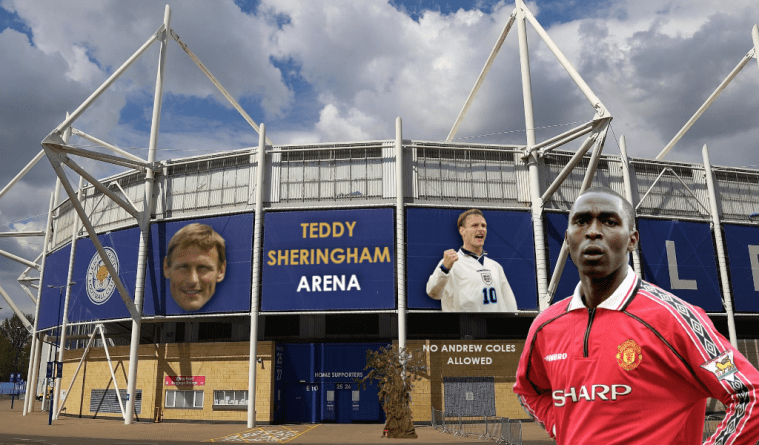
Lastly, I want to talk about the logic FM uses when assigning stadiums for a major tournament. Or lack of logic, for that matter.
Let’s assume that England are hosting Euro 2028 – and only England, not the UK & Ireland. The game might pick three or four venues in London (it’s usually a maximum of two per city), and then a mixture of existing and new stadia across the country.
You might see new stadiums built in cities like Stoke-on-Trent or Southampton, even if those cities already have perfectly good grounds large enough to host matches. A new venue might be named after a former England player, even if he has NO links to the city or its local club(s) – the Teddy Sheringham Arena in Leicester, anyone?
Then once the tournament’s over… that new stadium stay dormant. Sometimes a smaller team that climbs into the Premier League and needs a bigger stadium might move in, but otherwise, it’s just a white elephant.
Instead of leaving a new tournament stadium empty, it could be given to a big(ish) club that needs it, even if the capacity has to be reduced to make it sustainable. Even better, the FA could just upgrade an existing stadium. It’d be more sensible to spruce up Villa Park or St Andrew’s than build a new stadium in Birmingham that neither Aston Villa nor the Blues will use afterwards.
Those were my thoughts on international management in Football Manager, and how it can be improved in the future. With Football Manager 2023‘s release likely to coincide with the start of the World Cup in November, that would be an ideal time for SI to announce a massive overhaul of that part of the game.
If you have any ideas for improving international management that you’d like to share, feel free to leave them in a comment below – or tweet me @Fuller_FM.
Thanks for reading.
 Fuller FM
You must be logged in to post a comment.