

It’s been a while, hasn’t it, folks?
There hasn’t been much blog content on Fuller FM lately, mainly because I’ve had a little break from writing… but also because I’ve been playing Football Manager 2021 almost non-stop since the beta came out in November.
For me, two months is plenty of time to get stuck into the most in-depth football management simulator on the market, and see how it compares to previous versions. Releasing a new game in the middle of a global pandemic was always going to be a real challenge, but how have Sports Interactive fared in these unprecedented times?
Have they romped ahead of their rivals like Rangers, or have they had an unmitigated disaster like Sheffield United? The answer is probably somewhere in the middle, but here’s what I think about FM21…
NEW FEATURES
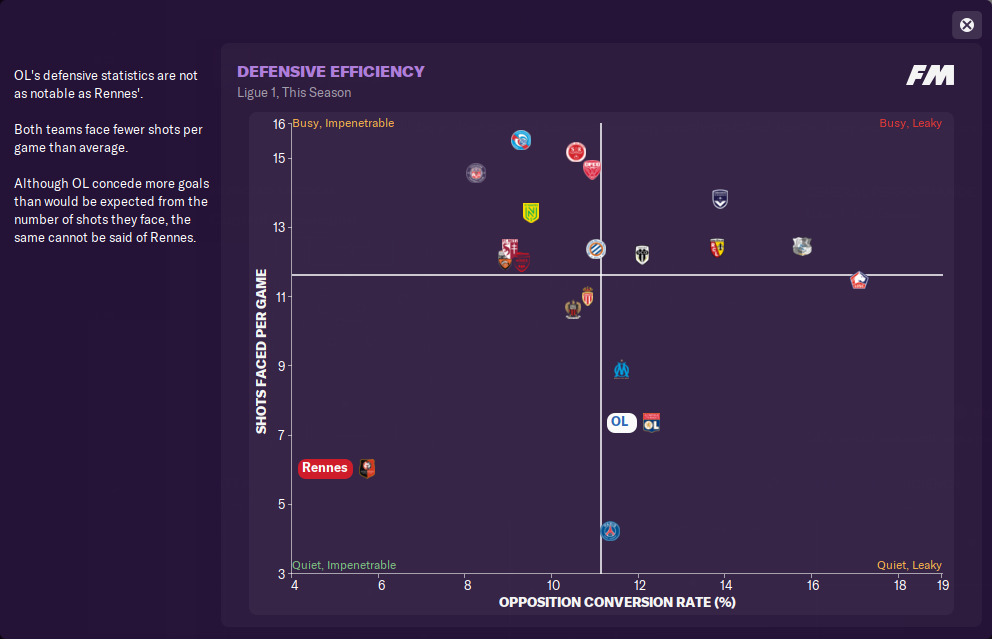
One of the biggest changes to FM21 was the addition of ‘expected goals’ – or xG for short. If you don’t know what that is, it’s a relatively new statistic that measures the likelihood of a goalscoring chance being converted.
Sports Interactive have built their own xG system, which rates every shot from 0 to 1 based on how likely it is to be scored. Personally, I’m still sceptical about the usefulness of xG. Nonetheless, it’s still a more accurate way of assessing your team’s performances than just looking at the shot counts – and wrongly assuming that having more shots should equal more goals.
This year has also seen the addition of some defensive and attacking efficiency charts, like the one you can see above. Being a bit of a stats buff, I love those scatter charts, which show you just how clinical (or otherwise) you are with shots compared to your rivals – and how reliable your defence is at keeping them out.
And of course, the much-changed world of today is also reflected in FM21. The pandemic isn’t officially in the game, so your players won’t be catching COVID, matches won’t be postponed, and stadiums will be as packed with spectators as they were in 2019.
However, as in real-life, most winter leagues start the 2020/2021 season later than usual (e.g. the Premier League started in September rather than August), and with substitution rule changes where appropriate. Many summer leagues won’t start until 2021, with the 2020 season effectively being ‘cancelled’, even if they were actually completed in some form. Schedules should return to normal from the summer of 2021… at least until the 2022 World Cup in Qatar messes everything up again!
Similarly, the transfer market has been changed to reflect the fact that many football clubs are nowhere near as financially secure as they have been. Transfer fees for players below the top level will be slightly reduced at first, before gradually returning to their regular levels as more money flows back into the game.
Now let’s talk transfers. For starters, you can now attend recruitment meetings before and during transfer windows. There, you’ll meet the big decision-makers, who’ll advise you on which areas of the team might need strengthening. Your scouts will then provide reports for recommended players in those positions, and you can instruct them to look for others who might fit the bill.
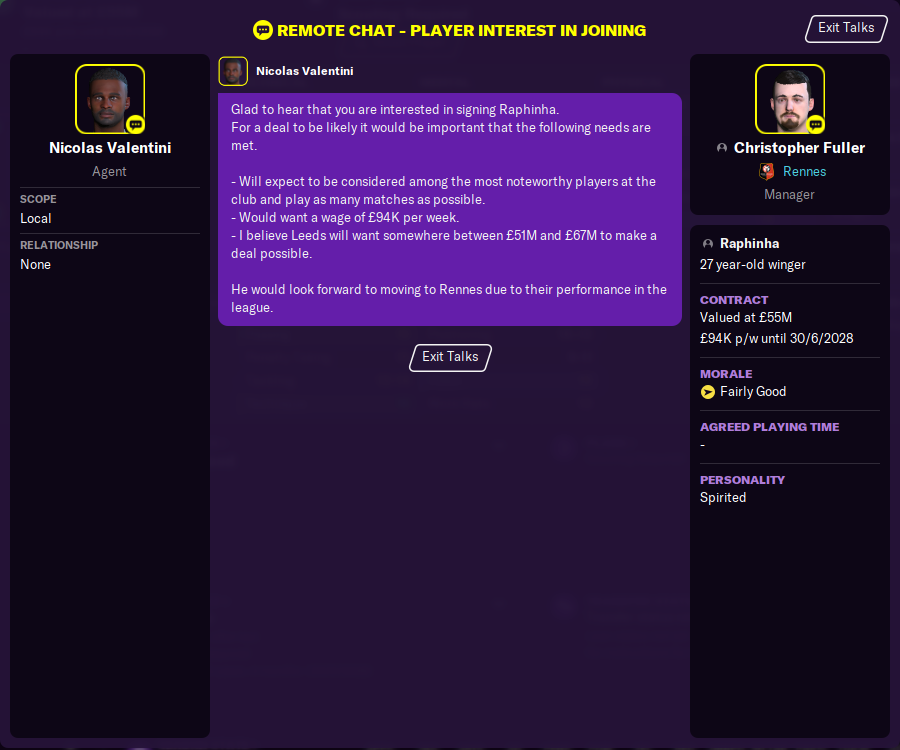
Also on the transfer front, you can approach a player’s agent to gauge their interest in joining your club – without having to make an offer to their club first. The agent may give you a good idea of the wages, promises and playing time their client would ask for once you’ve agreed a fee with their current employers. Or they could simply say, “He’s not interested. Don’t waste your time.”
The old ‘tones’ interaction system has been replaced with ‘gestures’. You can now use more expressive and contextual gestures when giving team talks, talking to your players or attending press conferences. You may want to raise a few smiles to get the press on your side, like Jürgen Klopp. You might also want to thrash your arms in anger at your players after a disappointing result… like Jürgen Klopp.
And once the campaign is over, you’re presented with a glossy new End of Season review. It has all the sections you’d expect to see from previous FMs – awards, statistics, financial review, your best XI – but all rolled into some kind of glossy Powerpoint-style presentation.
WHAT I LIKE ABOUT FM21
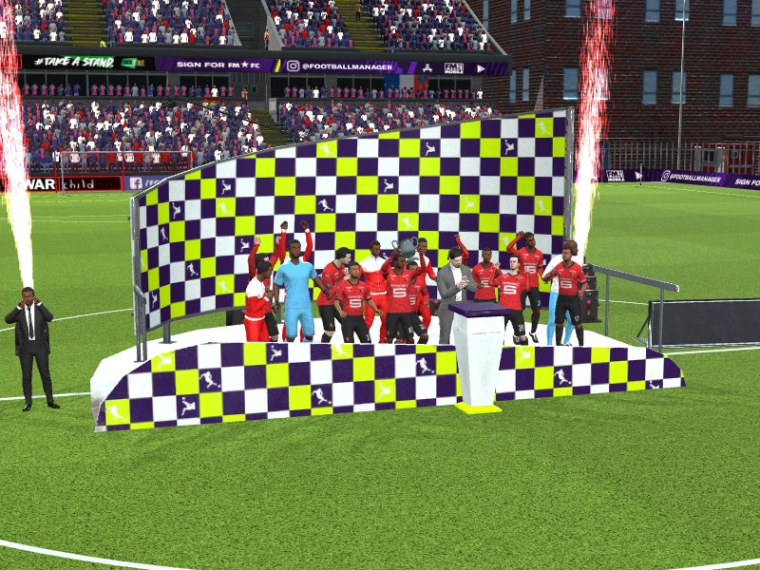
The trophy presentations are much better and give genuine excitement to winning a competition. There’s also a bit more variety and realism in terms of newgen faces. You won’t find nearly as many melted waxworks, lizard-men or full-bearded 16-year-olds in your youth intakes as you used to.
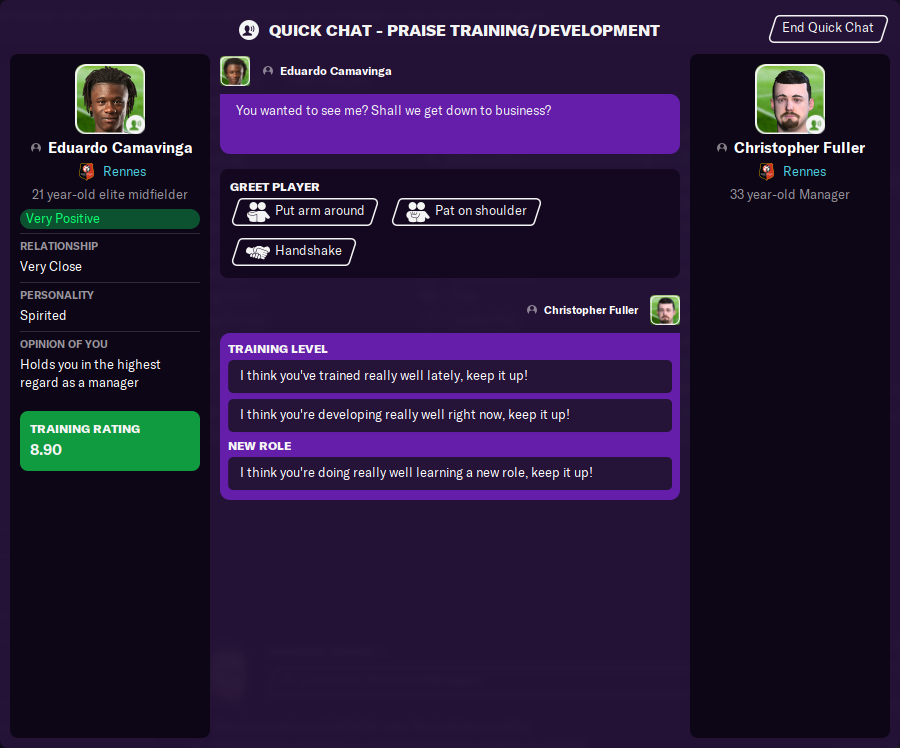
I’m also a fan of the redesigned ‘Quick Chat’ feature, which adds a more personal touch to private discussions with players and staff. The interface looks much sleeker and your potential options are now organised neatly, based on what you want to talk to them about. For example, when talking to a player about their poor form, you now know which options to pick if you want to criticise or threaten them, and which options are more reassuring.
With this feature, you can also speak to your ageing players and recommend a staff role for them to pursue when they retire. You could already advise them to go into coaching or management, but even more options like scouting and youth development are now available. If you’re managing Tottenham, you could even ask Gareth Bale to become a physio after he hangs up his golf clubs!
Similarly, press conferences have been spruced up. You’ll be asked more contextual questions, and you can use the new gestures to get your answers across more clearly, whether that’s by raising a smile, wagging a finger or banging the table. Of course, you may still face the same old questions time and time again, though anyone who’s watched real-life pressers will appreciate how accurate this is.
But all these new features won’t matter if the match engine isn’t up to snuff. Thankfully, after playing for close to four seasons, I can say that – in my opinion – FM21’s match engine is perhaps the best yet.
If you were frustrated about wide attackers shooting from impossible angles on FM20, you may find FM21 a less stressful experience. Players are now more likely to pass to an open team-mate instead of firing into the side netting. One-on-one conversion rates have also improved, but it’s worth remembering that even elite strikers don’t score all the time when they have only the goalie to beat.
I must also mention that there is much more variety when it comes to finishing. For instance, certain players may now try to chip the keeper if the opportunity presents itself. That’s something we maybe didn’t see enough of on previous games.
This is also the first version of Football Manager since FM13 where I’ve been able to get consistently good performances out of my central attacking midfielders. Playing through the middle is much more viable now, and I’ve seen some stunning through-balls from my ball-playing defenders, deep-lying playmaker and AMs.
Touchline shouts have been given a much-needed overhaul. Never again will you be spamming “Demand More” or “Get Creative” every 10 minutes – partly because “Get Creative” has been replaced, but also because any of the options can now work in certain contexts. I might write a post on this topic in the near-future to explain more.
Lastly, the biggest praise I can give to Sports Interactive this season is that FM21 is much more optimised. Loading and saving times are much quicker (even on my outdated hard drive), and they are especially speedy in the first and second seasons. I’ve also played 150+ hours without experiencing a single crash, which is always a good thing in my book.
WHAT I DON’T

The ME is always a work in progress; it will never be absolutely perfect. Every version of Football Manager has different areas of the engine that are either ‘overpowered’ or don’t work well.
Take crossing, which in recent games has swung from being far too effective (FM16) to being nowhere near good enough (FM19). SI kinda hit a sweet spot with crossing on FM20, but now we’re back to having problems. A lot of crosses are being easily blocked now, with wide players now often deciding to fire the ball at an oncoming defender’s midriff instead of making space for a more effective delivery.
And while right-backs like Héctor Bellerín would often sweep the major awards a few FMs ago because their crosses were overpowered, now they’ll be lucky to post an average match rating above 6.6. That’s partly because of the crossing issue… but also because some of the match statistics that drive player ratings simply don’t work properly.

Since the first major patch just before Christmas, FM21 is no longer recording key tackles. That means defenders and defensive midfielders’ match ratings will suffer quite badly unless they get goals or assists. Goalkeepers are also prone to getting poor ratings in games where they haven’t had to make many saves because the opposition forwards have been as prolific as Andy Carroll… oh, wait.
Other FMers have reported that other statistics are inconsistent at best, and outright ‘broken’ at worst. For their part, SI have said they are aware of the various statistics issues and are looking into fixing them in a future update.
There are other major bugs that I think are worth mentioning. For instance, not enough youth players generate at some AI clubs in certain leagues, which means that the number of players in the database can drop dramatically several years into a save game. There’ve also been cases where major teams don’t register all their senior players and instead field their youth-teamers in league games.
Then there are the various user interface bugs. When you leave the team talk screen to make changes to your tactical instructions, you can’t switch back. Setting up custom views is still a ballache, and exporting highlights even more so.
Other annoying UI quirks are not bugs, but intentional changes to provide a more ‘realistic’ experience. Widgets have gone, replaced by a customisable but fiddly tablet. The timebar (a long-standing feature which allows you to watch a highlight from any given time) has been taken away from live games and is now only available when reviewing past matches.
SUMMARY
There’s no doubt that Football Manager always offers great value for money at £40 (and even more when it’s discounted). FM21 is no different – and frankly, we should be more grateful that we even got a new version this season after such a turbulent year.
SI could have taken the easy way out by binning off FM21, putting out a 2020/2021 season update database for FM20, and putting everything into releasing Football Manager 2022 next term. Nobody could really have blamed them. After all, Konami have done something similar with their Pro Evolution Soccer series.
But SI haven’t skipped a season since the mid-1990s, and even the worst health and financial crises in a generation wouldn’t stop them releasing a game that lived up to their standards. In the circumstances, FM21 has been a major success, adding even more depth and detail to one of THE great sports video game franchises.
Yet the best version of Football Manager (in my opinion) is, paradoxically, also the buggiest version. It’s a 5* wonderkid who is still very raw mentally and not yet performing to the best of their abilities.
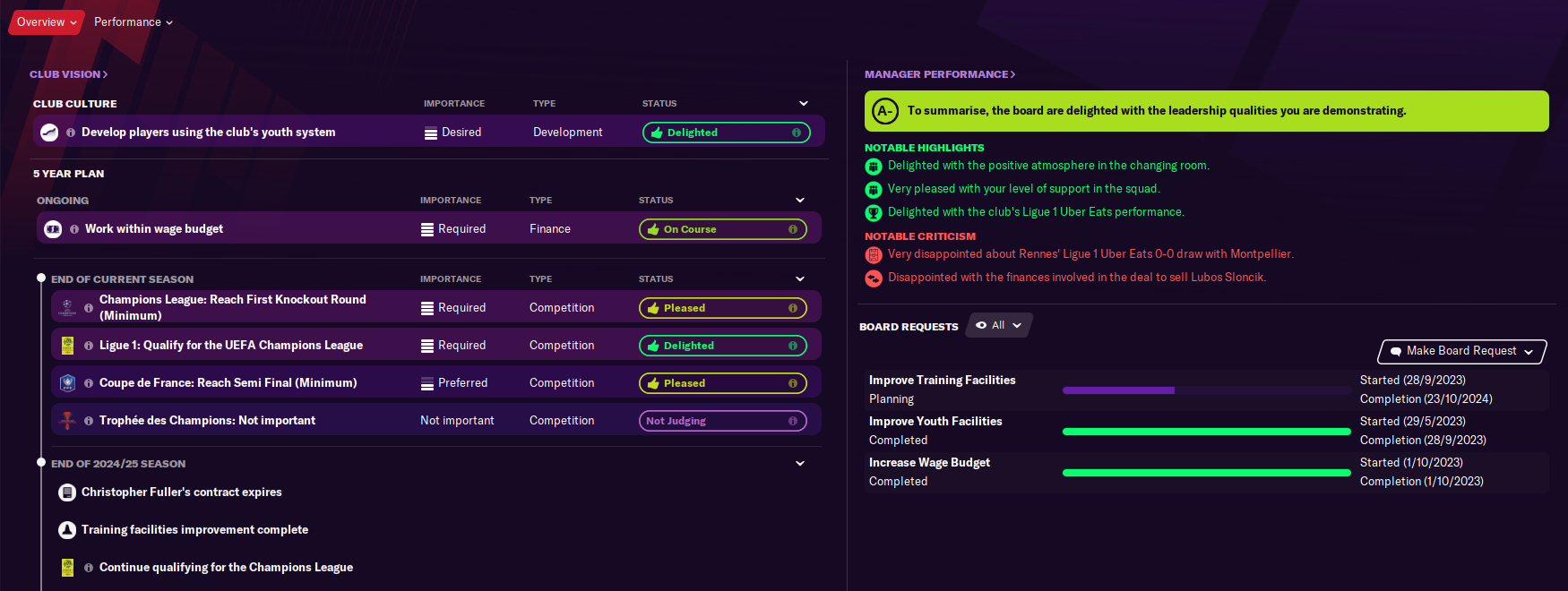
Let me put it another way. I’ve played my beta career with Rennes for a season longer than I planned to because I’m enjoying FM21 so much. The ME is certainly a huge improvement on FM20’s, and the game itself is smoother and more optimised than it has been in years.
However, I’ve also put off starting my long-term save for longer than I planned to because I still have major concerns about buggy youth intakes, dodgy statistics, and broken league rules. (Oh, and did I mention the shambolic car crash of a pre-game editor that is littered with bugs and frankly isn’t fit for purpose?)
I’m still hopeful that SI will address many of the issues reported above, and that FM21 will be remembered as a new high point in the franchise’s 28-year history. In its current state, I would still give it my recommendation… just with a few caveats.
If you’ve enjoyed FM20 and are still sitting on the bench about whether to buy FM21, I’d probably be a bit cautious right now. But if you haven’t played since FM19 or FM18, I reckon it’s worth the upgrade.
I hope you have found this review interesting. Football Manager 2021 is available to buy on Steam and the Epic Games Store (but not yet on Stadia – please stop asking!). If you’re still uncertain, you can try the demo, which runs for six months in-game.
If you’d like to add your own thoughts about FM21, you can leave a comment below. Alternatively, you can tweet me @Fuller_FM.
 Fuller FM
One thought on “My thoughts on Football Manager 2021”
Comments are closed.