
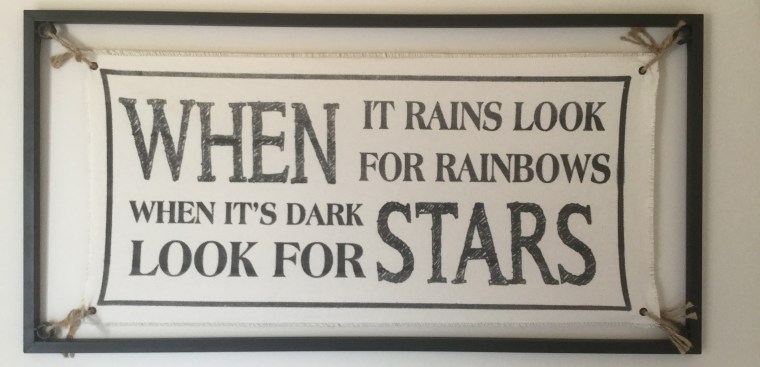
 Hello there. My name’s Christopher, I’m 29 years old, and I live in north-east London. I mainly use this blog to write about the “Football Manager” video game series… but not today. I want to write about something much closer to me.
Today is World Autism Awareness Day, when people of the autistic spectrum come together to raise awareness of their conditions. Today, I’m going to write about my experiences of living with Asperger syndrome.
WHAT IS ASPERGER SYNDROME?

Autism is a developmental disorder which affects how people see the world. This may impact how they learn, how they communicate with others, and how they react to change. Around 700,000 people in the UK (more than 1% of the population) are on the autistic spectrum, and men are affected more than women.
Not all autistic people are the same; their disabilities may be severe, or they may be milder and/or less obvious. Autism symptoms tend to start showing from the ages of two to three. The condition is lifelong and cannot be ‘cured’ (it’s NOT a disease), though it can be ‘controlled’ to some degree.
I have a high-functioning form of autism known as Asperger syndrome – often shortened to Asperger’s or AS. Many people with Asperger’s – or Aspies – have good language and cognitive skills, and are of average or above-average intelligence.
Some Aspies demonstrate repetitive and compulsive behaviour. They might adhere to strict schedules and become distressed if these schedules are disrupted. They might also regularly repeat movements (such as flapping their hands) or sounds, particularly when under stress.
Aspies might have narrower and more intense interests than most other people (for example, one might become obsessed with trains down to the tiniest detail). Some may have a restricted diet (in that they only eat certain foods and/or drink certain drinks) and may either overeat or undereat significantly.
Aspies generally struggle to communicate with others or make friends easily. They might show little emotion facially or verbally, and might also struggle to read the emotions of – or emphathise with – other people. Similarly, they might be slow to understand subtleties in language, such as humour or sarcasm.
It’s quite common for people with this condition have great hearing and visual perception. Conversely, they might move clumsily and/or awkwardly, and they might take longer to develop fine motor skills.
GROWING UP
My autism story started when I was about three years old. My development had been pretty ‘normal’ up until that point, but then I suddenly stopped speaking and started becoming more irritable. I was soon identified as autistic, though I wasn’t formally diagnosed with Asperger’s until I was 10.
From the ages of 4 to 16, I went to a special needs school. Among my fellow pupils were other kids who looked normal on the surface, but were autistic or dyslexic. Then there were those with more severe disabilities such as Down syndrome, or even life-limiting conditions such as cystic fibrosis.
Meanwhile, my younger sister – who is ‘neurotypical’ (i.e. not autistic) – attended mainstream schools. While she was much more outgoing and made loads of friends, I only ever had about three or four classmates – at most – who I communicated with even semi-regularly.
Though speech therapy had allowed me to speak again, my social skills were still very poor. I was very distant from others and made almost no eye contact with anyone. Even today, I can only look my parents in the eye when we’re having a very serious conversation.
I also had a somewhat rebellious attitude towards certain teachers. Add in the chaos that often ensued whenever I didn’t get my way, or whenever my stringent routines got changed… and you can imagine I was quite a handful!
There was one teacher I always obeyed and looked up to: the headmaster. He was a disciplined but genial Welshman who loved his job and enjoyed rugby, boot sales and Roald Dahl (even looked a bit like him). It was him and Dahl who first inspired my love for the English language, which endures today.
I was also good at mathematics – and computing, starting from when Dad bought the family’s first IBM computer in 1996. This quickly became an obsession for me, and I would happily spend almost all my free time on the computer if I could.
My biggest love affair – with football – began in the late 1990s. I’d been collecting Merlin Premier League stickers for almost a year before I watched my first match on TV (Arsenal beating Wolves 1-0 in the 1998 FA Cup Semi Final). My subsequent decision to support Arsenal was reinforced when Dad told me that – despite not being a huge football fan himself – he’d also followed the Gunners as a boy.
Football quickly overtook everything else in my life – and I couldn’t wait to share my passion with anyone, regardless of whether they were interested. I can still remember the blank looks across my parents’ faces when I explained to them the significance of Carlisle’s relegation in 2004, after 76 years in the Football League!
When anything new – or even different – really piques my interest, I suddenly become fixated and can spend weeks reading as much about it as I can. Some of these passions came and went (e.g. ancient history, Shakespeare, chess). Others have lasted longer while not being so overwhelming (e.g. music, cats, darts).
Photography is another milder love which has endured. I especially like to take photos of my cats, wildlife and holiday attractions. This is quite ironic, because since my teenage years, I’ve HATED having photos taken of me. I will oblige very rarely (e.g. at formal events), but I’m probably the last person in Britain who would ever take a selfie!
2004 represented a turning point for me. It was the year my childhood sweetheart – a girl two years older than me – left school, leaving me heartbroken in an era before social media made it easier to stay in touch. I’ve not had a girlfriend since.
A few months later, I began to have massive mood swings and struggle with depression. These softened for a while after I befriended another girl in the same age group, though my behaviour worsened again when she wouldn’t reciprocate my love for her. In hindsight, I was a borderline obsessive who did some creepy things that might’ve got me a restraining order if we were adults rather than teenagers.
On the plus side, my education thrived after I knuckled down and concentrated on exams. I left school with seven Entry Levels and a GCSE in Mathematics (becoming only the second student in my school’s history to get a GCSE).
ADULTHOOD
 The first five years after leaving school were very difficult for me. I dropped out of three colleges in that time, as early excitement quickly made way for stress, anxiety, and the meltdowns that ensued. I even started losing my hair and having some very dark thoughts, which led to weeks of counselling.
Things were stressful at home as well. Like many teenagers, I defied my parents a lot more – not in a ‘dying my hair and going out at night’ kind of way like my sister, but I did say some regrettable things to them. Being on the spectrum, I didn’t realise at first just how hateful my words were until one occasion when I made Mum cry.
It wasn’t until my early 20s that I really started to behave in a more adult manner. If anything, though, I overcompensated by retreating further into my shell and not saying anything that I feared would upset my family. I became more reclusive, with video games and other interests becoming even more important to me.
I returned to college in 2012 for two years, getting a couple of CompTIA certifications with a view to becoming a computer technician. However, my social skills were still a mess, with regular nervousness and anxiety making getting a proper job almost impossible for me. And so, for the past six years, I’ve mostly been at home – with no education, job or social life to write of.
That’s not to say I never go out. I walk to the local Tesco Metro most mornings to buy groceries and help Mum out with shopping every week (or at least I did until the recent pandemic). I’ve also gradually become more independent, finally developing skills and doing chores that most people my age would’ve started doing a long time ago.
Life for our family has changed so much since 2014. My sister left home, moved across the country to Shropshire, got married and had a son (my little nephew Oscar, whom I absolutely adore). Two of my grandparents passed away last year, as did my headmaster and my 13-year-old cat, giving me four doses of bereavement in a dreadful 2019.
Meanwhile, I’ve spent a lot of my time playing Football Manager and writing about it. I used to write stories (or fanfiction) about my save games and post them on the developers’ official forums before starting this blog about 18 months ago.
FM has served as an escape from the real world. It’s helped me build new friendships online when I’ve long lost contact with many of my classmates from school and college. It’s rebuilt my confidence and given me a greater purpose in life.
Things aren’t always so positive. I’m still prone to emotional outbursts and erratic behaviour in real-life, and the same is true online.
At the start of this year, I had a huge argument with another forum user about a bug report, which led to a heart-to-heart discussion with a moderator. He was the first person in the FM community who I explicitly told about my Asperger’s diagnosis. Finding out that a number of fellow users (including another moderator) were also on the spectrum had inspired me even more to come forward.
If you’ve been following me for a while (whether it’s through my blogs, the forums or Twitter), you’d probably have figured that I might be on the spectrum. I’ve referred to autism in some of my FM stories, and I’ve also written about having a “learning disability” (or a “social disability”, to be more accurate).
AND FINALLY…
In telling my story to the wider Football Manager family (and anyone else who’ll read it), I hope I’ve opened eyes and shed some light on what living with Asperger’s is really like.
Society is slowly becoming more accepting of people like us, yet “autistic” and “Asperger’s” are still used as throwaway insults for anyone seen as stupid, obnoxious or socially awkward. These stereotypes are deeply harmful to many Aspies, and even the most positive ones don’t exactly help.
We’re not all savants with extraordinary abilities like Dustin Hoffman in “Rain Man”. When I was very young, I used to be able to tell you what day of the week a certain date fell on, but not anymore. We’re also not all great mathematicians, though as I have hinted at before, that was one of my favourite school subjects.
Aspies have gone on to enjoy careers in music like Susan Boyle, Ladyhawke and Gary Numan, or become actors like Paddy Considine and Sir Anthony Hopkins. TV presenters Guy Martin and Chris Packham now share their respective passions for motorcycles and wildlife with millions.
You might also have heard of a climate activist named Greta Thunberg. I was reluctant to leave the house when I was 17, and here’s this fearless Swedish girl of that age trying to change the world for the better. I don’t always agree with her, but she’s certainly got guts.
For me, living with high-functioning autism has been both a blessing and a curse. I feel fortunate to have above-average intelligence and certain skills, but frustrated that I’m not as socially confident as my sister. I also look back to my school days and remember kids with more severe disabilities who lived their lives more freely and happily than myself.
I’m not ashamed to be autistic, as I perhaps was in the past. Even now, I’m not exactly going to wear my diagnosis on my sleeve or shout about it from the rooftops. It’s a huge part of what makes me who I am – but I don’t want it to define me.
I celebrate a significant milestone later this month – my 30th birthday. It’s made me think a lot more about where I’m going in life, and where I want to go. It might be a while before I know what’s next for me, but I’m keeping positive – as all of us perhaps should during these uncertain times.
With that in mind, I’ll leave you with a reminder of the Oscar Wilde quote I posted right at the top of this article. Even in your worst days, you can always find hope, whether it be in the smallest star or the faintest rainbow.
Okay… so that post was a bit longer than I thought it would be, but I felt it was time to get it all out in the open.
If there’s anything you’d like to comment on after reading this, then you can leave a reply below. Alternatively, you can contact me on Twitter @Fuller_FM, where I usually tweet about Football Manager, football in general, and alternative music.
 Fuller FM
You must be logged in to post a comment.